How Far Should Metal Roof Panels Overhang Eaves and Rakes?
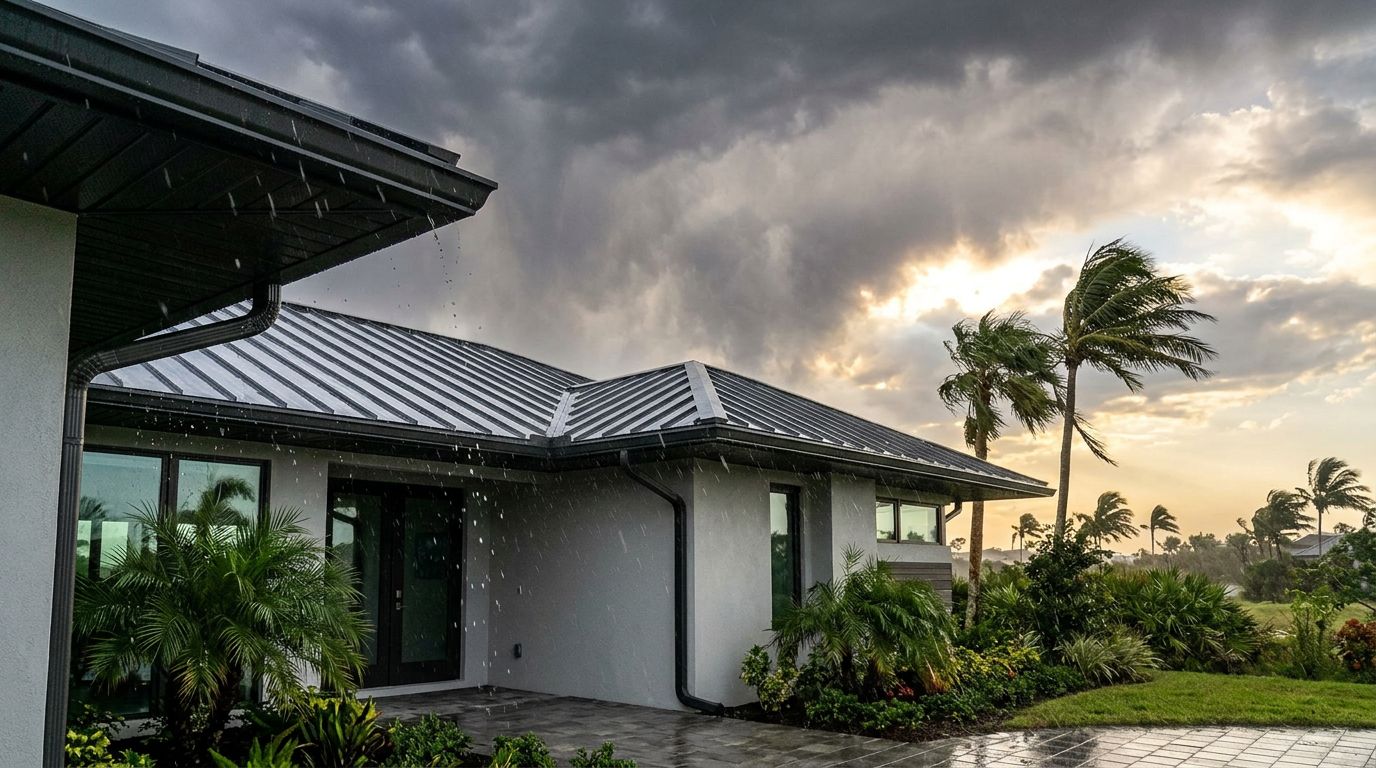
Picture this. A fierce Florida thunderstorm hits. Rain lashes sideways, wind howls at 80 miles per hour. Your metal roof sheds most of it fine. But at the edges, water sneaks back under panels or gusts lift them up. That happens too often because the metal roof overhang got it wrong.
Homeowners and builders in Florida face this issue all the time. Get the overhang right, and you protect your fascia, boost drainage, and stand up to hurricanes better. Get it wrong, and leaks or damage follow. Let's break down the right distances for eaves and rakes so your roof performs.
Why Overhang Distance Protects Your Florida Roof
Overhang controls water and wind at the edges. Too little, and runoff hits your fascia board directly. That rots wood over time. Too much, and panels catch wind like sails, leading to uplift.
At eaves, overhang directs water into gutters. It keeps splash-back off walls and foundations. For rakes, it shades the gable end while blocking rain from blowing under. In high-wind zones, short overhangs cut flutter and stress on fasteners.
Florida's building codes stress this. They demand edges resist 130 to 150 mph winds in most areas. Proper overhang helps panels stay locked down. Plus, it pairs with drip edge to stop wind-driven rain. In short, overhang isn't just looks. It guards your home's structure.
Standard Overhang Ranges for Eaves
Most metal roofs in Florida use a 1 to 1.5 inch overhang at eaves. This keeps panels past the drip edge without excess exposure. Water flows off smoothly into gutters.
For a typical 5- or 6-inch gutter, center the overhang over the hanger. That prevents overflow during heavy downpours. Always measure from the fascia face, not the deck edge. Underlayment and trim add thickness there.
Contractors often start with the eave drip edge guide for their panel type. It shows how overhang ties into trim bends. Result? Clean drainage and no fascia stains.
Adjust for roof pitch too. Steeper slopes shed faster, so stick to the shorter end. Flat spots need precise alignment to avoid ponding.
Best Practices for Rake Overhangs
Rakes follow the same 1 to 1.5 inch rule. Panels extend just past the rake trim. This covers the gable edge without creating wind traps.
Sloped rakes face more uplift. Wind curls up the gable line. A tight overhang with good closures seals ribs tight. Use hemmed rake trim for stiffness. Check our rake trim selection for Florida edges to match your profile.
Measure diagonally from eave to ridge. Keep overhang consistent across runs. If the first panel drifts, the whole rake looks wavy. Square your first panel on site early to nail this.
In coastal spots, shorten to 1 inch max. Gusts hit harder there. Test fit trim before final cuts.
Exposed-Fastener vs. Standing Seam Overhangs
Exposed-fastener panels like AG or PBR need 1 to 1.5 inches too. Ribs channel water, so overhang clears the drip edge fully. Closures at ribs prevent backflow.
Standing seam systems match that range. Seams clip tight, but edges still need control. Manufacturers test these for Florida winds. Overhang stays short to avoid seam stress.
Both types prioritize wind hold-down. Exposed systems use more screws at edges. Standing seam relies on clips. Either way, follow the detail drawing. No big gap between them, but standing seam often needs custom rake returns.
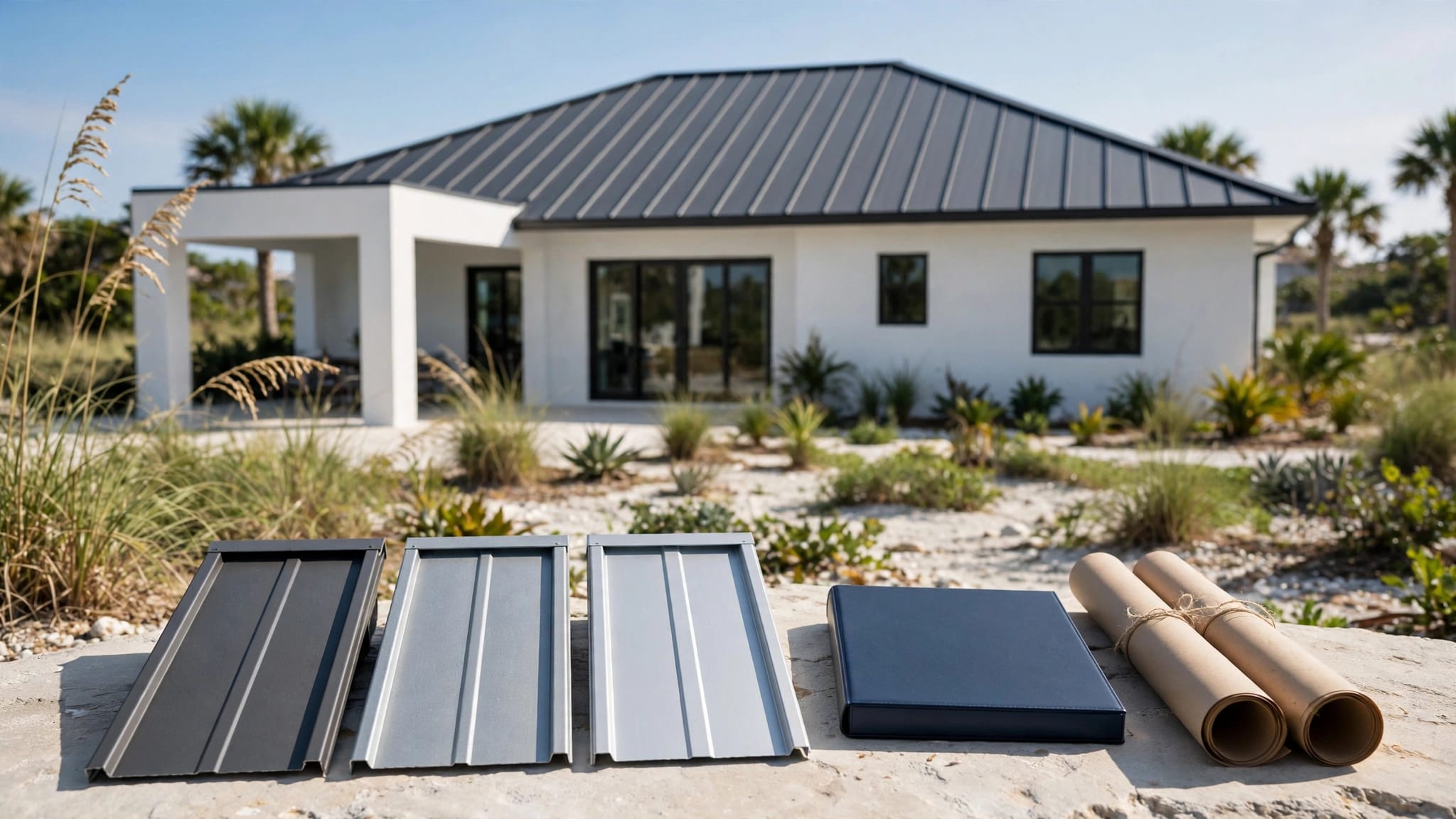
Pick trim that fits your profile. Order custom pieces right with exact leg sizes.
Common Mistakes That Ruin Roof Edges
Installers mess up overhang often. Too much, say 2 inches or more, causes bending. Panels droop under weight or heat. Wind grabs the tip, pops fasteners loose.
Too little, under 1 inch, lets water wick back. It soaks underlayment or fascia. Stains appear fast in humid air.
Another slip: Ignoring panel squaring. Overhang tapers across the roof. Rake cuts end up jagged.
Gutter mismatch hurts too. Overhang misses the hanger, floods the yard. Fix by mocking up with scrap first.
Skip closures at rakes, and ribs leak. Always seal per the manual.
Follow Manufacturer and Code Rules First
Typical ranges guide you, but your panel maker's instructions rule. They test for Florida loads. Local codes add layers, especially in high-velocity hurricane zones.
Check Florida Building Code edition for your permit date. It covers uplift, fasteners, and edges. Get product approvals that match your wind zone.
Call your building department early. They flag zone specifics. Pros verify substrate strength too. Weak fascia won't hold short overhangs.
In the end, blend these ranges with your detail sheets. That setup lasts through storms.
Right metal roof overhang keeps Florida homes dry and strong. Stick to 1 to 1.5 inches at eaves and rakes. Match your system, trim it tight, and check codes. Your roof will thank you next hurricane season.
Ready to spec panels? Grab a quote for trim and panels that fit. What's your roof's biggest edge worry?
Share Our Metal Roofing News Articles
Related Posts