How to Spot Failed Screw Washers on Metal Roofs
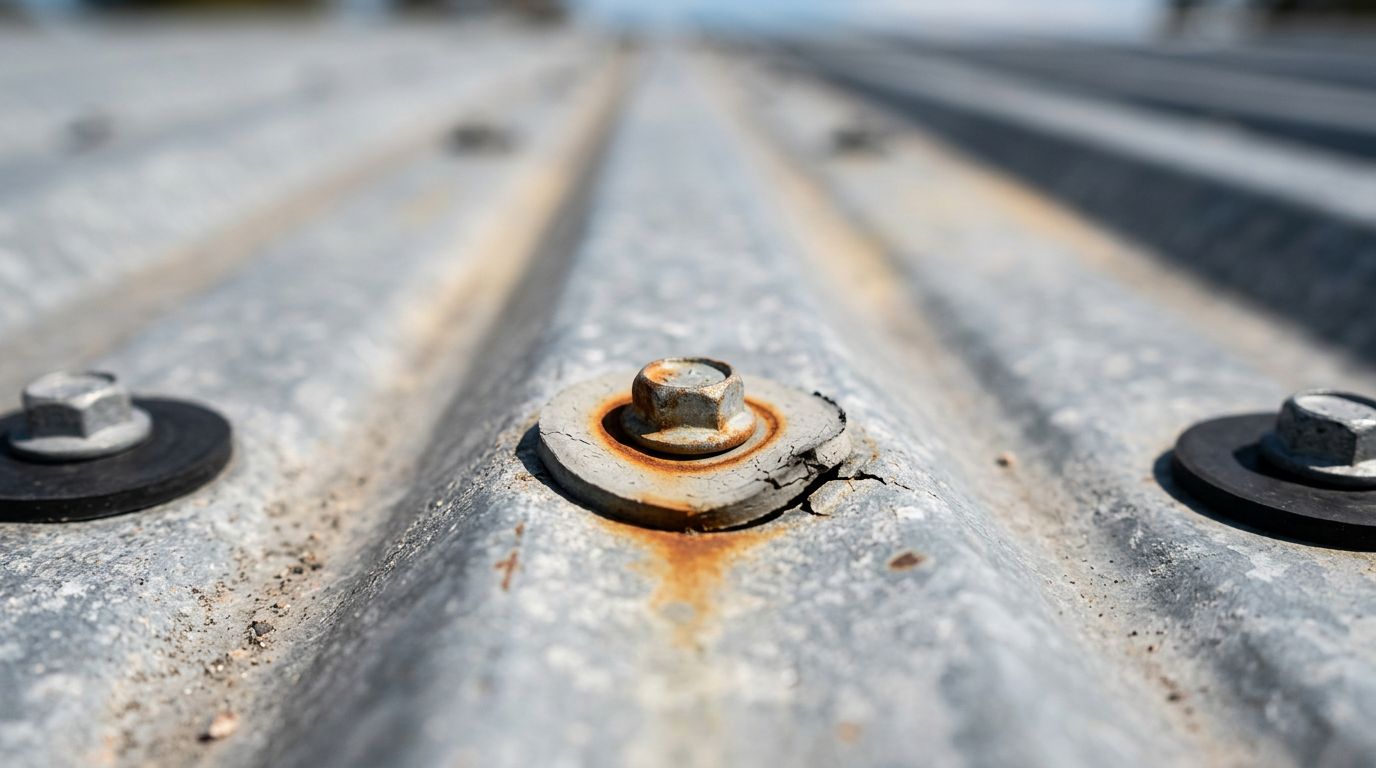
A tiny rust ring around one screw can point to a bigger roof problem. On exposed-fastener metal roofs, failed screw washers often show up long before a leak reaches the ceiling.
That makes early spotting important. If you know what a healthy washer looks like, the warning signs are easy to catch from the ground or a safe vantage point. The goal is simple, find trouble early, before loose panels, stains, and hidden moisture spread.
What a healthy screw washer should look like
On a sound metal roof, the washer sits flat under the screw head and makes even contact with the panel. It should look slightly compressed, not squashed flat or puffed up.
Most roofing screws use a bonded rubber washer, often EPDM or a similar material. That rubber should still look flexible and intact. It should not look chalky, brittle, split, or curled at the edges.
A healthy fastener also stays put. The screw head sits snug, the washer seals cleanly, and the panel around it stays tight. If you want a refresher on fastener styles, see choosing the right roofing fasteners and washers.
One important detail, a good-looking washer can still fail if the screw has loosened, the panel has shifted, or the roof was installed with the wrong fastener. That's why the washer, screw, and panel all need to be checked together.
Signs of failed screw washers you can see
The early signs are often small. A few screws may look different, but those few can point to wider roof wear.
| What you see | What it usually means | Why it matters |
|---|---|---|
| Cracking or splitting | The rubber has aged or been overstressed | Water can pass through the break |
| Dry, brittle, or chalky washers | UV damage and heat exposure | The seal loses flexibility |
| Washers that look flattened or over-compressed | The screw was driven too hard | The washer can no longer rebound and seal well |
| Screws that sit high or have backed out | Fasteners have loosened over time | Wind and movement can enlarge the hole |
| Rust staining below the screw head | Moisture has reached the fastener | Corrosion can spread into the panel |
| Loose or noisy panels | Fasteners are no longer holding the sheet tight | Wind can worsen the damage fast |
| Interior stains or drips | Water is already getting past the fastener line | Damage may be more widespread than it looks |
A cracked washer is easy to miss if you only glance at the roof. Still, once the rubber splits, the seal is on borrowed time. Drying out is another common clue in Florida, where sun and heat beat on the roof day after day.
Backed-out screws deserve special attention. A screw that rises even a little can release pressure on the washer. Once that happens, the seal weakens and the panel can start to move. That movement creates more wear, then the problem feeds itself.
A washer usually fails in stages. By the time you see a drip, the damage has often been building for a while.
Rust staining is one of the clearest signs. It often shows up as a brown halo around the screw head or a streak under the fastener line. That stain means moisture has been sitting where it shouldn't.
Why metal roof screw washers fail in Florida
Florida roofs take a beating. Heat expands the metal during the day. Cooler evenings pull it back in. That daily cycle works fasteners loose over time.
Sunlight is another big factor. UV breaks down rubber, so washers dry out, harden, and crack. Salt air near the coast can speed up corrosion on screws and heads. Strong storms add wind uplift, vibration, and pressure shifts that stress the whole fastening system.
Installation quality matters too. A screw driven too tight crushes the washer. A screw left too loose never seals well in the first place. If the fastener type doesn't match the panel or substrate, the washer may never sit correctly.
If you're sorting out fastener options, self-drilling vs self-tapping roofing screws breaks down a choice that affects fit and seal. The right screw helps the washer compress the way it should.
Other common causes include:
- Old age : Washers wear out even on well-kept roofs.
- Foot traffic : Walking on panels can twist or crush fasteners.
- Debris buildup : Dirt holds moisture against the washer.
- Panel movement : Expansion and contraction put stress on the fastener line.
In other words, washer failure usually isn't random. It often comes from a mix of weather, age, and installation stress.
Safe ways to inspect without damaging the roof
You do not need to walk every roof to spot trouble. In fact, walking the wrong roof can create more problems than it solves. Hot metal, wet panels, steep slopes, and brittle fasteners all raise the risk.
Start with a ground-level scan. Use binoculars or a phone camera with zoom. Look along the fastener rows, panel laps, eaves, ridges, and trim edges. These are the places where failed screw washers often show first.
A safe inspection routine looks like this:
- Check the roof from the ground first. Look for shiny screw heads, rust streaks, lifted panels, or spots where the panel line looks uneven.
- Use the attic or ceiling space if you have it. Water stains, damp insulation, or dark spots often point back to a fastener line.
- Inspect after storms and strong wind. New movement or fresh stains can reveal a problem that wasn't visible before.
- Use a ladder only for a closer look at the edge. Do not step onto a roof you can't safely access.
- Photograph anything suspicious. Compare the same spot later so you can track change.
If a roof is steep, slick, or sun-softened, skip the walk entirely. A bad step can dent panels, bend fasteners, or tear washers that were still holding. For Florida homeowners and contractors, a careful visual inspection is usually the smarter first move.
Why small washer problems turn into bigger roof repairs
A failed washer does more than let in a little water. It can start a chain reaction.
Water that reaches the screw hole can spread under the panel. It may stain decking, wet insulation, or travel along framing before it shows inside. That means the leak you see in the ceiling may not sit under the bad screw at all.
Loose fasteners can also let panels shift in the wind. Once a panel moves, screw holes can widen and nearby washers get stressed too. Then one weak spot turns into several.
Rust is another concern. If moisture keeps sitting around the fastener, corrosion can affect the screw, the panel coating, and nearby hardware. Over time, that makes repairs harder and more expensive.
Ignoring the problem can lead to:
- larger leak areas
- stained ceilings and wall damage
- wet insulation and lost energy efficiency
- panel noise in wind
- more stripped or missing screws
- wider corrosion on the roof surface
The good news is that early signs are easy to act on. A few bad washers can often be replaced before the roof needs bigger work. That's much cheaper than waiting for widespread panel damage or hidden rot.
When to bring in a roofing pro
Call for help when the damage shows up in clusters, not just one or two screws. Multiple cracked washers in one area usually mean the roof has aged out of its seal.
You should also get a closer look if you see any of these:
- repeated rust halos around screws
- several backed-out fasteners along one panel line
- loose or noisy panels after wind
- stains inside the building
- washers that feel brittle or crumble when touched safely from the edge
Contractors should pay special attention to matching replacement fasteners to the existing panel profile and substrate. A well-matched screw and washer seat better and last longer. For panel-specific guidance, metal roof maintenance checklist can help frame a simple inspection plan around fasteners, seams, and storm checks.
If the panel edges are already lifting or the screws are widespread across the roof, the issue may be bigger than washer replacement. At that point, a full inspection is the safer call.
Conclusion
The easiest way to spot failed screw washers is to look for change. Cracks, splitting, dryness, rust staining, backed-out screws, and loose panels all tell the same story, the seal is no longer doing its job.
On a Florida metal roof, heat, UV, storms, and movement push fasteners hard. That's why a careful visual check from the ground matters so much.
Catch the warning signs early, and you can keep a small washer issue from becoming a larger roof repair.
Share Our Metal Roofing News Articles
Related Posts