How to Find a Metal Roof Leak in Florida
A metal roof leak in Florida can start with one loose screw, one cracked seal, or one small gap at a flashing joint. After a hard rain or a windy storm, the drip inside often shows up far from the real problem.
That is what makes leak hunting tricky. Water can travel along panels, framing, or insulation before it drops. If you know where to look, you can narrow it down fast and avoid chasing the wrong spot.
Start inside, because water rarely shows up where it began
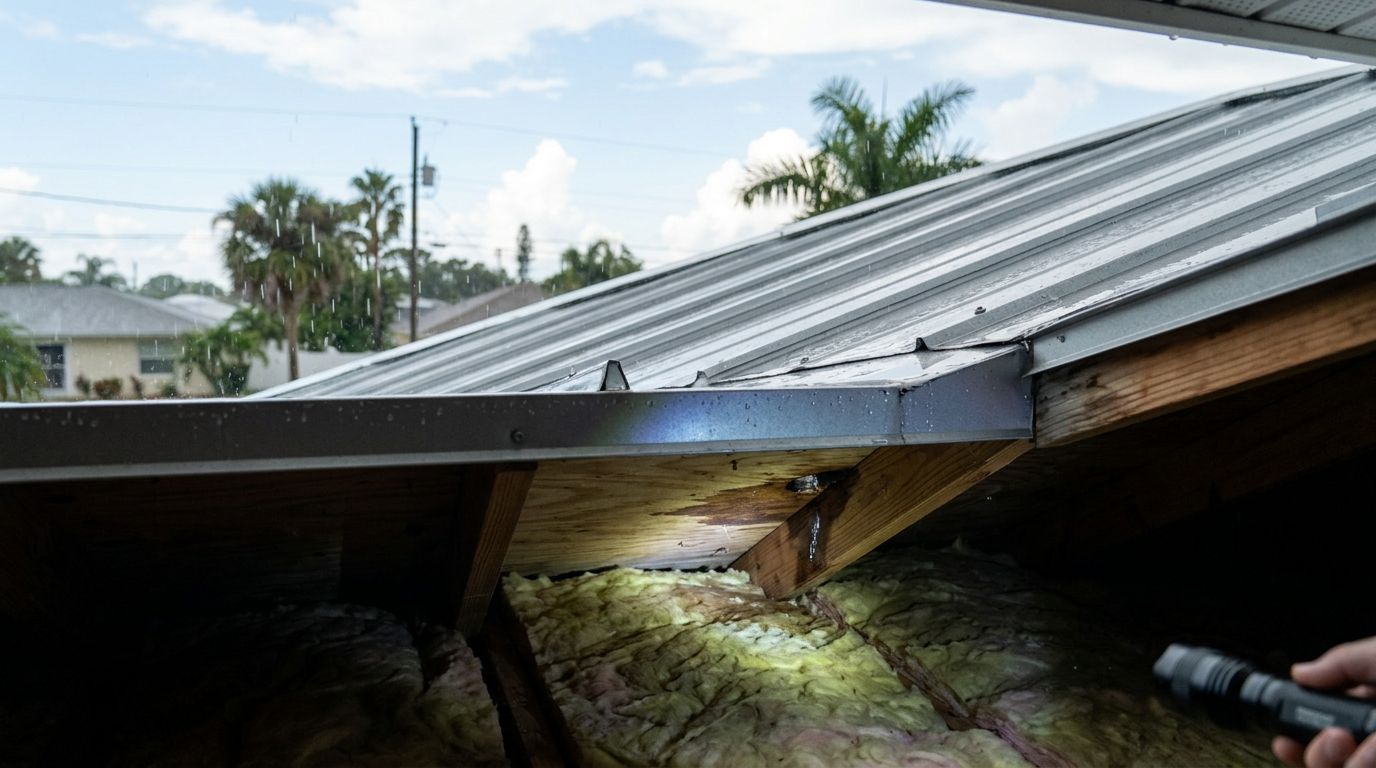
Before you climb up, start in the attic or ceiling space if you have one. Use a flashlight and look for damp insulation, dark wood, rust stains, or a shiny trail on the underside of the deck.
Water stains show where the leak traveled, not where it began.
Find the highest wet point first. Then work backward from there. If the roof leaks during wind-driven rain, the entry point may sit upslope, not directly above the stain.
Pay attention to the pattern. A single drip after one storm often points to a small opening. Several wet spots in different areas often mean a wider problem, such as storm damage, failed sealant, or more than one bad detail.
Follow the path on the roof, one section at a time
Once the roof is dry and safe to access, inspect it in a calm, methodical way. Start above the interior stain and move upslope. Do not jump around the roof. That wastes time and can hide the real source.
- Check the weather window first. A dry roof is easier to read. Wet panels, morning dew, or algae can make a safe step turn slippery fast.
- Mark the interior clue. Use painter's tape, chalk, or a note on the ceiling below the wet area. Then match that point to the roof above it.
- Inspect exposed fasteners. Look for backed-out screws, missing screws, rust around heads, or washers that look flat, split, or hard. On older metal roofs, fastener failure is common.
- Walk the seams and laps. Panel edges, end laps, and side laps can open a tiny path for water. If the sealant looks dry, cracked, or pulled away, it may be part of the leak. For more on seam failures, see stopping metal roof leaks at seams.
- Check flashing and transitions. Look at walls, valleys, ridges, chimneys, skylights, and places where one roof plane meets another. These details often fail before the panels do.
- Inspect all penetrations. Pipes, vents, satellite mounts, and HVAC curbs need tight seals and clean flashings. Any split boot, loose collar, or cracked sealant bead can send water inside.
- Look for storm clues. Dents, lifted edges, bent trim, or debris impact marks tell you where wind or flying limbs caused damage.
If several areas look weak, the leak may not be isolated. In that case, how to assess metal roof damage can help you think through repair versus replacement.
The Florida leak points that fail first
Florida weather puts stress on certain roof details faster than others. Heat expands metal during the day. Night cooling pulls it back. That daily movement works fasteners, seams, and sealant over time.
Exposed screws and fasteners
On exposed-fastener systems, each screw hole is a possible opening if the washer or screw loosens. Sun and heat dry out washers. Coastal air can speed up corrosion around the head and threads.
Look for screws that sit high, tilt slightly, or show rust rings. If many fasteners are failing in one area, the panel may be moving too much or the roof may be near the end of its service life.
Seams and panel laps
Seams take a lot of pressure during wind-driven rain. If the overlap is short, the sealant is worn, or the lap has shifted, water can sneak through.
Florida sun is hard on tube sealant. It can crack, shrink, or separate from the metal. That is why seam detail matters so much on this kind of roof. On many repairs, the method matters as much as the product. fixing metal roof flashing leaks covers the kind of edge details that often fail at the same time.
Flashing at walls, valleys, and chimneys
Flashing is where leaks like to hide. Roof-to-wall joints, sidewalls, valleys, and chimney areas move more than open panel fields. That movement opens tiny gaps.
Check for lifted edges, dried sealant, and rust at cut ends. Also look for messy patch work. A heavy caulk line may hide a problem for a while, but it rarely solves a bad detail.
Penetrations and roof transitions
A vent pipe, skylight, or roof-to-patio tie-in can leak even when the panels look fine. Transitions are tricky because water changes direction there.
If your leak appears below a transition, inspect the area above it in the attic first. Then move outside and check the connection point. A small crack at a pipe boot can dump a surprising amount of water during one Florida storm.
Why Florida weather makes leaks harder to spot
Florida heat, humidity, and storm cycles create a narrow window for finding leaks. A roof can look dry on a clear day and still leak under strong wind or sideways rain.
Coastal homes face another layer of trouble. Salt air can speed up corrosion at fasteners, cut edges, and trim pieces. Inland homes still deal with UV wear, hail, and debris from tropical systems. In both cases, the roof can look fine from the ground while a small detail is already failing.
That is why one leak often leads to another. A screw problem can stress a seam. A seam problem can wet insulation near a flashing. A storm can lift one edge, then water finds the old weak spot during the next rain.
If the damage looks spread out, or if rust is showing in more than one area, the issue may be broader than a single leak. That is a good time to slow down and inspect the roof as a system, not as one bad spot.
When a professional inspection is the safer call
Some roofs are not worth climbing without training and the right gear. Steep slopes, slick panels, soft decking, and recent storm damage all raise the risk.
Call a professional if the roof is too steep to walk safely, if you suspect structural damage, or if the leak is hard to trace after a careful attic and roof check. The same goes for repeated leaks in the same area. That usually means the problem is under the panel surface or hidden in the flashings.
A good inspector will look at fasteners, seams, penetrations, and transitions together. That matters because a leak in one place often causes trouble somewhere else. For a Florida roof, that whole-picture view saves time and money.
Conclusion
Finding a metal roof leak in Florida takes patience, not guesswork. Start inside, trace the wet path, then check the usual failure points, screws, seams, flashing, penetrations, and roof transitions.
Storms, heat, UV, and coastal air all make small problems grow faster. If the roof is steep, the damage looks wide, or the leak keeps coming back, a professional inspection is the safest next step. The sooner you find the real source, the less chance water has to spread through the roof system.
Share Our Metal Roofing News Articles
Related Posts