Which Way Should Metal Roof Side Laps Face in Florida?
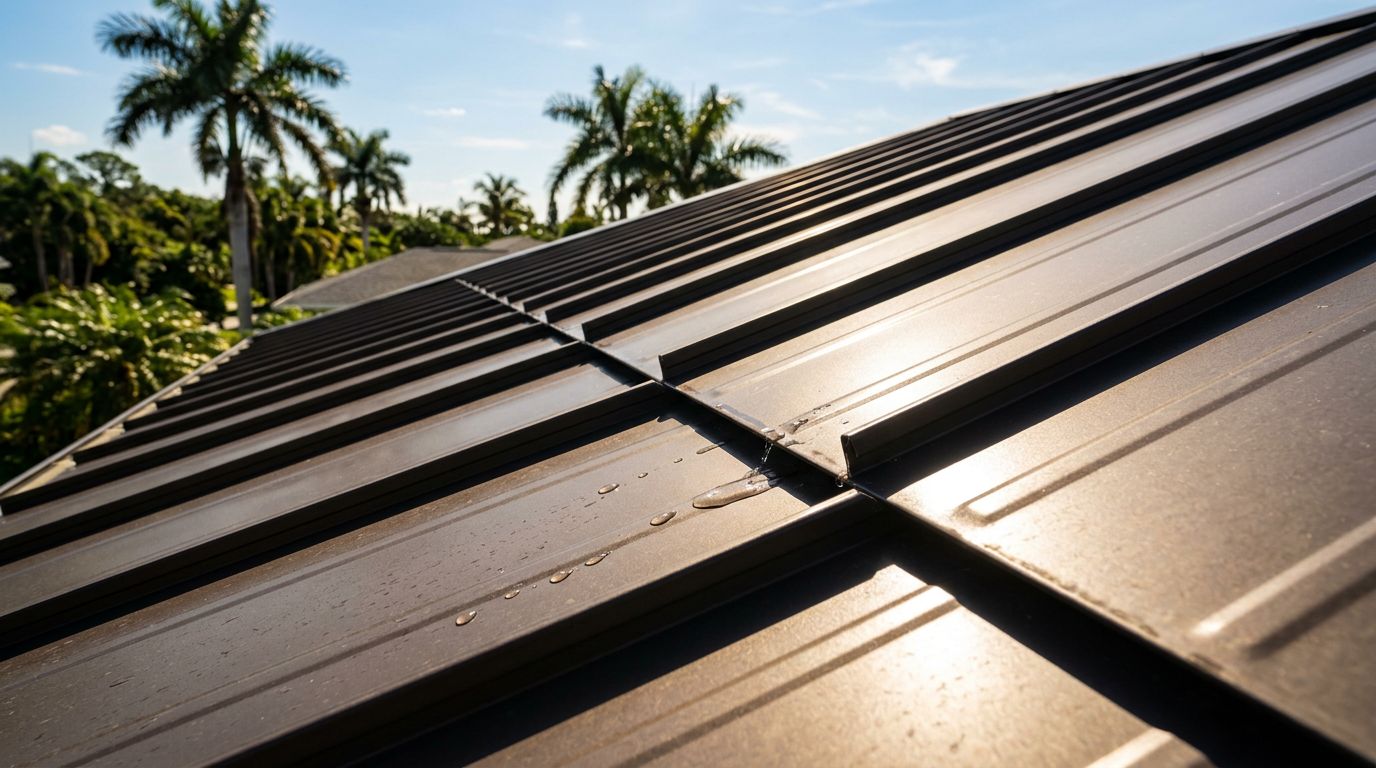
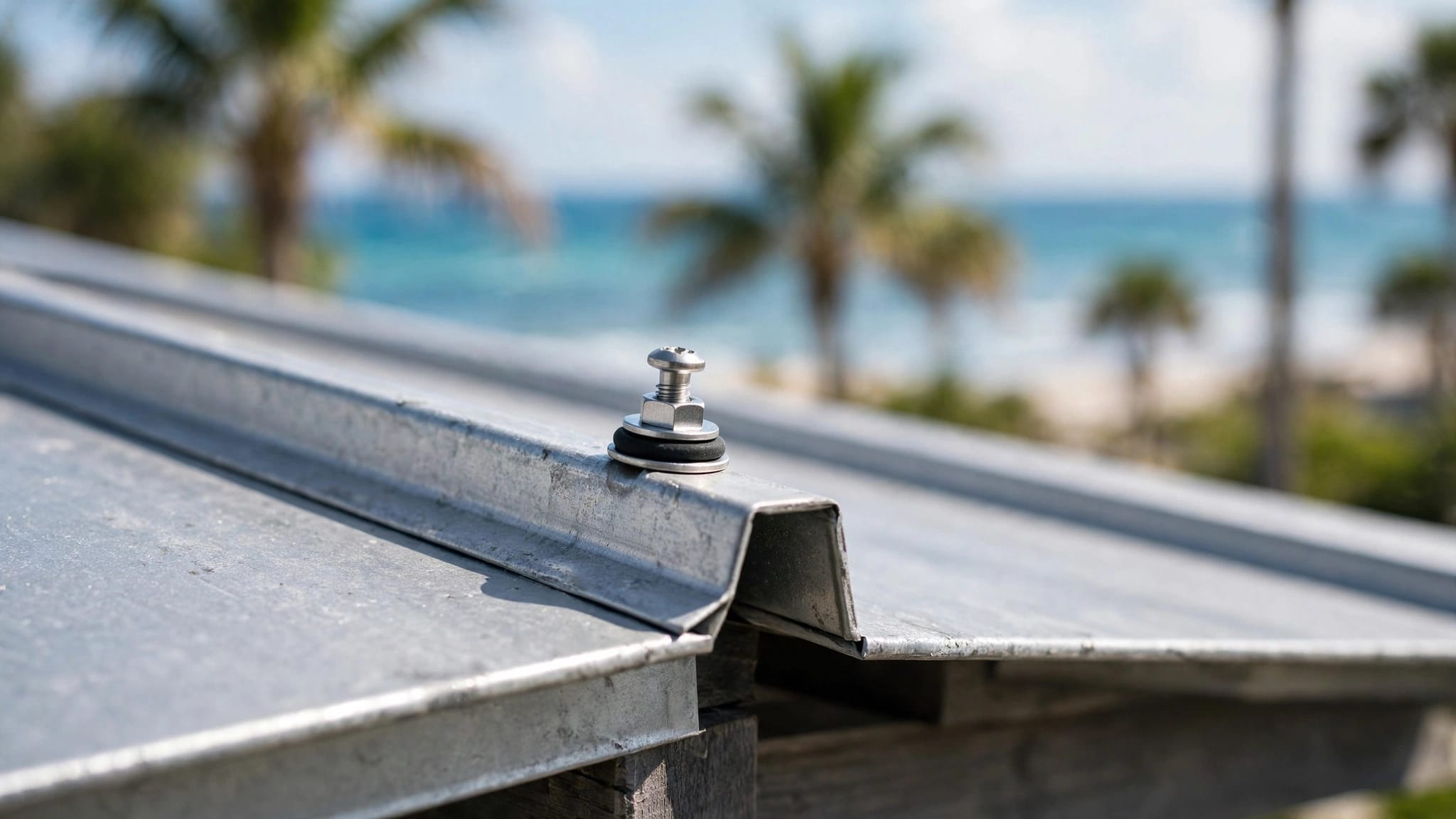
On a Florida roof, the safest default is simple, side laps should shed water downhill and face away from the prevailing rain-bearing wind . In practice, that usually means the upper panel overlaps the lower one, so rain has to travel over the joint, not into it.
That matters more here than in milder climates. Florida gets wind-driven rain, tropical storms, and long periods of heat and humidity, so a small mistake at a lap can turn into a leak, rust spot, or callback.
The short answer for Florida roofs
For most sloped metal roofs, the lap should work like roof shingles. Water should always run over the overlap, never into the open edge. If the panel system has a preferred installation direction, follow that direction first.
That last part is important. Some profiles have a fixed side-lap sequence. Others rely on the installer to start on the correct gable side so the lap stays closed against the usual wind. If you ignore the product layout, the roof may still look fine from the ground, but the seam can fail when rain pushes sideways.
A good rule is this: face the lap so the wind and rain hit the cover, not the opening . That gives the panel a better chance to keep water out during a summer storm or a hurricane band.
Why Florida weather changes the answer
In a dry climate, a sloppy lap might stay hidden for a while. In Florida, wind-driven rain can force water sideways under a seam in minutes. That is why the direction of the lap is not a small detail.
Coastal roofs need extra care. Salt air, wet debris, and repeated storms make any gap more damaging. If water sits at a lap, it can work its way into fastener holes and cut edges. Over time, that speeds up corrosion.
Roof slope matters too. A steeper roof sheds water faster, so the lap has less time to hold moisture. A lower-slope roof keeps water near the seam longer. That means the lap direction, sealant use, and underlayment details all matter more on shallow pitches.
On Florida jobs, the right lap direction is part water control and part wind control.
The best installers think about both at the same time. They look at the panel profile, the roof pitch, and the direction storms usually hit the building.
Correct vs. incorrect lap orientation
The right setup depends on the panel, but the logic stays the same. The seam should close against the weather, not open toward it.
| Situation | Correct approach | Wrong approach |
|---|---|---|
| Standard ribbed or corrugated panels | Install so the overlapping side sheds water over the joint | Flip the lap so wind can blow under the edge |
| 5V Crimp roof panels | Match the overlap direction to the approved install pattern and fastener layout | Guess the direction and change the panel sequence on site |
| Low-slope roof | Use the documented overlap, sealant, and underlayment details | Rely on a dry-fit seam with no weather check |
| Coastal exposure | Keep laps tight and consistent, with approved accessories | Leave a loose edge that salt spray can reach |
A simple example helps. If a storm usually drives rain from the southwest, the roof should be laid out so that side lap does not open toward that wind. If the system calls for starting on a specific gable end, that starting point matters because it sets the direction of every lap that follows.
On exposed-fastener panels, the mistake is easy to spot. The installer may turn a sheet so the exposed edge faces the strongest wind. That can let gusts lift the panel edge and push water under the lap. On a standing seam roof, the issue looks different, but the same rule applies, the seam has to lock in the direction the system was designed for.
Check the product sheet before the first panel goes up
This is where many jobs go off track. A roofer can know metal roofing well and still install the wrong lap direction if the panel profile has a special requirement.
Before fastening anything, the crew should review the exact product documents. The metal roofing installation instructions are the first place to check, because they spell out the approved sequence, overlap, and fastening details. For bigger projects, the installation manuals help tie the panel layout to the framing and trim.
A few job types deserve extra attention:
- Standing seam systems often have a fixed seam method, so the lap direction is part of the design.
- 5V Crimp and similar exposed-fastener panels need the lap and screw pattern to work together.
- Low-slope roofs may need more overlap or sealant than a steeper roof.
- Coastal homes should be checked for corrosion-resistant accessories and approved attachment details.
For 5V roofs, the 5V crimp fastener placement guide is especially useful because lap direction and fastener placement affect each other. If the fasteners are right but the overlap faces the wrong way, the roof still has a weak point.
Local code and the manufacturer's approval package matter too. A panel system is usually tested as a full assembly, not as loose parts. Changing the lap direction can change how the roof performs under wind and rain.
Conclusion
For Florida, the safest answer is clear, metal roof side laps should face so they shed water over the seam and stay closed against the prevailing rain-bearing wind . That usually means shingle-style overlap, but the exact direction still depends on the panel profile, roof slope, and approved installation method.
When the product sheet gives a direction, follow it. When it does not, check the wind exposure, the slope, and the local code before the first sheet goes down. That small decision can be the difference between a roof that handles Florida weather and one that lets it in.
Share Our Metal Roofing News Articles
Related Posts