Can You Pressure Wash a Metal Roof in Florida?
A metal roof can handle Florida weather, but the wrong wash can damage it fast. Pressure washing sounds simple, yet high PSI can push water under seams, loosen sealants, and strip a painted finish.
The right method depends on the panel type, coating condition, roof pitch, and buildup on the surface. In Florida, you also have to think about algae, mildew, salt spray, and storm debris.
If you want the roof clean without risking the finish, start with the roof itself, not the machine setting.
Can You Pressure Wash a Metal Roof in Florida?
Yes, sometimes you can. That does not mean it should be the first choice.
A newer roof with sound coatings, tight seams, and manufacturer approval may handle a careful wash. A roof with worn paint, rust spots, loose fasteners, or failing sealant needs a much gentler touch. The same goes for roofs with a steep pitch or hard-to-reach areas.
Florida makes the answer more complicated. Humidity feeds algae and mildew. Coastal air leaves salt residue. Summer storms drop leaves, branches, and other debris that hold moisture against the panels. So cleaning matters, but the method matters more.
That is why many owners start with cleaning your metal roof guidance before they ever bring out a pressure washer. A quick rinse may be enough for loose dust or salt film. Heavy spray is not always the better clean.
High pressure can clean quickly, but it can also force water where it does not belong, under seams, around fasteners, and into weak sealant lines.
Pressure Washing vs Soft Washing on Metal Roofs
Pressure washing uses force to remove dirt. Soft washing uses a cleaner and low pressure to lift grime, then rinses it away. For a metal roof, that difference matters more than many people think.
Here is a simple comparison:
| Method | Best for | Main risk | Florida use case |
|---|---|---|---|
| Pressure washing | Heavy dirt on sturdy, approved roofs | Coating damage, water intrusion, fastener stress | Only on some roofs, and only with care |
| Soft washing | Algae, mildew, mildew stains, light grime | Wrong cleaner or poor rinse | Often the safer choice for most roofs |
| Low-pressure rinse | Dust, pollen, salt film, loose debris | Not strong enough for buildup | Good first step after dry weather |
The table tells the story. The least forceful method that gets the job done is usually the safest one.
A high-PSI spray can do real harm to metal panels. It can dent thinner material, peel protective coatings near scratches, and drive water under laps or ridge details. On exposed-fastener roofs, it can also stress the washer seals around screw heads. Once water gets past those points, small leaks become expensive repairs.
Soft washing is often better for mildew and algae because the cleaner breaks down the growth instead of blasting it off the surface. That helps protect the finish and lowers the chance of pushing water where it should not go. It also fits the routine care most owners want, which is why many people keep metal roof maintenance essentials in mind before they pick a cleaning method.
Florida Problems That Change the Cleaning Method
Florida roofs deal with more than dirt. The climate changes what you see on the panels and how you should treat it.
Mildew and algae often show up on shaded roof sections, especially on the north side or under trees. These stains are common after long humid stretches. They do not always mean the roof is failing, but they do mean the surface needs attention.
Salt residue is another issue, even for homes that are not right on the beach. Coastal breezes carry fine salt that settles on the roof and dries into a dull film. Over time, that film can hold moisture and dull the finish. A gentle rinse is usually the right move here, not a hard blast.
Storm debris changes the picture again. Palm fronds, twigs, seed pods, and blown trash can trap water in valleys and around fasteners. If you spray that debris with too much force, you may drive grit into seams or scratch the coating as it moves.
Before you wash after a storm, take a careful look first. If you need a starting point, use a post-storm metal roof checklist and note anything bent, loose, or stained. A roof that needs repair should be inspected before it gets cleaned.
Cleaning on a cooler morning also helps. Hot metal dries fast, so cleaners can flash-dry and leave streaks. Wet metal is slippery too, so timing affects safety as much as results.
Roof Type, Coating Condition, and Pitch Matter
The right cleaning method depends on roof type, panel/coating condition, manufacturer guidance, pitch, and buildup present. That sentence is the real answer to the question.
Standing seam roofs usually handle weather better than systems with exposed fasteners, because the fasteners are hidden. Still, the seams, clips, and trim pieces need care. Even on a strong system, a spray aimed the wrong way can force water into joints. If you are comparing panel styles, standing seam panels show why concealed fasteners change both maintenance and cleaning.
Exposed-fastener roofs, including many 5V-style systems, need extra caution. The washer seals around the screws age over time. High pressure can hit those points hard and shorten their life. If the finish around the fasteners is already worn, a forceful wash can make the problem worse.
Roof condition matters just as much. If the coating is chalky, peeling, or faded, pressure washing can strip away more of the protective layer. If you see rust, pitting, or cracked sealant, stop and inspect before you clean. The roof may need repair, not pressure.
Pitch matters too. A steep roof is harder to stand on, harder to aim at, and easier to damage by accident. Even if the panels can take some spray, the person doing the work may not be safe on the roof. In those cases, a licensed roofing professional is the better call.
A Safer Way to Clean Most Metal Roofs
Most metal roofs do not need a harsh wash. They need a careful routine.
- Start with a ground-level inspection. Look for bent trim, lifted edges, rust, or heavy debris.
- Remove loose material by hand or with a soft blower. Do not grind leaves and grit across the coating.
- Test a mild cleaner on a small spot. Check the roof maker's instructions first.
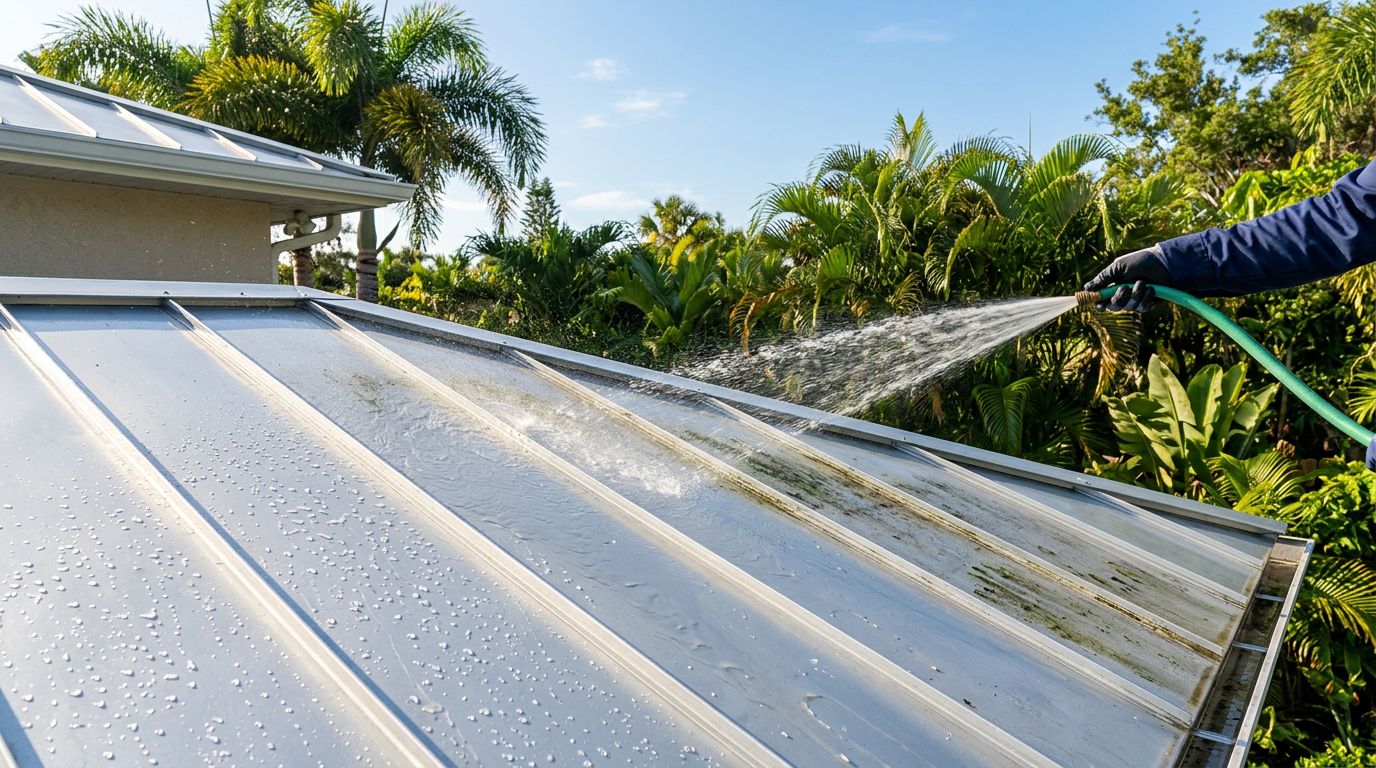
- Rinse from top to bottom with low pressure. Keep the spray moving and avoid forcing water under laps.
- Check fasteners, seams, sealants, and flashing after the roof dries.
A soft-bristle brush can help on stubborn areas, but heavy scrubbing can mark the finish. Use light pressure and let the cleaner do the work. If you need a little more help, a low-pressure wash with the right nozzle is better than a full-pressure blast.
Safety matters just as much as the cleaning product. Use non-slip footwear, keep clear of hot panels, and do not work alone on a steep roof. Florida roofs can get slick from humidity, even when they look dry.
If the roof is high, fragile, or under warranty, hire a licensed roofing professional. That is especially smart when the roof has old sealant, coated panels, or storm damage. A short service call is cheaper than repairing leaks or repainting panels later.
When Pressure Washing Is the Wrong Call
Sometimes the best answer is no.
Avoid pressure washing if the roof has loose fasteners, aging caulk, peeling paint, open seams, or visible rust. Skip it if the roof manufacturer warns against it. Skip it again if the roof is too steep for safe footing. If the roof is already damaged, pressure can turn a small issue into a bigger one.
This is also the time to think about warranties. Some metal roofing warranties limit cleaning chemicals, spray angle, or pressure levels. Others require maintenance to follow written instructions. If you ignore that guidance, you may void coverage that could have helped later.
A roof with light dust, pollen, or salt film usually does not need aggressive cleaning anyway. A rinse, a soft brush, and a mild cleaner often do the job. Heavy force is useful on driveways. It is much riskier on roof panels.
Conclusion
Pressure washing a metal roof in Florida is possible in some cases, but it is not the default choice. The safest method depends on the panel type, the coating, the pitch, the buildup, and the roof's condition.
Florida adds its own problems, like mildew, salt residue, and storm debris. Those issues call for care, not brute force. If you are unsure, check the manufacturer instructions first and bring in a licensed roofing professional when the roof is steep, old, or damaged.
A clean roof matters. A clean roof with intact coatings, tight seams, and dry fasteners matters more.
Share Our Metal Roofing News Articles
Related Posts