How Long Should Metal Roof Screws Be in Florida?
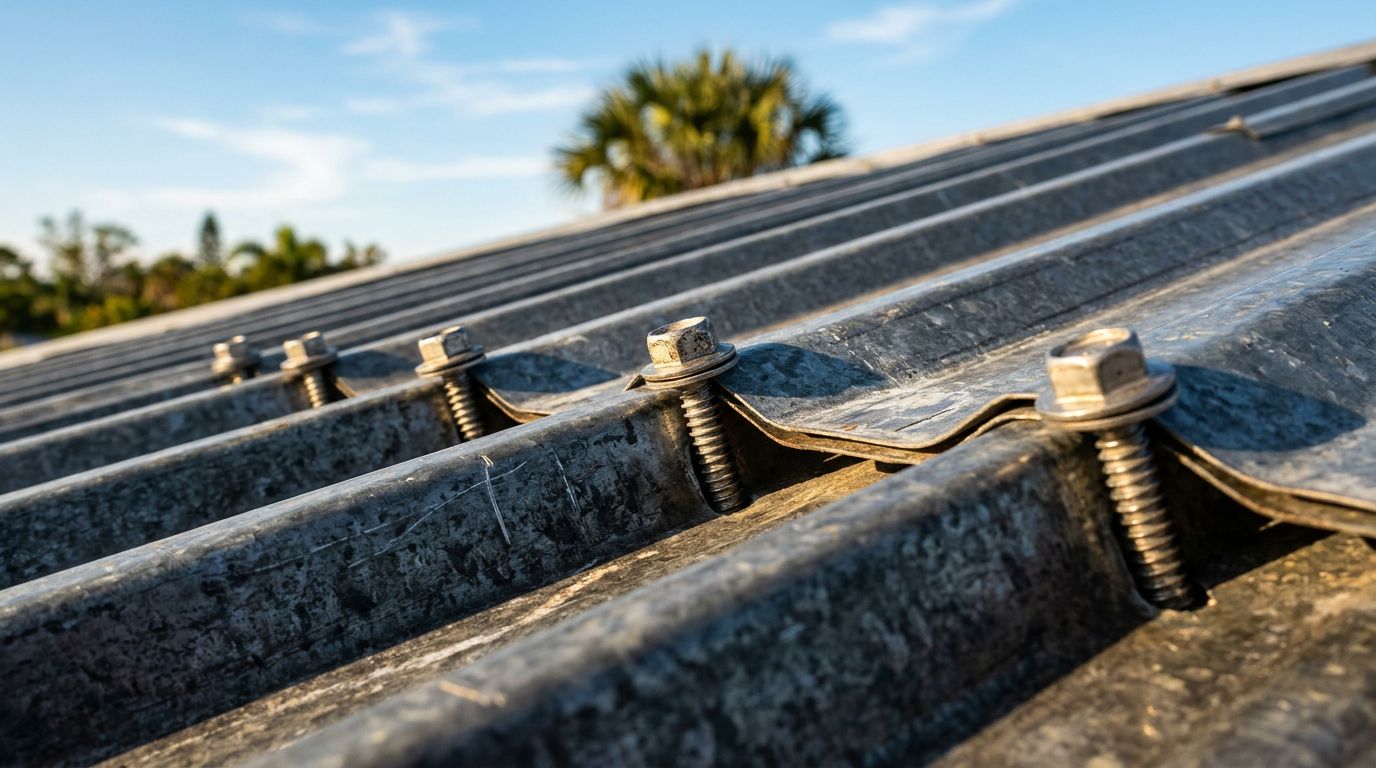
If you're asking, "How long should metal roof screws be in Florida?" the short answer is usually 1 inch to 1.5 inches for many residential jobs. That range works when the screw has to pass through the panel and still bite firmly into the wood or steel below.
The real answer depends on the roofing panel, underlayment, deck or purlin material, and the manufacturer's fastener schedule. Florida adds another layer, because wind uplift, hurricane exposure, and coastal corrosion can change what is acceptable on a roof.
The usual screw length range for Florida roofs
For many through-fastened metal roofs, 1-1/4 inch and 1-1/2 inch screws are the most common starting points. A 1-inch screw can work on thinner assemblies, especially on trim or light accessories. On thicker builds, 2-inch screws may be the better fit.
| Roof setup | Common screw length | Why it fits |
|---|---|---|
| Ribbed or corrugated panels over plywood | 1-1/4 to 1-1/2 inches | Gives the screw enough bite into the deck |
| Trim, flashing, and small accessories | 1 inch | Helps avoid bottoming out in thin metal |
| Thicker assemblies or double layers | 1-1/2 to 2 inches | Reaches through more material cleanly |
| Clip-based standing seam parts | Varies by system | Clips and trim often use a different fastener spec |
That table is a guide, not a replacement for the product approval. Florida roof systems are tested as assemblies, so a guessed screw length can miss the mark. The state code materials for roof assemblies explain why wind resistance and approved installation matter, and the rules for metal roof panels are laid out in Florida's roofing code guidance and the Chapter 15 roof assembly section.
What changes the screw length
The panel profile changes the answer fast. A PBR panel, a 5V panel, and a standing seam system do not all use the same fastener approach. Rib height, panel thickness, and lap details all affect how much screw you need.
The substrate matters just as much. Plywood, OSB, wood purlins, and steel purlins all hold screws differently. Underlayment also changes the stack height, which can push you up or down a size. That is why proper PBR panel fastener placement matters so much on Florida roofs.
Fastener type matters too. Hex-head screws and pancake-head screws do different jobs, so a screw can be the right length and still be the wrong tool for the task. If you're comparing head styles, metal roof screw types explained helps separate panel attachment from trim work.
How to measure the stack before buying
Measure the full roof stack, not just the metal panel. That means panel thickness, underlayment, spacer material if present, and the deck or purlin thickness below it.
A screw that barely reaches the base material can lose hold long before the roof should.
Use this simple order when you size screws:
- Measure the combined thickness of the panel and everything under it.
- Add the penetration needed into the base material, often at least 3/4 inch.
- Check the manufacturer's installation sheet for the exact fastener schedule.
- Test one screw in a scrap area before you buy the full order.
This is where many jobs go wrong. A screw that is too short may not hold in a wind event. A screw that is too long can crush washers, snag hidden layers, or create an ugly finish at the underside of the deck.
Florida wind, corrosion, and coastal conditions
Florida roofs face stronger wind concerns than many other places. Edge zones, corners, and ridge areas often take more uplift than the field of the roof. That means the fastener pattern, not just the screw length, has to match the approved system.
On standing seam projects, clip spacing and fastener choice work together. If the clip layout changes, the screw spec can change too. For clip-based jobs, standing seam clip spacing is part of the fastening plan, not an extra detail to sort out later.
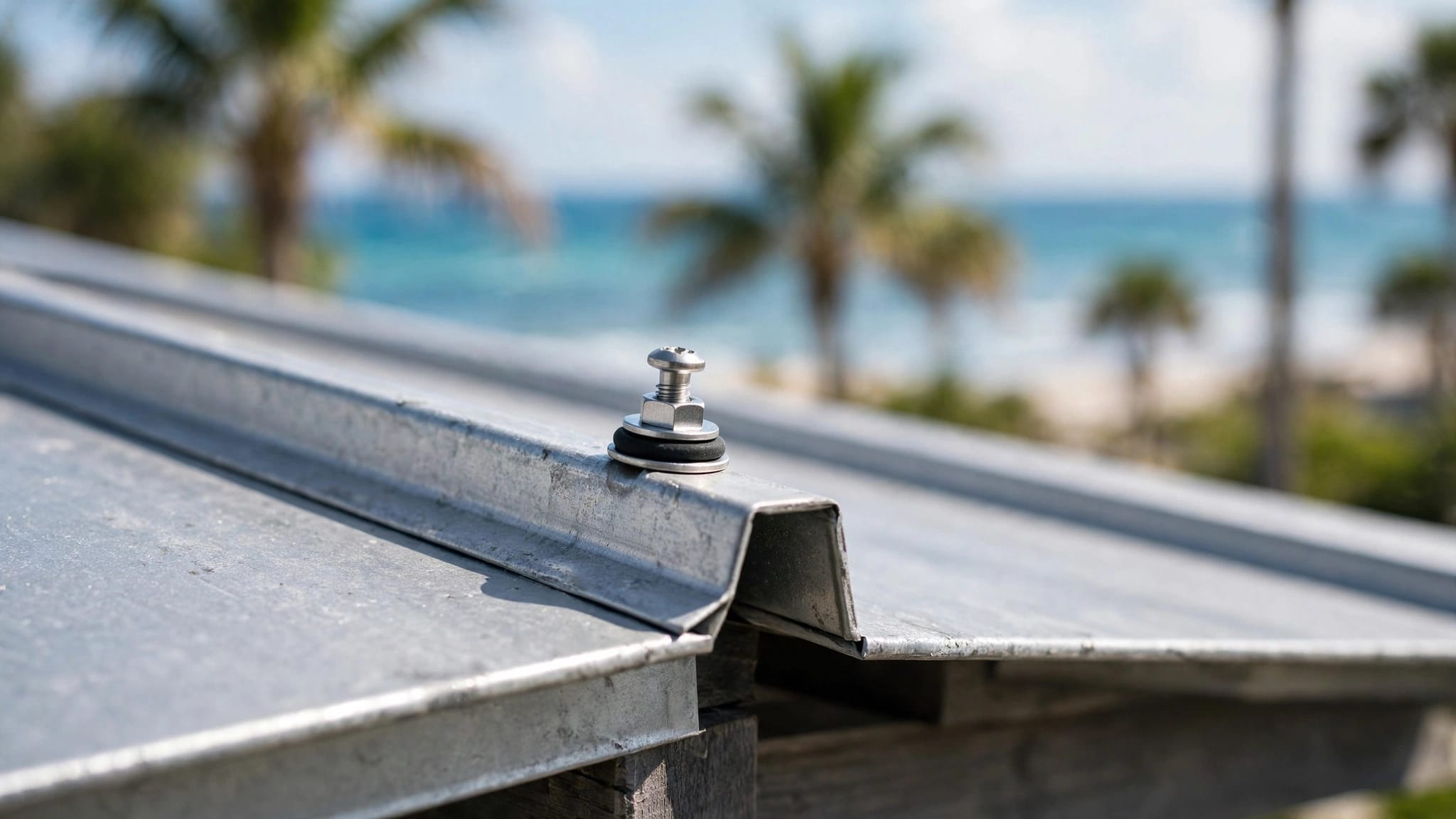
Coastal homes need another layer of caution. Salt air can eat away at weak coatings and low-grade fasteners. That is why corrosion-resistant screws matter so much near the Gulf and Atlantic sides of the state. Florida code language also points to corrosion resistance for roof fasteners, so the finish on the screw is just as important as its length.
In other words, don't choose the cheapest box on the shelf and hope for the best. A roof in Florida has to stay tight, sealed, and secure through heavy rain, heat, and wind.
Mistakes that lead to leaks or pullout
A few mistakes show up again and again on metal roof jobs:
- Buying screws by length alone without checking the panel approval.
- Forgetting the underlayment or spacer layer when measuring the stack.
- Using the wrong head style for the panel or trim.
- Overdriving the washer until it flattens or splits.
- Reusing old screws with worn coatings or damaged threads.
If a screw is overdriven, the washer stops doing its job. If it is underdriven, wind can work the panel loose. Both problems cost more to fix than buying the right fastener the first time.
Conclusion
For many Florida roofs, the best starting point is 1 inch to 1.5 inches , but the correct metal roof screw length depends on the full assembly. Panel type, deck or purlin material, underlayment, and manufacturer instructions all matter.
Florida's wind exposure and coastal conditions make that choice even more important. Check the current code guidance, follow the approved fastening schedule, and match the screw to the roof system, not the other way around.
Share Our Metal Roofing News Articles
Related Posts