Dormer Flashing Guide for Florida Metal Roofs
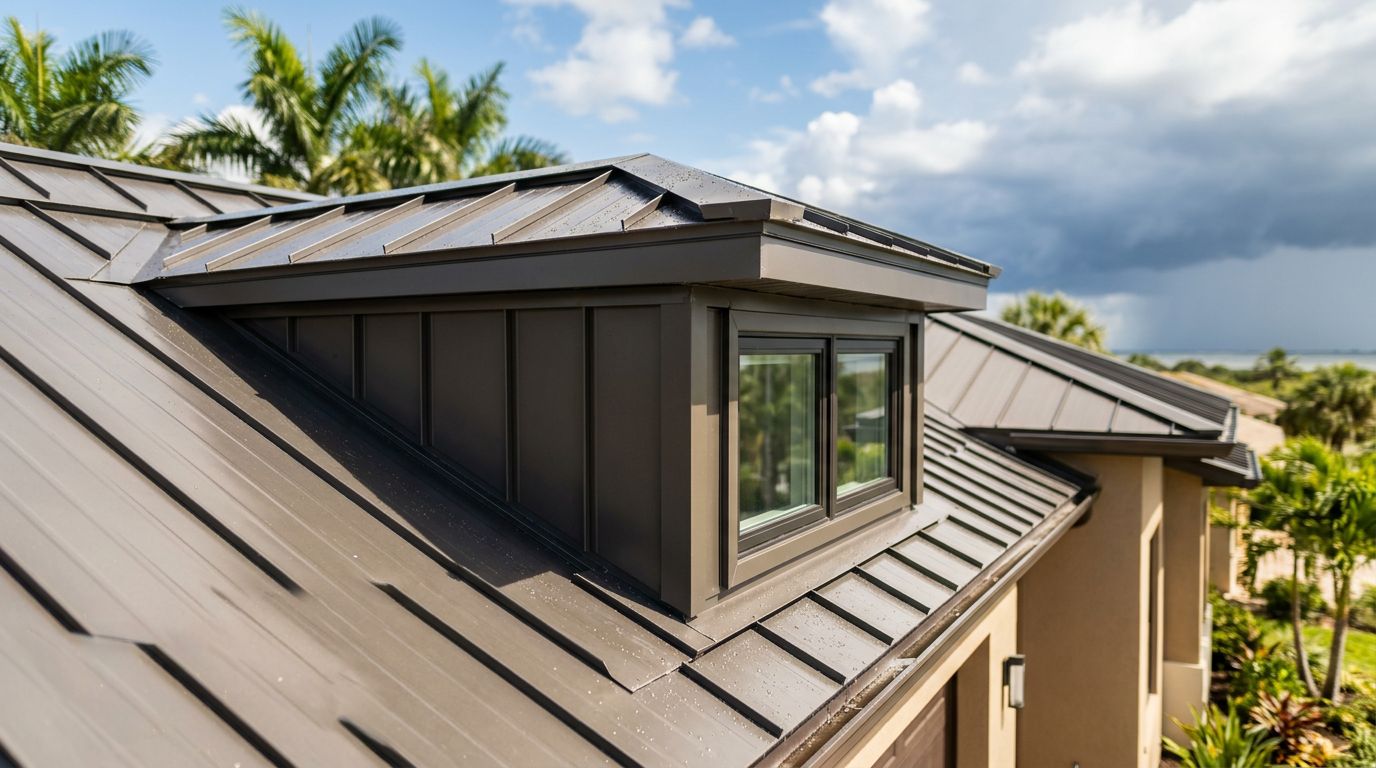
Florida storms hit hard. Rain drives sideways, winds push water uphill, and salt air eats at metal fast. Dormers add extra risk because they stick out from the main roof slope. A weak spot there turns your attic into a drip zone after the next downpour.
You face leaks if flashing fails around those dormer walls. Homeowners call contractors, property managers chase repairs, and everyone pays more. This guide shows you solid dormer flashing for dormer flashing Florida metal roofs. It covers materials, failures, and steps that hold up in humidity and hurricanes.
Why Dormer Flashing Matters on Florida Metal Roofs
Dormers create joints where roof meets wall. Water pools there during heavy rain. Metal roofs shed most runoff well, but dormers interrupt that flow.
Florida makes it tougher. High humidity keeps everything damp. Coastal salt speeds rust on cut edges. Storms like recent hurricanes lift loose trim. Poor flashing lets water sneak under panels.
Code backs this up. The 2023 Florida Building Code requires corrosion-resistant metal at those junctures. It must match roof panels and seal tight. In high-velocity hurricane zones, tested systems rule. Follow manufacturer details too.
Think of dormer flashing like a gutter on a house corner. It channels water away instead of letting it swirl. Skip it, and rot starts in sheathing. Get it right, and your roof stays dry for decades.
Underlayment ties in first. Self-adhered membranes turn up the dormer base. Then flashing laps over that. Panels and trim finish the seal. Each layer works together, or water finds a path.
For similar openings, check this roof curb flashing guide for Florida metal roof openings. Same principles apply to dormers.
Top Materials for Durable Dormer Flashing in Florida
Choose materials that fight salt, heat, and wind. Match them to your panels to avoid corrosion. Galvanic reaction between unlike metals ruins jobs fast.
Aluminum works great near coasts. It resists salt spray and stays light. Galvalume steel handles inland humidity well. Its coating lasts 50 years or more. Stainless steel fits harsh spots, but costs extra.
Thickness counts. Code calls for at least 0.019-inch aluminum or equal. Heavier gauge stiffens pieces against wind flutter.
Sealants support, not lead. Butyl tape compresses at laps and flexes with metal movement. Avoid cheap caulk that cracks in sun.
Fasteners need coatings too. Use Florida Product Approved ones. They grip through cycles of expansion.
Here's a quick match-up:
| Material | Best For | Watch For |
|---|---|---|
| Aluminum | Coastal salt air | Softer; dent risk |
| Galvalume | Humidity, storms | Inland preferred |
| Stainless | Extreme exposure | Higher price |
Order custom pieces up to 21 feet. For tips, see how to order custom metal roof trim without mistakes.
Panels like PBR or standing seam change flashing shape. Closures fill rib gaps. Always profile-match.
Where Dormer Flashing Fails Most in Florida
Leaks show up fast here. Post-hurricane checks find 80 percent tied to flashing. Water enters nail holes or loose laps.
Common spots: Base of dormer walls. No counterflashing lets runoff track back. Side joints lift in wind if fasteners back out. Tops pool without proper head flashing.
Salt air rusts raw edges. Humidity swells wood substrates, loosening screws. Storms peel sealant-only fixes.
Spot trouble from ground level. Look for stains below dormers. Rust streaks mean metal clash. Gaps at panel-trim hems signal movement stress.
Attic checks reveal more. Damp insulation or daylight at joints scream failure.
| Failure Sign | Likely Cause | Quick Fix Path |
|---|---|---|
| Stains on walls | Reverse laps | Re-lap shingle style |
| Rust lines | Mixed metals | Match materials |
| Loose trim | Wrong fasteners | Upgrade to coated |
See metal roof flashing details that fail in Florida for visuals on repeats.
Older roofs worsen. Heat cycles work seams apart. Inspect before re-roof. Upgrade if over 25 percent changes.
Step-by-Step Dormer Flashing Installation
Start dry. Prep underlayment first. Self-adhered turns up dormer sides at least 6 inches.
- Cut opening clean. Flash base apron first. It sheds water from front.
- Install step flashing on sides. Each piece overlaps underlayment. Lap shingle-style down slope.
- Add head flashing at top. Bend over dormer front. Seal edges with butyl.
- Fit side counterflashing. Tuck into wall or reglet. Fasten per code spacing.
- Install panels over. Use closures at ribs. Screw where details call, not in water paths.
- Seal laps. Butyl tape compresses. Skip exposed caulk beads.
Panel type shifts details. Standing seam needs movement joints. Exposed fastener uses rib-matched trim.
For nearby skylights, this skylight flashing guide for Florida metal roofs compares well.
Work in wind-protected stages. Debris free helps seals grip. Final sweep catches shavings that rust.
Keep Your Florida Metal Roof Dormer Dry Long-Term
Dormer flashing stops most leaks when done right. Pick salt-tough materials, lap smart, and seal secondary. Florida code and storms demand it.
Check yearly after big rains. Spot issues early, fix before rust spreads. Your roof lasts longer that way.
Homeowners and contractors save headaches with matched systems. Order precise trim, follow steps, and stay dry.
Share Our Metal Roofing News Articles
Related Posts