Roof Curb Flashing Guide For Florida Metal Roof Openings
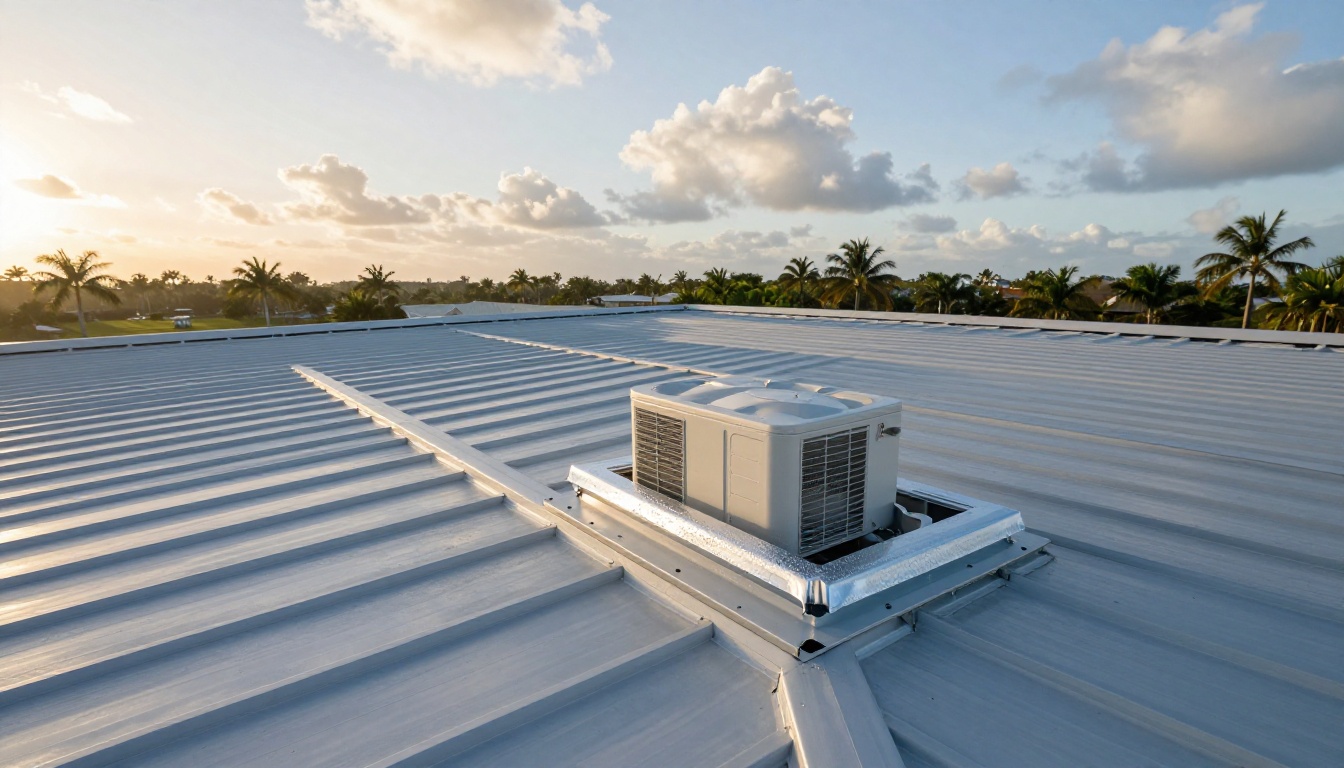
A metal roof can shed huge amounts of rain, but one badly detailed opening can undo all of that work. On Florida buildings, roof curb flashing often decides whether an HVAC curb stays dry or turns into a leak path during the next hard storm.
That matters because Florida rain rarely falls straight down. Wind pushes water uphill, heat moves metal every day, and coastal air speeds up rust. If you own, build, or manage a property here, the curb detail deserves more attention than it usually gets.
Why roof curb flashing matters more in Florida
A roof curb is the raised frame around a roof opening, usually for HVAC units, exhaust fans, or other mechanical equipment. The flashing around that curb has one job, move water away from the opening while staying tight under wind pressure. Think of it like the cuff on a rain jacket. The jacket fabric can be fine, yet the cuff still decides whether water gets in.
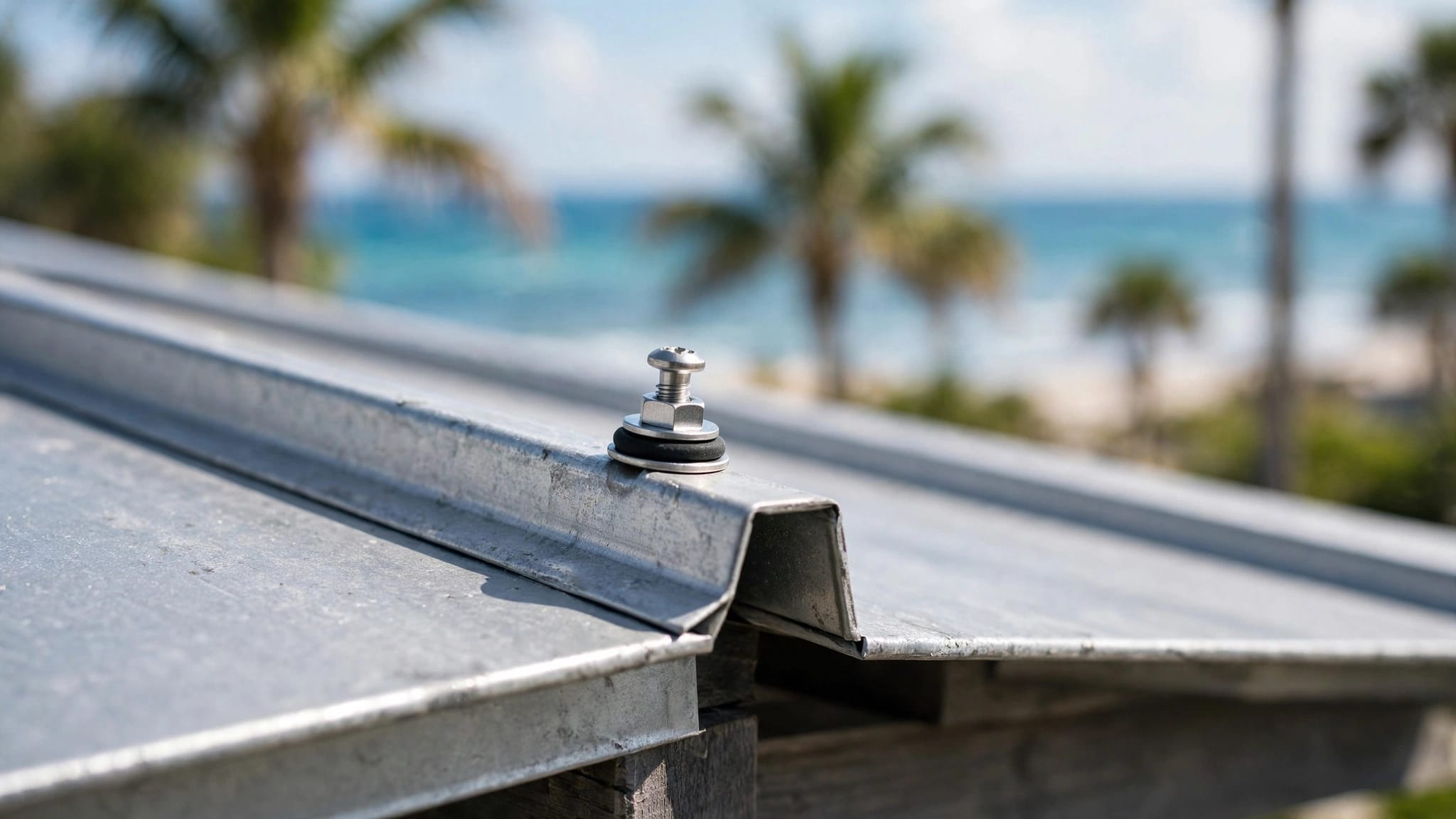
Florida makes that job harder. First, wind-driven rain can push water under loose laps and exposed fasteners. Next, long metal panels expand in the sun and pull back as clouds roll in. Then salt air, especially near the coast, starts working on every cut edge, screw head, and mixed-metal contact point.
As of March 2026, many Florida jurisdictions are still enforcing the 8th Edition Florida Building Code (2023). However, the final call always comes from the local building department and the approved roof system details for that project. That matters because curb flashing has to work with the full assembly, not as a stand-alone patch.
A good curb detail also depends on the panel profile. Standing seam, PBR/R, AG panel, and 5V all shed water differently. The curb flashing has to match the panel shape, panel movement, and fastening method. A flat curb flange forced over high ribs is like trying to fit a square lid on a ribbed cooler, it looks close until water finds the gaps.
If you want a quick refresher on trim names and metal roof terminology, metal roof flashing types explained can help before you review quotes or details.
Materials and design choices that hold up in wind, rain, and salt air
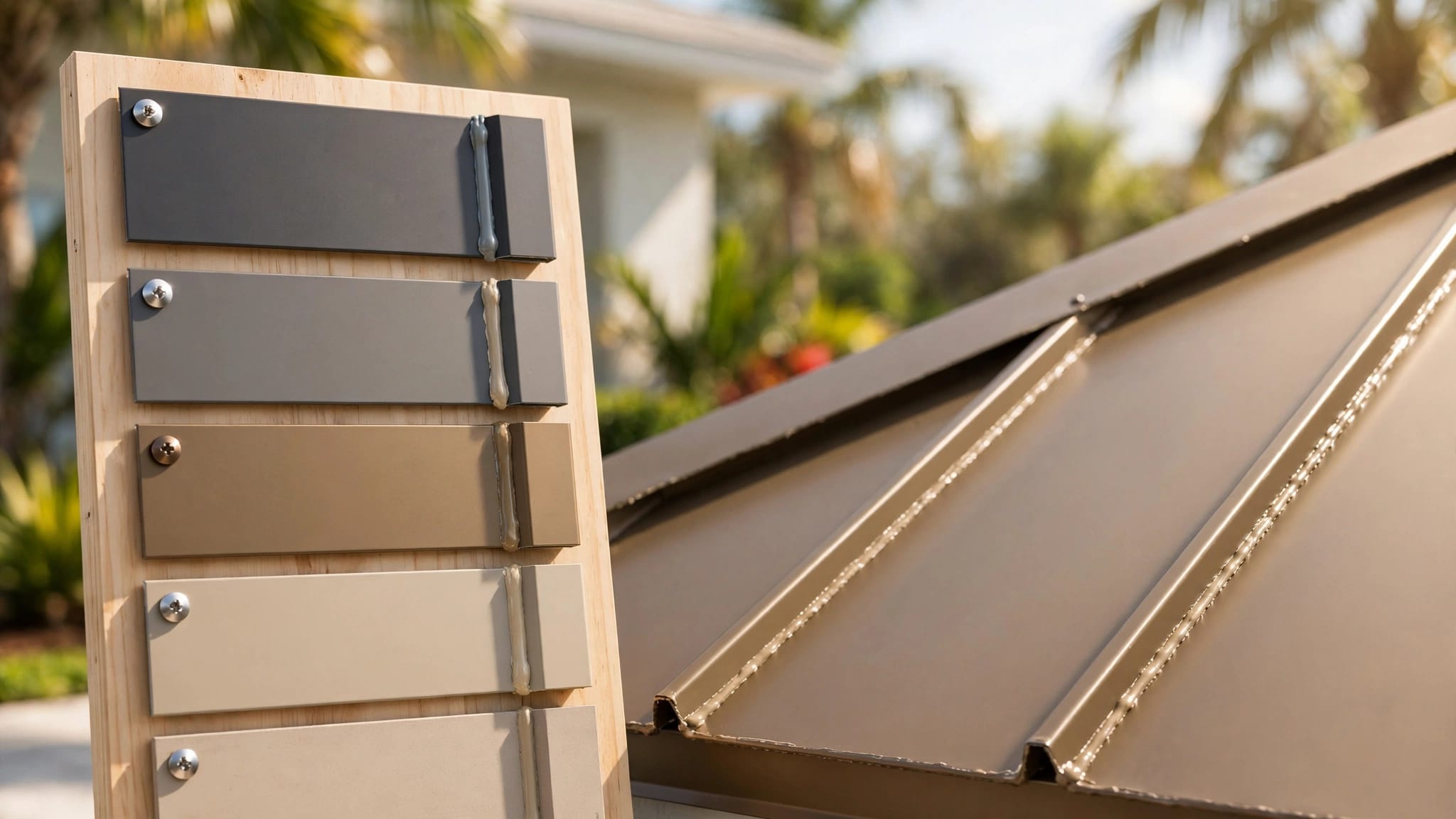
The best roof curb flashing detail starts with metal that belongs on the same roof system. In most Florida work, that means coated steel, aluminum, or stainless steel, depending on exposure and manufacturer approval. Mixing metals carelessly can trigger galvanic corrosion, and Florida humidity speeds that up.
This quick comparison helps narrow the field:
| Material | Where it works well | What to watch |
|---|---|---|
| Painted or coated steel | Inland projects, many standard roof systems | Protect cut edges, avoid damaged coatings |
| Aluminum | Coastal areas, lighter trim pieces | Match fasteners carefully, softer metal can deform |
| Stainless steel | Harsh coastal exposure, high-corrosion areas | Higher cost, must match system details |
| Galvanized or Galvalume steel | Common on many metal roofs | Don't pair with incompatible metals or cheap fasteners |
Sealants matter too, but they should support the detail, not become the detail. Butyl tape is often a better primary seal at laps because it stays compressed and flexible. By contrast, exposed surface caulk can crack, shrink, or separate under UV and movement.
Fastener choice is another place where good jobs go bad. Florida wind loads can be tough, and curb corners see a lot of pressure. Use the screw type, spacing, and substrate attachment called for by the panel maker and the approved assembly. In HVHZ areas, spacing may be much tighter than on inland jobs. Guessing here gets expensive fast.
Profile compatibility also matters. A curb on a standing seam roof needs a different plan than one on an exposed-fastener panel. Some curbs need a welded or factory-made pan. Others need custom-bent trim, profile-matched closures, and a cricket on the upslope side to split water around the opening.
If a curb repair depends on exposed caulk alone, it won't stay reliable long in Florida weather.
Round pipes are a separate detail entirely. For smaller penetrations, Florida vent pipe flashing guidance is more useful than curb flashing rules.
How to detail HVAC curbs on metal roofs without creating leak points
A sound roof curb flashing detail follows the path of water first. That means every piece should lap shingle-style, stay out of the main water channel, and leave room for the roof panel system to move.
Here is the basic sequence most Florida metal roofs need:
- Start with curb location and height : Keep the curb out of valleys and heavy drainage paths when possible. Low curbs in high-flow areas invite trouble.
- Tie the underlayment into the curb : The secondary water layer should turn up the curb and overlap correctly, based on the roof system detail.
- Use an upslope diverter when needed : Larger curbs often need a cricket or saddle to split runoff and reduce backwater pressure.
- Match the flashing to the panel profile : Use formed trim, closures, and hems that sit tight to the ribs or seams.
- Keep fasteners out of water paths : Screws belong where the detail calls for them, not in the middle of the pan where runoff concentrates.
- Finish with compatible sealant and clean edges : Seal laps neatly, remove metal shavings, and protect exposed cuts.
The most common failure points are easy to spot once you know where to look. Watch for smeared roof cement, exposed screws in flat pans, loose side trim, missing closures, reverse laps, and rust lines where different metals touch. Also look for ponding on the upslope side of the curb. Water should split and move, not stall.
Standing seam roofs need extra care because the panels are meant to move. If the curb detail pins those panels too hard, the stress shows up later as split sealant, distorted trim, or fastener trouble. For related transition details, Florida roof-to-wall flashing details offer a useful comparison, because the same rule applies, shape and laps beat caulk-only fixes.
If you're checking an older roof, compare suspicious areas to these Florida-specific flashing red flags. Many leak patterns repeat from one opening to the next.
A curb opening is never a place for improvising. On a Florida metal roof, the right detail uses approved materials, matched profiles, smart drainage, and fastening that respects wind and movement.
Treat roof curb flashing like storm hardware, not trim. If a curb detail looks patched, forced, or sealant-heavy, fix it before the next sideways rain turns a small opening into a big repair.
Share Our Metal Roofing News Articles
Related Posts