Metal Roof Chimney Flashing for Florida Homes
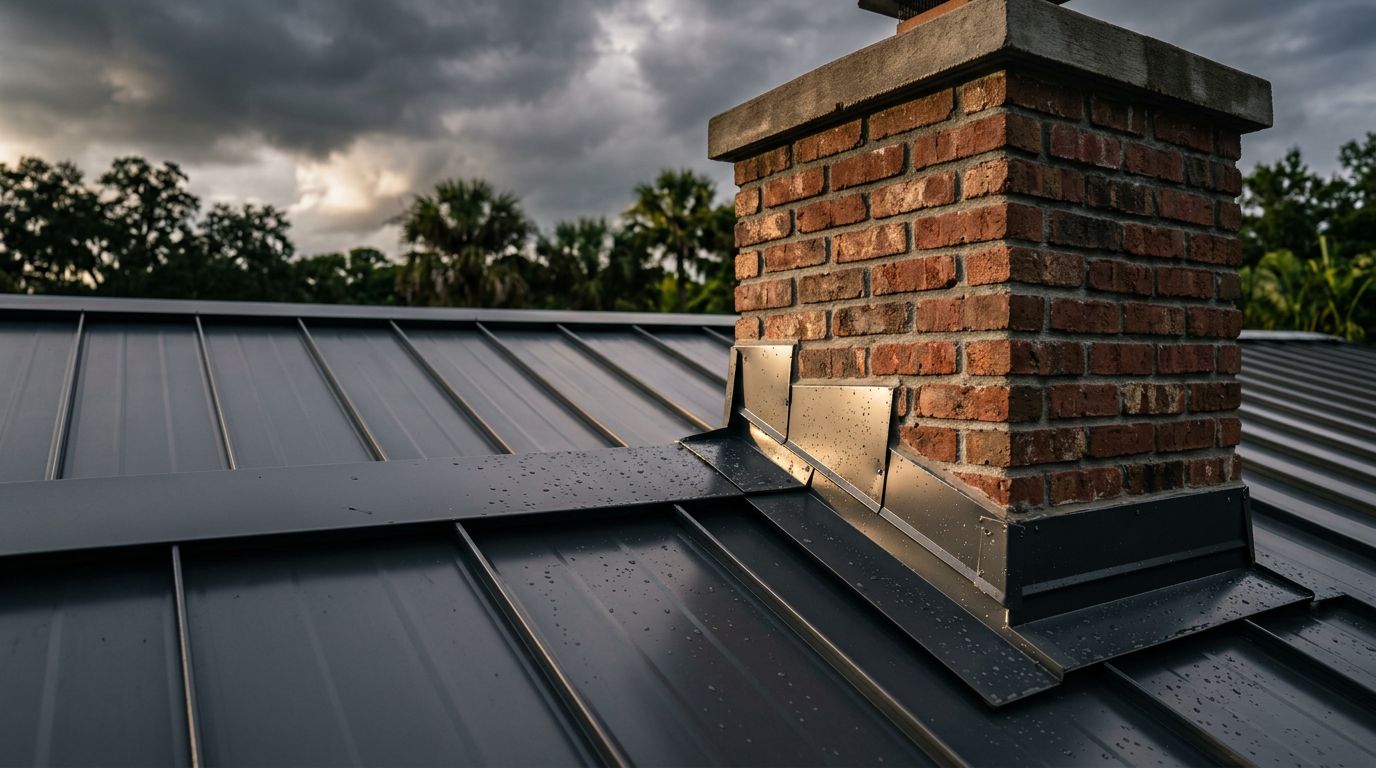
Florida rain doesn't tap politely. It blows sideways, piles up fast, and tests every joint around a chimney. When leaks show up near a fireplace, metal roof chimney flashing is often the weak spot.
A chimney is like a rock in a stream. Water hits it, splits, and swirls behind it. If the metal and masonry don't work together, that water finds a way inside.
Why chimney flashing fails so often in Florida
Florida weather is hard on roof details. Heat expands metal panels. Sudden storms cool them down. Near the coast, salt air speeds up corrosion. During tropical weather, wind can push water up under loose laps.
That mix punishes sloppy work fast. The biggest problem is over-reliance on caulk. Sealant helps, but it can't replace properly lapped flashing. Another common issue is movement. A metal roof moves every day, while a masonry chimney barely moves at all. If the flashing locks those parts together too tightly, joints crack or pull open.
As of March 2026, many Florida jurisdictions are still working under the 2023 code cycle. In practice, roofers still need corrosion-resistant flashing, sound counterflashing at masonry, and a cricket behind chimneys wider than 30 inches. Many approved residential assemblies also target wind ratings around 130 to 150 mph, depending on the county and system. Local code enforcement and the panel manufacturer's instructions make the final call. If you want to compare leak-prone details with better ones, this guide to common metal roof flashing mistakes is a helpful reference.
What a good metal roof chimney flashing detail includes
A durable chimney detail works in layers. The roof underlayment directs backup water. The base flashing pieces send runoff around the chimney. Then the counterflashing protects the top edge where water tries to get behind the metal.
At the front, an apron flashing moves water onto the roof surface. Along the sides, the flashing has to lap so water keeps traveling downhill. On some roof profiles, installers may use step-style side flashing pieces. On others, the manufacturer may call for custom continuous side flashing. At the back, a saddle or cricket splits the flow and keeps water from piling up on the uphill side of the chimney.
Sealant should back up the flashing detail, not replace it.
On masonry chimneys, counterflashing should usually be set into a reglet cut in the mortar joint, or use another approved mechanical termination. A face-sealed strip on brick may look neat on day one, but Florida sun and movement tend to break that bond.
Material choice matters, too. Common code-accepted metals include 26-gauge galvanized steel and .019-inch aluminum. Copper or stainless may fit some jobs, especially in harsh environments. Still, mixing metals without thinking through compatibility can trigger galvanic corrosion, which is a bigger risk in humid and coastal air.
Roof profile also changes the detail. Chimney size, roof slope, panel shape, and manufacturer rules all affect the finished flashing. That's why custom-bent trim often fits better than trying to force a generic kit. If you're matching parts to a roof system, these metal roof flashing profiles show how different trim shapes are used.
Standing seam and exposed-fastener roofs need different approaches
Both roof types need the same outcome, a watertight chimney detail that can handle storms. However, they get there in different ways.
This simple comparison shows the main difference:
| Roof type | Main concern at the chimney | Common failure |
|---|---|---|
| Standing seam | Allowing panel movement around raised seams | Rigid flashing that traps movement |
| Exposed-fastener panel | Managing rib openings and screw locations | Fasteners placed in water paths |
On standing seam roofs, the flashing has to respect thermal movement. Custom side and back pieces usually work better than a one-piece frame around the chimney. When the detail fights movement, seams can stress, sealant can split, and leaks return.
On exposed-fastener roofs, the panel ribs create extra openings that need closures, shaped trim, or approved sealant lines. Fastener placement also matters more. A screw driven where runoff concentrates is like putting a pinhole in a raincoat. Water may not show up right away, but it eventually will.
Either way, a wide masonry chimney should have a cricket behind it. That's not a cosmetic add-on. It helps move heavy Florida runoff around the chimney instead of letting water and debris collect at the back.
Materials and sealing methods that hold up longer
Florida roofs need more than any shiny piece of metal from the truck. Chimney flashing should use corrosion-resistant materials, compatible fasteners, and sealants rated for UV exposure, moisture, and heat.
Butyl tape is common at laps because it stays compressed and flexible. Meanwhile, high-quality sealants can back up joints and terminations where the manufacturer calls for them. The key is compatibility. A bad sealant choice can attack a paint finish or fail early in constant sun.
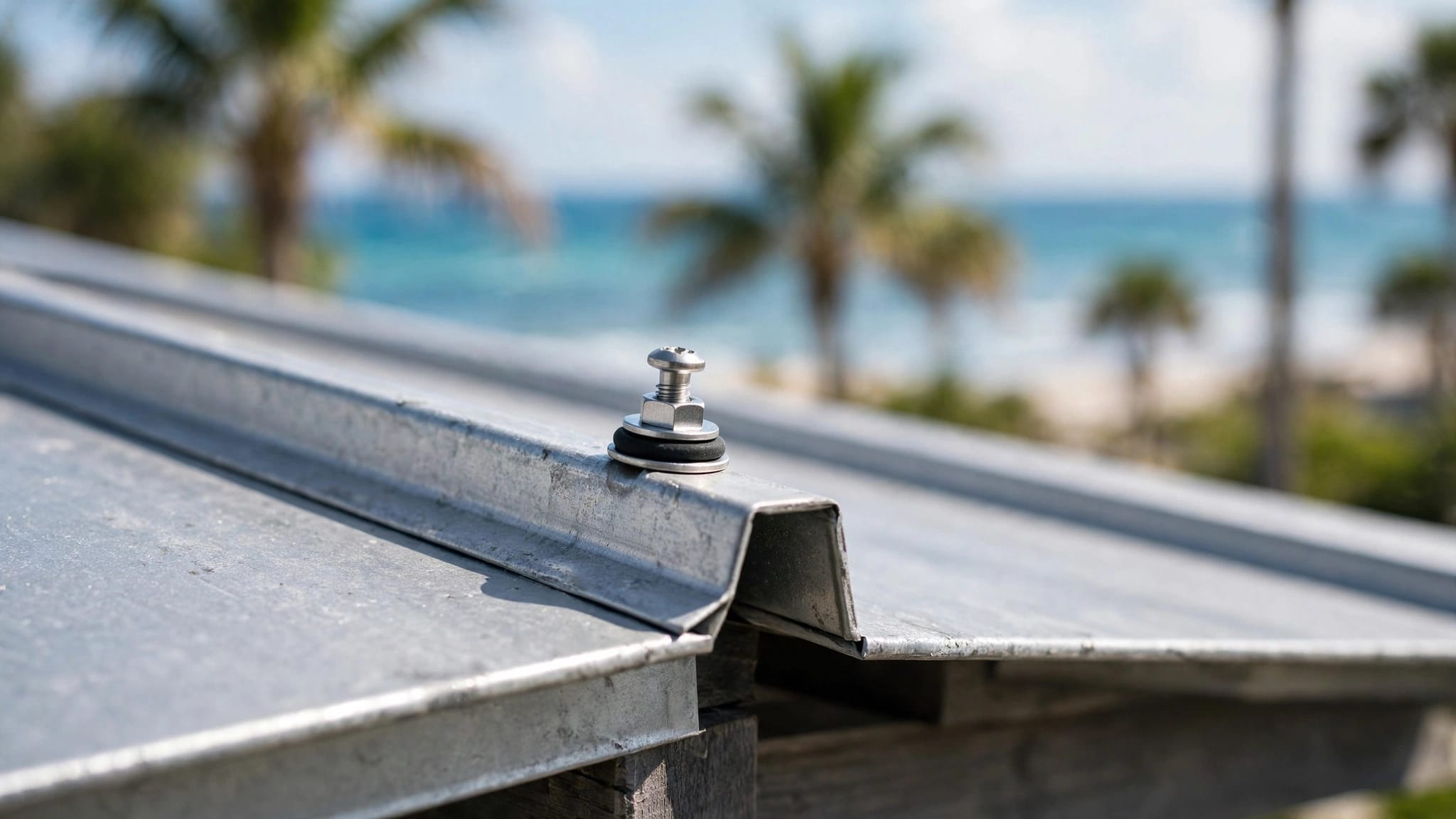
Near the coast, stronger coatings and stainless fasteners often make sense, but the approved roof assembly should guide that choice. If you're selecting parts for a repair or new install, flashing sealants and rivets can help you match the accessories to the roof system.
When to stop patching and call a professional
Chimney leaks are sneaky. Water may enter behind the chimney and show up feet away in the attic or ceiling. That's why tar and quick caulk patches often waste time and money.
Bring in a licensed roofer or metal roofing specialist if you see attic staining near the chimney, rust at the flashing, gaps at the masonry joint, or repeat leaks after a past repair. Active metal roofs are slick and sharp, so this isn't a smart DIY project for most homeowners.
Persistent leaks deserve a real inspection, especially on masonry chimneys, coastal homes, and roofs exposed to high winds. Florida roof systems often need product approval, correct trim, and fastening details that match the panel profile.
A chimney is one of the roof's hardest spots because it joins moving metal to rigid masonry. When metal roof chimney flashing is built with the right shape, counterflashed properly, and backed by compatible materials, it stands a much better chance in Florida weather.
If the leak keeps coming back, don't wait for the next storm to settle the argument. Get the chimney detail inspected, fix the flashing itself, and match the repair to your roof profile, slope, and local code.
Share Our Metal Roofing News Articles
Related Posts