Skylight Flashing Guide for Florida Metal Roofs
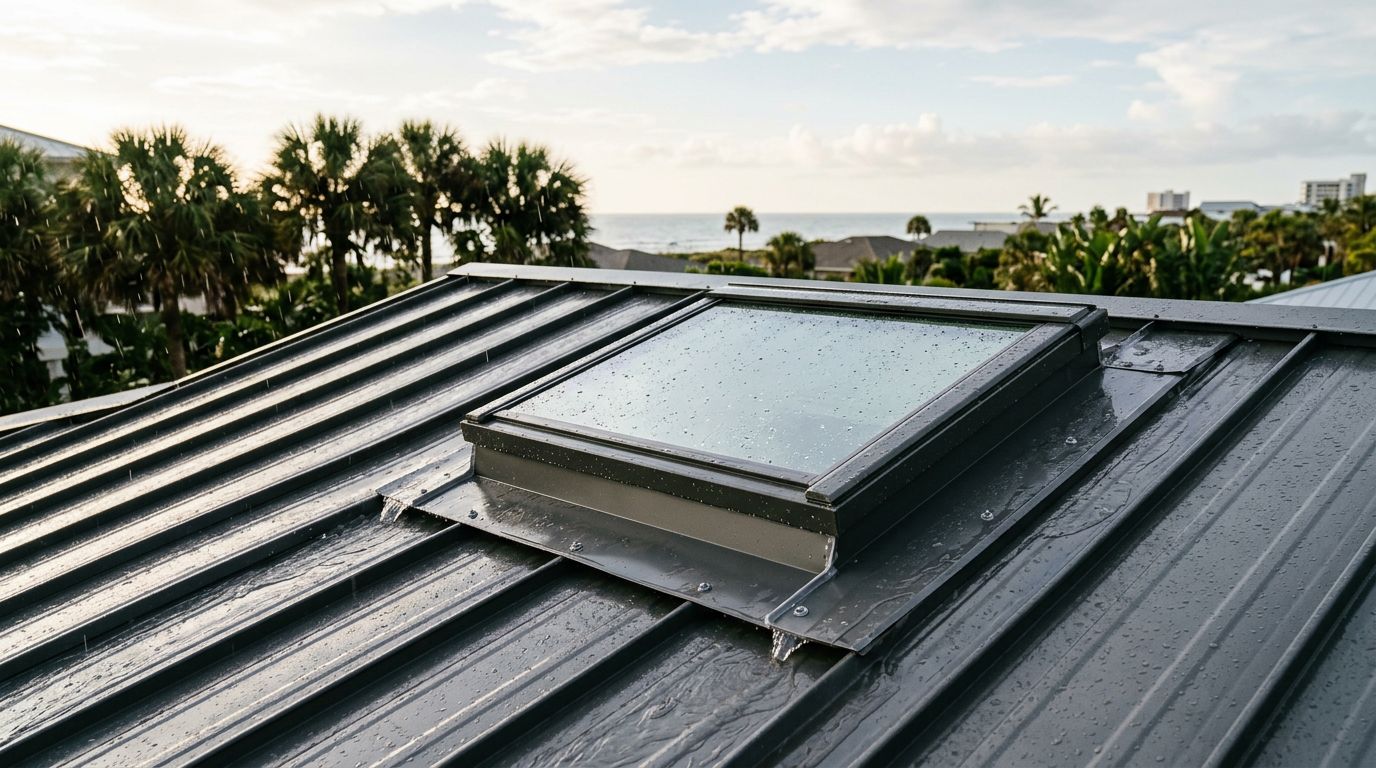
A skylight can brighten a dark room, but it can also become the first place a Florida roof leaks. On metal roofing, the risk goes up because the opening cuts across ribs and seams that were built to shed water.
Good skylight flashing for Florida metal roofs isn't about extra caulk. It's about the right curb, the right laps, and approved parts that keep rain moving downhill.
Why skylight flashing fails faster in Florida
Florida roofs take a beating from three directions at once. First, rain often blows sideways. Next, metal panels expand in the sun and pull back as temperatures drop. Also, coastal air can speed up rust on cut edges, wrong fasteners, and mixed metals.
A skylight interrupts all of that. Think of it like cutting a hatch into a boat deck. The opening can work well, but only if every edge is shaped to shed water under pressure.
As of March 2026, Florida's 9th Edition building code expects skylights and metal roof assemblies to use approved products, often with current Florida Product Approval, or Miami-Dade NOA where required. Wind rating, roof slope, exposure, and corrosion resistance all matter. In Miami-Dade and Broward, HVHZ rules are tighter, and self-adhered membrane layers with sealed laps are often part of the assembly.
Code is only half the story, though. The skylight maker's instructions and the roof panel maker's instructions both matter. If one calls for a curb-mounted unit and the other calls for a movement-friendly detail around standing seams, a shortcut from another system can create a leak path fast.
Underlayment matters just as much. If the skylight goes in during a reroof, the backup water layer under the metal should tie into the opening cleanly, which is why this Florida secondary water barrier guide for metal re-roofs is worth reviewing before work starts.
What a proper skylight detail should include
Most long-lasting skylight installs on metal roofs start with a raised curb. The exact minimum height comes from the skylight manufacturer, roof slope, and local code. Still, a taller curb gives wind-driven rain more distance to climb, and that helps in Florida.
The underlayment or self-adhered membrane should turn up the curb, not stop at the cut opening. From there, the flashing pieces need to lap in shingle style. Apron flashing sheds water away from the unit. Side flashings guide runoff past the opening. Head flashing at the upslope side blocks backwater, and larger skylights often need a cricket or saddle to split the flow.
Sealant should back up the metal detail, not act as the waterproofing plan.
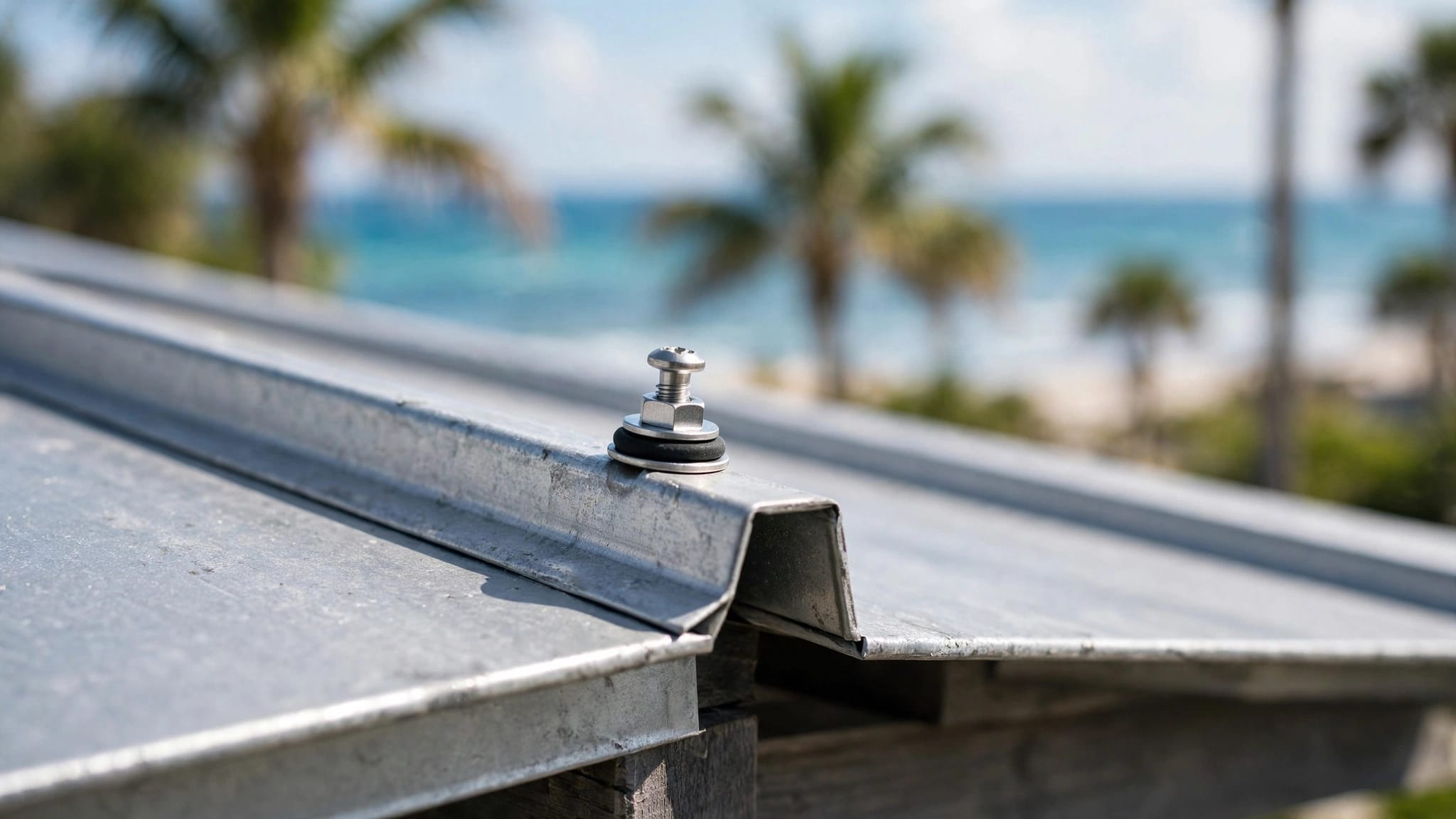
That point gets missed all the time. Butyl tape at laps usually lasts better than a surface bead of generic caulk. Meanwhile, fasteners should be corrosion-resistant and placed where the approved detail calls for them, not in the middle of a water channel.
Panel profile changes the flashing plan. This quick table shows why.
| Metal roof type | Main skylight issue | Better flashing approach |
|---|---|---|
| Standing seam | Panel movement can stress rigid trim | Use a curb detail that respects panel movement and approved clips or transitions |
| Exposed-fastener panels | Ribs and screw lines create leak paths | Use profile-matched closures, butyl tape, and fasteners kept out of runoff paths |
| Low-slope metal systems | Water lingers longer upslope of the skylight | Increase curb protection, verify slope limits, and add a diverter when needed |
The key takeaway is simple. Flat stock metal forced over ribs is asking for trouble. If the trim doesn't match the panel shape, gaps open up where water wants to sit.
For related opening details, this skylight curb flashing guide for Florida roofs helps explain how a raised penetration should move water away instead of trapping it.
The leak points to watch before and after installation
Most skylight leaks don't come from the glass. They come from rushed transitions. A crew may set the skylight too low, reverse a lap, run screws through the flat pan, or smear sealant over gaps instead of fixing the metal shape. The roof can look neat from the yard and still fail during the first tropical downpour.
Placement matters too. A skylight near a valley or heavy drainage path has a harder life. That's like putting a hatch in the middle of a river. Even a good flashing detail has less room for error when runoff piles up above the opening.
Watch for these common red flags:
- Low curb height that leaves little room above panel ribs or standing seams
- Missing closures or foam gaps where ribs meet apron or side flashing
- Exposed screws in water paths , especially upslope of the skylight
- Heavy surface caulk or roof cement , which often signals a patch, not a detail
Standing seam roofs need extra care. Those panels are meant to move. If the skylight detail pins them too hard, the stress can show up later as split sealant, distorted trim, or failed clips. Exposed-fastener roofs have their own trap, because the flashing has to work around ribs, lap seams, and screw lines without creating small dams.
Before sign-off, ask for the skylight approval, the flashing detail for your exact panel profile, and photos of the membrane and curb before the metal covers them. If the job is part of a larger reroof, ask whether the 25 percent rule or local permit review triggers wider upgrades. A clean paper trail matters when storm season rolls in.
If you're reviewing an existing leak or a repair bid, these Florida metal roof flashing red flags can help you spot the shortcuts that keep showing up on Florida roofs.
A dry skylight comes from approved products, matched flashing, careful laps, and a crew that follows both code and manufacturer instructions.
Before you approve a skylight install, ask to see the exact flashing detail for your roof panel, skylight model, and county requirements. That's the difference between extra daylight and an expensive leak path.
Share Our Metal Roofing News Articles
Related Posts