Stitch Screws vs Lap Screws: Which Fits Your Metal Roof?
You install the wrong screw on a metal roof panel overlap, and leaks start small. Then Florida rain turns them into big problems. Homeowners and contractors face this choice often with stitch screws vs lap screws . Both secure panel seams, but they serve different jobs. Pick right, and your roof lasts decades. Pick wrong, and wind uplift or water finds weak spots fast.
These fasteners look similar at first. However, details like head style and length matter in humid, windy Florida conditions. This guide breaks down when to use each. It also covers spacing, washers, and pitfalls so you avoid callbacks.
Core Differences Between Stitch and Lap Screws
Stitch screws and lap screws both join metal panels at overlaps. Yet manufacturers use terms differently by region or brand. In Florida, stitch screws often mean short, low-profile fasteners for side laps. Lap screws handle end laps or wider joints. Sometimes people call them the same thing. Check your panel maker's guide to confirm.
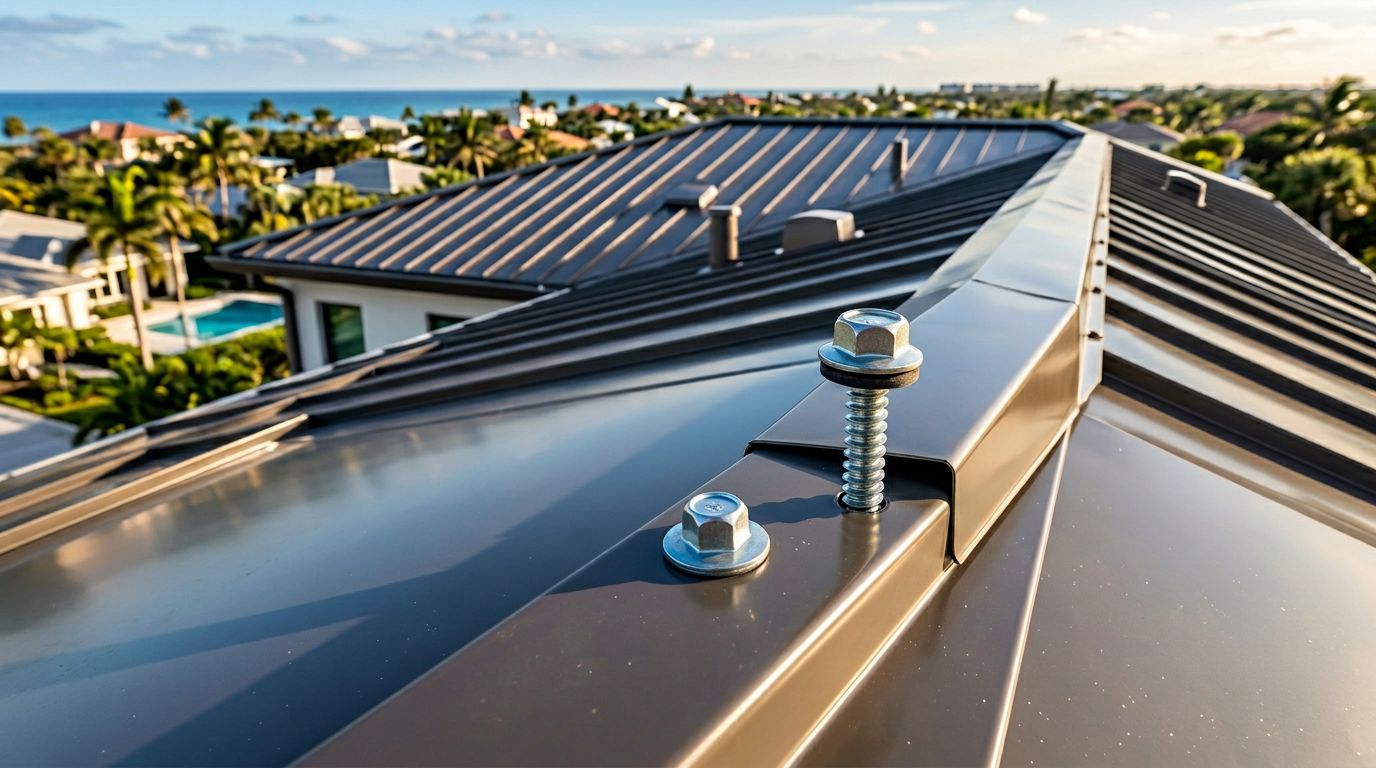
Stitch screws typically feature a pancake head. This sits flat under overlaps. They measure about 3/4 to 1 inch long. Lap screws come longer, often 1 to 1-1/2 inches, with hex or pancake heads. Both self-tap into metal without pre-drilling.
| Feature | Stitch Screws | Lap Screws |
|---|---|---|
| Length | Short (3/4"-1") | Longer (1"-1-1/2") |
| Head Style | Mostly pancake | Hex or pancake |
| Main Use | Side laps, trim | End laps, heavy overlaps |
| Pull Strength | Low (metal-to-metal) | Higher (into structure) |
As a result, stitch screws clamp panels together. Lap screws grab substrate below for extra hold.
Ideal Applications for Stitch Screws
Use stitch screws where panels overlap side-to-side. They tie ribs or flats without poking through to framing. On PBR or 5V panels, place them every 12 to 24 inches along the lap. This stops panels from shifting in wind.
Contractors grab these for quick seams during install. For example, on a standing seam edge or multi-rib profile, stitches keep alignment tight. They work best with butyl sealant under the lap. That combo seals against Florida downpours.
Don't drive them into purlins or decking. They lack length for deep bite. Short threads pull out under load. Instead, follow PBR panel fastener placement for zone-specific patterns.
Spacing tightens near edges. In high-wind zones, go 12 inches on center. Field areas allow 18-24 inches. Always match your Florida Product Approval.
Best Uses for Lap Screws
Lap screws shine at end laps. Panels butt up there, so you need more grab. Drive them through both layers into wood or steel below. This resists uplift better than stitches alone.
On low-slope roofs common in Florida ag buildings, lap screws prevent siphoning. Water climbs overlaps in wind; longer screws anchor firm. Use them also for trim overlaps or where panels stack vertically.
Head choice matters. Hex heads take torque well for production runs. Pair with EPDM washers for seal. For hidden spots, pancake styles blend better.
See pancake vs hex head roof screws for head details. Length ensures 3/4-inch penetration minimum.
Washer Choices and Sealing Impacts
Washers make or break weatherproofing. Both screw types pair with EPDM or neoprene. EPDM holds up best in UV and heat. Bonded versions stick metal to rubber for even compression.
Stitch screws use smaller washers. They seal thin metal-to-metal. Over-tighten, and EPDM splits; leaks follow. Lap screws need larger ones for wider bearing.
Florida humidity speeds failure on cheap rubber. Pick coated or stainless options near coast. Metal-back washers spread load without crushing panels.
Wrong washer leads to rust rings. Water wicks under, corrodes from inside. Test compression: washer edges touch panel flat, no gaps or bulges.
For full advice, review choosing right fasteners for metal roofs.
Installation Tips for Long-Lasting Results
Start perpendicular. Angle causes leaks. Use low-speed drill to avoid spin-out.
Prep laps with sealant tape. Screws alone don't waterproof. Space per approval: tighter at corners, looser in field.
Torque snug, not crush. Practice on scrap. Check after rain; redo loose ones.
Florida code demands tested patterns. Match your panel's NOA or FPA. Substrates vary too. Wood needs sharp points; steel takes drill tips.
Why Wrong Fastener Choice Hurts Performance
Stitches in end laps pull free fast. No substrate bite means wind lifts panels. Lap screws as stitches waste length; heads snag overlaps.
Leaks erode decking. Uplift voids warranties. Callbacks cost time and trust.
Terminology trips crews. One maker's "stitch" is another's "lap." Read specs. Overlaps happen; right screw prevents issues.
Stitch screws vs lap screws comes down to job fit. Stitches handle side seams quick. Laps secure ends with power. Match to your panels, add good washers, and follow Florida rules. Your roof stays dry through storms. Questions on your project? Specs clarify next steps.
Share Our Metal Roofing News Articles
Related Posts