Metal Roof Solar Mounting Guide for Florida Homes
Florida homeowners love solar power. It cuts bills and stands up to our storms. Yet mounting panels on a metal roof demands care. One wrong move risks leaks or uplift failure in high winds.
You face unique challenges here. Salt air corrodes parts fast. Hurricanes test every clamp. Codes change often, and local rules vary. This guide covers safe metal roof solar mounting basics. It helps you plan right, from roof type to permits.
Why Metal Roofs Pair Well with Solar in Florida
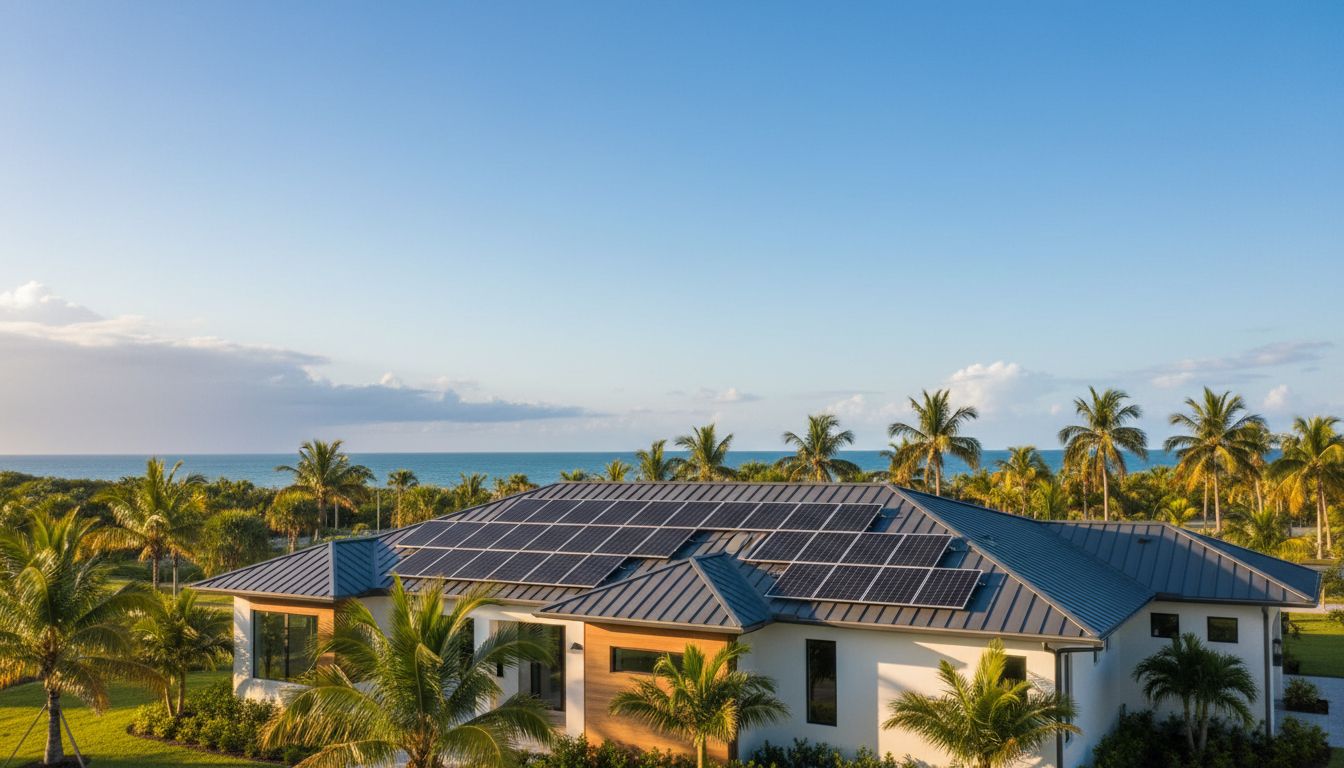
Metal roofs last decades. They handle heat and rain better than shingles. Solar panels fit right on top without big changes.
Standing seam panels shine here. Clamps grip seams tight. No holes needed. That keeps warranties intact. Exposed fastener roofs work too. Brackets secure over ribs. However, they demand extra flashing.
Solar boosts your metal roof's value. Panels shade the surface. That lowers cooling costs in our sun. Plus, metal reflects heat well. Systems like rail-less clamps speed installs. They cut labor by half.
Check go green with Florida metal roofs and solar for energy savings details. Homeowners save 20-30% on power yearly. Yet success starts with your roof's profile and zone.
Match Mounting to Your Roof Type and Conditions
Roof type drives choices. Standing seam allows seam clamps. These slide with panel movement. PBR or 5V needs rib brackets. AG panels use wider bases for stability.
Wind zones matter most. Inland areas hit 130-150 mph gusts. Coasts push 170+. HVHZ like Miami-Dade demands 175+ mph ratings. Salt air eats standard parts. Pick coated aluminum or stainless steel clamps.
Uplift pulls hardest at edges. Space clamps closer there. Field areas allow 24-36 inches. Always follow maker specs.
For example, a Tampa home in a 140 mph zone picks non-penetrating clamps. A Key West spot adds corrosion-proof sealant. Test assemblies match ASCE 7 pressures.
| Roof Profile | Best Mount Type | Key Concern |
|---|---|---|
| Standing Seam | Seam clamps | Thermal slide |
| Exposed Fastener (PBR/5V) | Rib brackets | Flashing fit |
| Low Rib (AG) | Wide base rails | Edge uplift |
This setup resists Florida's mix of heat, salt, and storms.
Meet 2026 Code Rules for Uplift and Wind Resistance
Florida's 9th Edition Building Code rules all. Solar mounts need Florida Product Approval (FPA). HVHZ adds Miami-Dade NOA.
Uplift tests prove strength. Clamps hold at 150+ mph. No full penetrations in most cases. That seals the roof better.
Verify attachments transmit loads right. Metal roofs count as the assembly. No deck removal if solid. Yet 25% rule triggers upgrades on damaged roofs.
Local AHJ sets paces. Submit plans with wind calcs. Inspections check spacing and seals. See the Florida metal roof permit checklist for steps.
Utilities like FPL require interconnection apps. Meet IEEE 1547 for grid tie. Plans show no overload risk.
Codes protect your investment. Skip them, and insurance denies claims post-storm.
Choose the Right Mounting Hardware and Flashing
Non-penetrating clamps top lists. S-5! style grips seams. They flex with expansion. Rails add weight but spread loads.
Flashing prevents leaks. Use profile-matched transitions. Butyl tape seals laps. Silicone works for salt exposure. Avoid cheap caulk; it cracks in UV.
Salt air demands extras. Coat clamps in Kynar. Space them for airflow. That cuts corrosion 50%.
Install per manufacturer. First, clean seams. Clamp mid-panel. Torque to spec. Add mid-clamps for panels.
For standing seam, review fixed vs floating standing seam clips Florida. They affect mount stability.
Wet sealant test each spot. Dry attic checks confirm no paths.
Steps for Permits, AHJ Approval, and Utility Hookups
Start early. Contact your AHJ. Ask for solar add-on rules. Submit roof plan, FPA sheets, and engineer stamp if over 10 kW.
Utility apps follow. FPL needs load study. Duke wants safety certs. Approval takes 4-6 weeks.
Inspections hit three points. Rough-in checks mounts. Final verifies wiring. Roof dry-in confirms seals.
Homeowners track this:
- Gather FPA/NOA docs.
- Engineer wind loads.
- File with AHJ online.
- Schedule utility review.
- Pass three inspections.
Delays cost sun. Plan six months ahead.
Evaluate Installers with a Homeowner Checklist
Pick pros who know Florida codes. Ask for FPA proofs. Check HVHZ experience.
Compare bids on details, not price. Look for rail-less options. Confirm sealant brands.
Red flags include no engineer stamp or generic hardware. Good crews show past jobs.
Use this checklist:
Experience : 5+ years in your zone?
Certs : NABCEP solar, FBC roofing?
Warranty : 25-year mount, 10-year flashing?
Refs : Three local metal roof solars?
Interview two. The best explains your wind map match.
Follow standing seam metal roof installation guide Florida principles for mounts.
Right team means storm-proof power.
Metal roofs make solar simple in Florida. Match mounts to your profile and zone. Codes ensure uplift holds. Flashing and sealants fight salt and rain.
You gain reliable energy without leaks. Verify FPA now. Talk to certified installers. Your home stays powered through the next gale.
Share Our Metal Roofing News Articles
Related Posts