Why Cut Edges Rust on Metal Roofing Panels in Florida
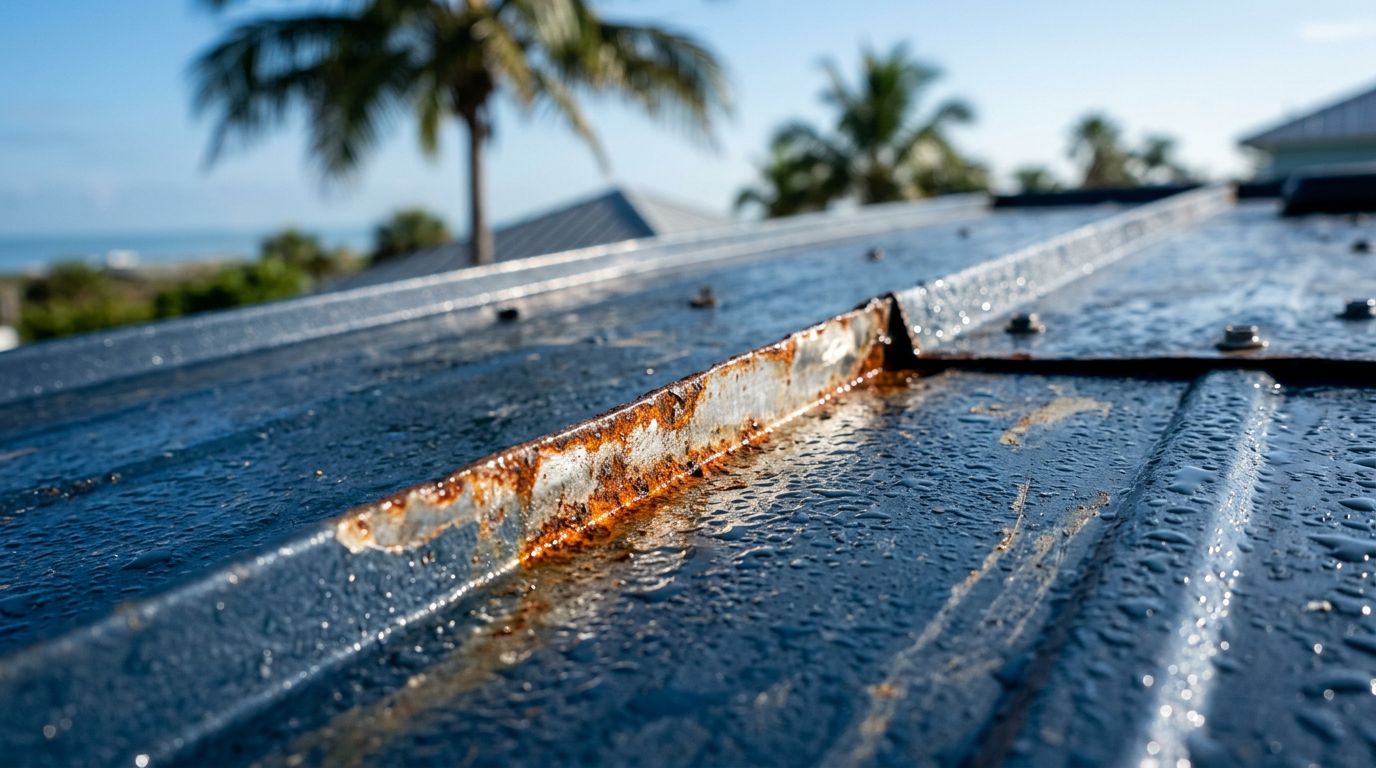
Cut edges are where metal roofing rust usually starts, and the reason is simple. The panel's factory finish protects most of the surface, but every field cut exposes fresh metal. In Florida, humidity, rain, and salt air make that thin edge work harder than the rest of the roof.
That does not mean every rusty line means failure. Sometimes you're seeing normal surface oxidation on an exposed edge. Other times, the rust points to damaged coatings, poor cutting methods, or moisture that should not be there.
Why the cut edge is the first place rust shows up
Metal roofing panels depend on a coating system. On painted steel, that usually means a color finish over a protective metallic layer. When a saw blade, grinder, or snip removes that finish, the edge loses its best defense.
Once oxygen and moisture reach bare steel, rust can begin. Warm air speeds the reaction, and Florida roofs see plenty of warm, damp days. Wind-driven rain can also push water into laps and trim details, so a cut edge near a seam gets exposed again and again.
Material matters too. Aluminum forms a surface oxide that protects itself better. Steel panels need more help at cut points, especially when the edge has been scratched, burned, or left unsealed. Galvanized and Galvalume steel resist corrosion, but they still need care where the coating ends.
Dissimilar metals can make things worse. A steel panel edge touching copper, aluminum, or the wrong fastener can start a corrosion reaction. Preventing galvanic corrosion on metal roofs is part of keeping those edges sound.
A little orange tint at a fresh cut edge can be normal. Rust that moves away from the edge is the part to watch.
When surface oxidation is normal, and when it is a warning
Some edge rust is surface oxidation. Some is a sign that the roof needs attention. A quick look can help you tell the difference.
| What you see | Likely cause | What it may mean |
|---|---|---|
| Thin orange line only at the cut edge | Fresh exposure to air and moisture | Often early surface oxidation |
| Rust spreading onto the painted face | Coating damage, heat, or skipped touch-up | Needs inspection |
| Rust around screws, seams, or flashings | Moisture trap or mixed metals | Possible installation issue |
| Bubbling paint, flaking, or pits | Deeper coating failure or long exposure | More serious problem |
The main clue is spread. If the color stays at the edge, the issue may be small. If it creeps across coated areas, shows up on several panels, or starts early after install, it deserves a closer look. That is where metal roof warranty coverage may matter, especially if the problem points to material or installation trouble.
Cut-edge rust can also appear near fastener heads and cut trim pieces. Those spots collect water longer than open panel faces. So, a little staining at the edge is one thing, but repeated rust in the same locations usually means the roof is holding moisture where it shouldn't.
How cutting methods and jobsite conditions speed up rust
The way panels are cut changes the risk. A clean shear or proper snip keeps heat low and reduces damage. A grinder, on the other hand, can burn the finish and throw hot metal dust onto the panel. Those tiny filings rust fast, then leave specks and streaks on nearby areas.
Site conditions matter just as much. Panels that sit in bundles through a wet morning can trap moisture between sheets. Concrete, dirt, and wet wood can keep the bottom layer damp. In coastal or near-coastal Florida, salt adds more stress.
That is why good handling starts before the first panel goes on the roof. Proper metal panel storage and handling keeps bundles dry, separated from ground moisture, and away from sparks and grinding dust. Once the panels are clean and dry, they are much easier to protect.
Clean-up matters too. After cutting, sweep metal shavings, wipe edges, and check nearby seams. If filings stay on the roof, they rust and stain the finish, even when the panel itself is fine.
Practical ways to prevent cut-edge rust
Preventing cut-edge rust is mostly about habits. Small steps matter.
- Use the right tool for the panel type, and keep blades sharp.
- Touch up exposed edges, scratches, and drilled holes as soon as possible.
- Keep dissimilar metals apart where they meet at trim, fasteners, or flashing.
- Store panels off the ground and out of standing water before install.
- Inspect cut ends after storms, especially near valleys, penetrations, and eaves.
These steps do not make a roof maintenance-free. They do reduce the chance that a small bare spot turns into visible metal roofing rust.
For homeowners, the job is often simple visual care. Look for orange staining, chipped coating, or marks that return after cleaning. For contractors, the goal is consistent edge treatment and fast cleanup. A roof that starts clean usually ages better, especially in Florida heat and rain.
If rust keeps returning at the same edges, the problem is usually not the color. It is the exposure.
Conclusion
Cut edges rust because they are the one place the panel loses its factory shield. That is normal to a point, but only when the oxidation stays small and local.
Once rust spreads, shows up around fasteners, or starts early across multiple panels, the issue goes beyond a cosmetic mark. At that point, coating damage, metal choice, moisture, or installation details need a closer look.
A careful install, dry storage, matched metals, and quick touch-up keep most cut-edge problems under control. In Florida, that small bit of extra attention goes a long way.
Share Our Metal Roofing News Articles
Related Posts