Why Roof Cement Fails on Florida Metal Roof Repairs
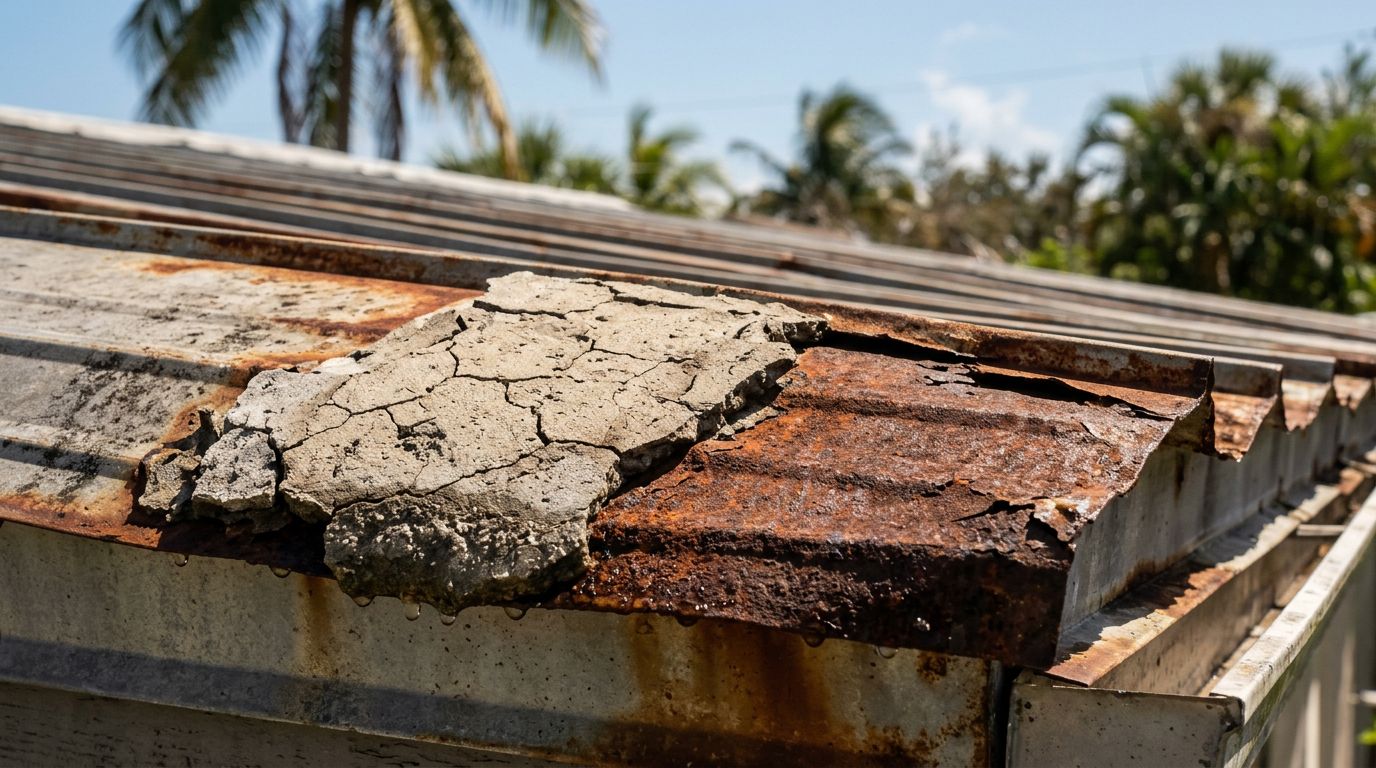
Roof cement on a metal roof often looks like a quick win, then cracks open after the next hot afternoon or hard rain. In Florida, that happens fast.
Metal panels expand, contract, shed water, and flex at fasteners and seams. Roof cement stays rigid, so the repair and the roof fight each other.
That mismatch leads to leaks, rust, and repeat patching. Once you see how the material behaves, the failures make sense.
The movement under the patch
Metal roofs move every day. The sun heats the panels, then evening cools them down. That constant shift changes the size and shape of the roof a little at a time.
Roof cement does not move with that cycle. It hardens, then it starts to split where the panel shifts beneath it. The first crack may be tiny, but water only needs a tiny path.
Fasteners, side laps, and flashing joints are the weak spots. Those areas already handle stress, so a stiff patch gets pulled apart faster there. A repair that looks sealed from the ground can fail at the edge you cannot see.
When a panel is bent, split, or rusted through, replacing a damaged metal roof panel is often cleaner than stacking more patch over the same flaw. A patch can cover the leak. It cannot fix damaged metal that keeps moving.
Florida weather speeds up the breakdown
Florida adds stress that roof cement does not handle well. Heat bakes the patch during the day. UV exposure dries it out. By late afternoon, the surface can turn brittle and chalky.
Then the rain comes. Heavy storms push water across the roof fast, and wind can drive it under lifted edges. If the patch has already begun to separate, that water finds its way in.
Humidity makes the problem worse. Damp air slows drying and keeps the roof surface wet longer. Near the coast, salt air adds another layer of wear on fasteners, flashing, and any exposed metal.
After a storm, small failures show up first at seams and trim. A metal roof maintenance checklist helps catch those trouble spots before a minor issue turns into stain lines on the ceiling.
Florida roofs do not usually fail in one big event. They wear down at the joints, then the joints start leaking.
Roof cement can trap moisture under the patch
Roof cement seems helpful because it seals the top. The problem is what it does underneath.
If the area is still damp when the patch goes on, the cement can trap that moisture against the metal. Water then sits under the repair instead of drying out. That trapped moisture speeds up corrosion and weakens the bond.
This is why some roof cement patches keep failing even when the surface still looks neat. The leak path may be hidden, but the damage keeps growing below the patch. Rust does its work quietly once moisture gets sealed in.
If moisture stays under the repair, the leak hasn't gone away.
This issue is common around penetrations, seams, and transitions. A bead of cement may bridge over a moving joint, but it does not restore the roof's original water-shedding path. Once the joint flexes again, the patch splits.
Better repair methods for Florida metal roofs
The best repair depends on where the leak starts. A loose screw needs a different fix than a torn flashing or a rusted panel.
Here is a simple side-by-side look at better options:
| Repair method | Best use | Why it fits metal |
|---|---|---|
| Butyl tape | Overlaps, side laps, and trim joints | Stays flexible and seals well under compression |
| Polyurethane or other metal-compatible sealant | Small cracks, edge gaps, and penetrations | Bonds to metal and handles movement better |
| Properly gasketed fasteners | Loose screws and worn washer points | Reseals the fastener without covering the whole area |
| Flashing repair | Walls, chimneys, skylights, and vents | Restores the water-shedding path |
| Panel replacement | Rust-through, broken seams, storm damage | Removes the failed metal instead of hiding it |
| Elastomeric coating system | Larger sound roofs with many small aged areas | Covers broad areas when the roof is a good candidate |
Coatings can help, but only when the roof is still sound and fully prepped. They are not a fix for loose panels, active corrosion, or hidden damage beneath the surface.
When damage keeps returning or the panel body is failing, deciding between metal roof repair and replacement keeps the work focused on the real problem. That choice saves more money than repeating the same patch every season.
A good repair follows the roof's shape and water path. Roof cement often ignores both.
Warning signs a roof cement patch is failing
A failing patch usually gives a few warnings before the leak gets obvious. Look for these signs after rain or a storm:
- Cracks along the patch edge
- Rust bleeding around the repair
- New ceiling stains or wall spots
- Damp insulation or a musty attic smell
- Soft, lifted, or shrinking cement
- Fasteners near the patch backing out
A patch that turns hard and separates from the panel has lost its grip. If it is collecting dirt in the cracks, water has likely already started moving through the opening again.
Stains that return after each storm are another clear clue. So are fresh rust lines below a patch on a standing seam, R-panel, or 5V roof. Those marks usually mean water is getting behind the repair and traveling farther than expected.
If several patches are failing in different spots, the roof needs more than another layer of cement. It needs a broader inspection and a repair plan that matches the roof system.
When a temporary patch makes sense
A temporary patch has a place after sudden storm damage or before a scheduled repair. Its job is to slow water, not solve the whole problem.
That kind of patch works best when the roof area is dry, reachable, and easy to inspect later. It can buy time during an active leak or after a branch impact, especially when a storm is still in the forecast.
Even then, the patch should use a product that fits the roof material. Thick layers of roof cement can hide the leak path and make the real repair harder later. A quick stopgap should stay small and targeted.
Call a professional when the leak keeps returning, when the damage sits at a seam or flashing, or when corrosion is spreading. Steep roofs, tall buildings, and multi-unit properties also call for a better plan. Safety matters, and so does finding the true source.
For property managers, repeated patching can turn into a maintenance cycle that eats time and budget. A documented repair strategy is usually the smarter move.
Conclusion
Roof cement looks simple, but Florida metal roofs punish rigid fixes. Heat, rain, humidity, and daily panel movement break the bond, crack the patch, and let water back in.
Better repairs match the material. Flexible sealants, proper fasteners, flashing work, panel replacement, and the right coating system last longer because they move with the roof.
When a patch keeps cracking, the roof is telling you the fix does not fit the problem.
Share Our Metal Roofing News Articles
Related Posts