AG Panel vs 5V Crimp for Florida Sheds
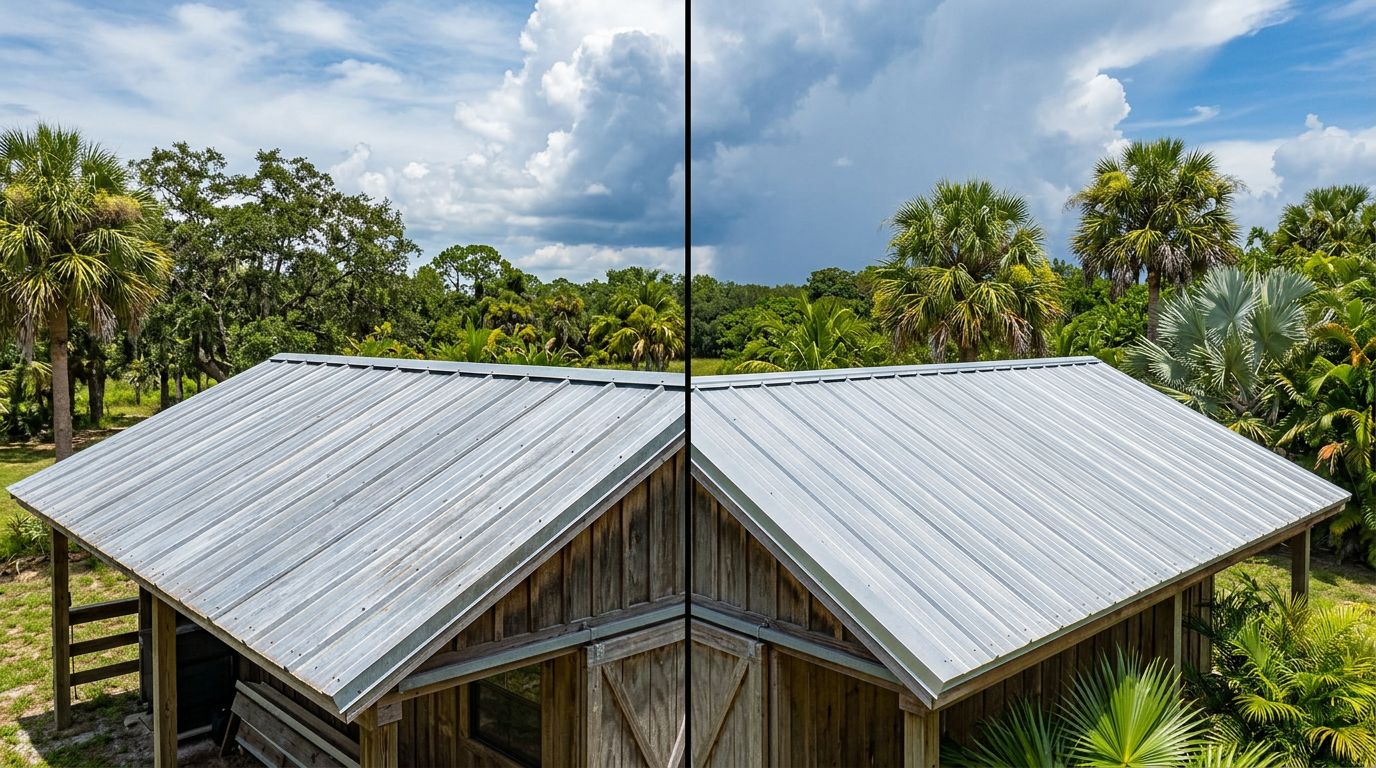
A shed roof in Florida needs more than a weather-resistant surface. It must handle intense sun, driving rain, high humidity, and, in many areas, hurricane-force wind. When comparing AG panel vs 5V crimp , the right choice depends on the shed's location, roof design, appearance, budget, and approved installation method.
AG panels are common on utility buildings, barns, and storage sheds because they offer a practical exposed-fastener system. 5V crimp panels provide a lower-profile, traditional metal-roof appearance. Both can work well, but neither profile automatically meets every Florida project requirement. Start with the building department and the panel manufacturer's current approval information.
Key Takeaways
- AG panels are often the practical choice for basic Florida sheds and agricultural buildings.
- 5V crimp offers a traditional appearance with closely spaced V-shaped ribs.
- Gauge, fastener layout, roof framing, and edge details affect performance as much as the panel profile.
- Coastal locations need careful attention to corrosion protection and dissimilar metals.
- Local building departments must confirm permits, wind requirements, setbacks, and product approvals.
What Separates AG Panels From 5V Crimp?
AG panels, also called agricultural panels or Multi-Rib panels, use raised ribs that run from the ridge toward the eave. The panels attach with exposed fasteners, usually screws with sealing washers. Their broad coverage and straightforward installation make them popular for sheds, pole barns, workshops, and other utility structures.
The raised rib pattern gives the panel its visual character and affects how the sheet handles water and spans between supports. However, the exact rib height, panel width, steel thickness, and fastening schedule vary by product. Always compare the manufacturer's specifications rather than relying on the general name "AG panel."
5V crimp panels have repeated V-shaped ribs and a lower-profile appearance. They are often selected for residential-style sheds, cabins, porches, and accessory buildings where the owner wants a more traditional metal roof. The profile can look less industrial than a deeper agricultural panel, especially on a small building viewed from the yard.
The term "crimp" describes the formed panel profile. It doesn't tell you the complete wind rating, steel thickness, coating, or installation requirements. Those details come from the tested and approved assembly.
For a broader comparison of ribbed metal profiles, review this guide to PBR versus AG panels for your build. PBR is a different profile, but the comparison shows why panel shape and structural requirements should be considered together.
AG Panel vs 5V Crimp for Florida Sheds: Side-by-Side Comparison
The following comparison provides a useful starting point. Product specifications and local code requirements still control the final selection.
| Feature | AG panel | 5V crimp |
|---|---|---|
| Common appearance | Ribbed, utility-focused | Traditional, lower-profile V ribs |
| Typical shed use | Utility sheds, barns, workshops, storage buildings | Sheds, cabins, porches, and appearance-focused accessory buildings |
| Fastening | Usually exposed fasteners | Often exposed fasteners, with layout determined by the approved system |
| Installation | Straightforward on properly framed roofs | Requires careful panel alignment and approved fastening details |
| Cost factors | Often economical, depending on gauge and trim | Depends on gauge, finish, trim, and order quantity |
| Wind performance | Depends on the tested assembly | Depends on the tested assembly and approval |
| Best selection factor | Practical coverage and simple installation | Traditional appearance and profile |
A basic shed in Central Florida may suit an AG panel system when the building has proper framing and the local requirements allow that assembly. A visible backyard shed near a home may favor 5V crimp because its profile can better match the appearance of residential metal roofing.
Neither panel should be judged by appearance alone. A thicker sheet with poor edge fastening can perform worse than a lighter sheet installed as part of a properly designed system. The panel, screws, framing, underlayment, trim, and roof geometry must work together.
Florida Wind Requirements Matter More Than Profile Names
Florida sheds face different wind conditions depending on the county, exposure, building height, roof shape, and proximity to open water. A shed near the coast or in an open field receives different wind pressure than one protected by larger buildings and trees.
The High-Velocity Hurricane Zone, or HVHZ, covers Miami-Dade and Broward counties. Projects in those counties require close attention to approved products and tested installation assemblies. Other Florida locations also have significant wind requirements, so a shed outside the HVHZ isn't automatically free from wind-related code checks.
The local building department determines whether the shed needs a permit, which wind design criteria apply, and whether the proposed roof system is acceptable. Permit exemptions can vary by jurisdiction and building size. Even when a small structure doesn't require a full building permit, zoning, placement, setback, or flood-related rules may still apply.
Product approval is another separate question. Florida may require approved roofing products for certain regulated construction. The approval applies to a defined assembly, not simply to a coil of steel. It may identify the allowable panel thickness, fastener type, spacing, substrate, edge condition, and wind pressure.
The listed information for Mid Florida Metal Roofing Supply identifies a Florida Product Approval for 26-gauge 5V crimp fastened in the Rib-HVHZ and NON-HVHZ 140 mph wind zone . Treat that information as a starting point, then confirm the current approval number, assembly details, and project eligibility before ordering.
A product approval doesn't give permission to change the screw spacing, substrate, or edge fastening. Those details are part of the approved assembly.
For AG panels, ask for the current approval or tested documentation that matches the exact panel and installation method. Don't assume that an AG panel approved for one roof deck or wind condition applies to an open-framed shed.
Gauge, Framing, and Fasteners Change the Result
Panel gauge affects stiffness, handling, and resistance to dents. A 26-gauge panel is thicker than a 29-gauge panel, but thicker steel alone doesn't determine the roof's wind performance. The profile, support spacing, screw pattern, and perimeter details also matter.
For a small shed, 29 gauge may fit an approved system and budget. An exposed site, larger roof, or building with wider framing spacing may call for 26 gauge. Compare the options in this guide to 29 vs 26 gauge metal panels before selecting the sheet thickness.
Framing must support the panel system specified for the building. A roof may use solid decking, purlins, or another substrate, but the panel manufacturer and building department must confirm the correct arrangement. Fasteners need adequate penetration and must land in the intended support.
Exposed-fastener systems also depend on screw quality and placement. Overdriven screws can damage the sealing washer. Underdriven screws may leave a path for water. Screws installed at an angle can reduce the washer's seal and make future leaks harder to diagnose.
The roof edge deserves equal attention. Rake trim, eave trim, ridge caps, closures, and properly installed flashing help control wind-driven rain. In hurricane-prone areas, the perimeter often receives higher wind forces than the middle of the roof. Use the fastening and trim details required by the approved system instead of copying a standard shed installation.
Rain, Heat, and Coastal Salt Require Different Details
Florida rain can arrive as a short, intense storm. Roof panels need enough slope, proper laps, sealed penetrations, and clear drainage paths. Confirm the minimum roof pitch for the selected AG or 5V system. A panel that performs well on a steeper roof may not be suitable for a low-slope shed roof.
Long exposure to sun also affects sealants, coatings, and rubber washers. Use compatible roofing sealant and fasteners recommended for the panel system. Avoid mixing products based only on appearance or price.
Coastal air adds salt to the environment. Salt deposits can accelerate corrosion at cut edges, scratches, fasteners, and areas where incompatible metals touch. A coastal shed may need a coating and fastener package suited to the exposure. Galvalume and painted finishes are common choices, but the right option depends on the product specifications and site conditions.
Keep the panel surface clean during installation. Metal filings left behind after cutting can rust and stain the finish. Use the cutting method recommended by the manufacturer, remove debris promptly, and protect the sheets from standing water before installation.
Trim color matters for appearance, but trim material compatibility matters for service life. Use matching or approved materials around the roof perimeter. Avoid contact between dissimilar metals unless the system provides suitable separation.
Which Panel Fits Your Shed?
Choose an AG panel when the shed has a utility-focused design, the roof framing suits the system, and you want a practical profile with accessible installation details. AG panels are often a good match for agricultural buildings, lawn equipment storage, workshops, and sheds where appearance is secondary to function.
Choose 5V crimp when the roof is visible from the house, the shed has a traditional design, or you want a lower-profile rib pattern. The appearance can complement wood siding, painted accessory buildings, and residential-style construction.
Location should guide the decision. A coastal shed may need more attention to finish and fastener compatibility than an inland shed. A structure in an open, hurricane-exposed area may require a higher-performing approved assembly, regardless of whether it uses AG or 5V panels.
Before ordering, gather the following information:
- County and city jurisdiction
- Shed dimensions and roof pitch
- Roof substrate, such as decking or purlins
- Distance from the ground and nearby buildings
- Wind exposure and flood-zone information
- Desired gauge, color, trim, and fastener finish
- Current Florida approval or tested assembly documents
Then ask the local building department whether the shed requires a permit and which documents it needs. Ask the supplier to match the panel, trim, fasteners, and installation instructions to that requirement.
For project planning, Mid Florida Metal Roofing Supply also lists Florida-approved 5V metal panels, along with available gauges, finishes, and delivery information. Confirm current availability and approval details before making a final material decision.
Conclusion
The right choice in an AG panel vs 5V crimp comparison depends on more than the rib pattern. AG panels fit many practical shed projects, while 5V crimp can provide a more traditional appearance. Wind design, gauge, framing, fasteners, flashing, and coastal exposure determine whether the selected roof system is suitable.
For any Florida shed, verify the local requirements before installation. Once the building department confirms the rules, select the panel and complete assembly that match the roof design, site exposure, and approved fastening details. That process gives you a roof choice based on the actual building, not only its appearance.
Share Our Metal Roofing News Articles
Related Posts