How to Fix Crooked Screws in Metal Roofing Without Damaging the Seal
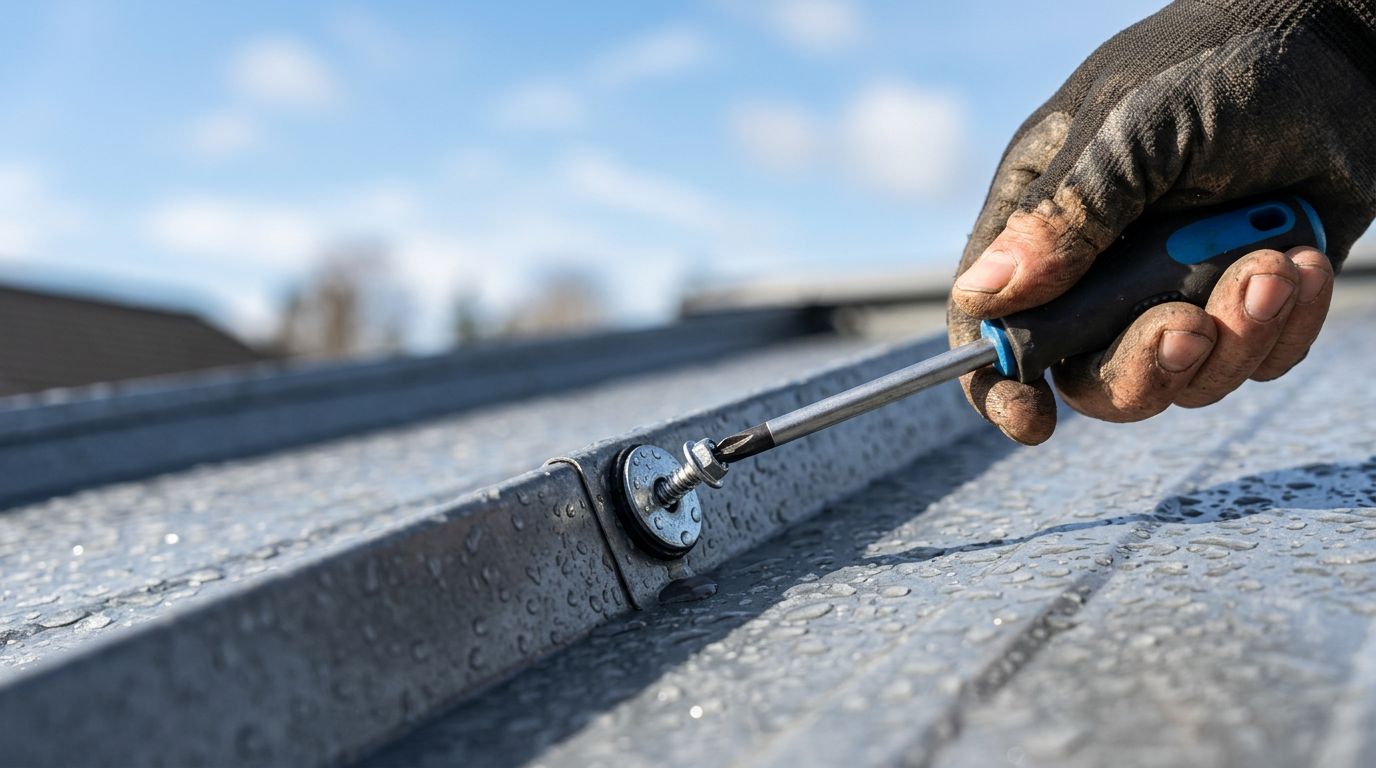
A crooked screw can look minor, but on a metal roof it can turn into a leak path, a torn washer, or a fastener that never holds right. In Florida, where wind and rain work hard on every seam, that small mistake can matter fast.
The good news is that many crooked metal roofing screws can be corrected without opening a bigger problem. The key is to know when the screw can be reseated, when it should come out, and how to keep the hole, washer, and panel from getting damaged in the process.
Spot the problem before you touch the screw
A screw is crooked when the head sits at an angle, the washer does not lie flat, or the shank bites the panel off-center. Sometimes the sign is obvious. Other times, you only see a slight tilt and a shadow around the washer.
Look for these warning signs:
- The screw head leans to one side instead of sitting square.
- The washer looks pinched on one edge and loose on the other.
- The screw spins with little resistance.
- Rust streaks or dark marks appear around the head.
- The panel surface looks dimpled or lifted near the fastener.
A little angle is not always a failure. Some panel shapes and rib locations make the head look slightly off. What matters is contact. The washer should sit flat, and the screw should still grip the framing or substrate without wobble.
If the fastener is leaning but still tight and the washer looks healthy, you may be able to reseat it. If the head is bent, the washer is damaged, or the hole has opened up, replacement is usually the safer move.
Set up safely and choose the right tools
Roof work starts with access, not the screwdriver. Use a dry day, stable ladder placement, and shoes with good traction. If the slope is steep, the roof is high, or the footing feels uncertain, stop there and use a fall-protection setup or bring in help.
For the repair itself, a small drill/driver with a clutch gives you better control than a fast, aggressive tool. A driver bit or nut setter that matches the screw head matters too. A worn bit slips, chews the head, and makes the fix harder.
Keep these items close:
- A matched replacement screw or two
- The correct driver bit or nut setter
- A magnetic tray or pocket for loose fasteners
- A clean cloth to wipe debris away
- A flashlight for checking the washer and hole
If you need to replace several screws, review how to choose metal roofing screws before you start. A replacement should match the panel type, the substrate, and the coating system.
A fastener that matches the roof is easier to seat, seal, and trust.
Reseat it or replace it?
Not every crooked screw needs the same fix. The decision depends on grip, washer condition, and hole shape. A quick comparison helps keep the repair clean.
| Condition | What you see | Best move |
|---|---|---|
| Slight tilt, solid bite | Washer is intact and the screw still feels firm | Reseat it carefully |
| Screw spins or wobbles | Hole feels loose or enlarged | Remove and replace it |
| Washer is cracked or flattened | Rubber shows splits, cuts, or heavy squeeze-out | Replace the screw |
| Head is stripped or bent | Driver slips or the head will not hold | Replace the screw |
A screw that still grips can often be saved. A screw that no longer grips usually cannot.
If you are choosing a replacement style, compare self-drilling vs self-tapping roofing screws before you buy. The right point style helps the new fastener enter cleanly and reduces the chance of another crooked start.
Correct the screw without enlarging the hole
Once you know the screw can be saved, work slowly. The goal is to straighten the fastener while keeping the hole the same size and shape. Forcing it only makes the problem worse.
- Clean around the screw head first. Dirt, rust flakes, and metal chips can hide the washer edge and make the screw slip.
- Set the driver square to the head. Keep the bit centered. If the driver tilts, the screw will tilt too.
- Back the screw out a small amount. A half-turn is often enough to relieve pressure without losing the bite.
- Re-align the screw by hand and then drive it again at low speed. Use steady pressure, not a hard push.
- Stop as soon as the washer starts to sit flat. The washer should compress a little, not bulge or squeeze out.
- If the screw starts to spin, stop right away. Do not keep driving and do not keep backing it in and out. That is how the hole gets larger.
A clean reseat feels controlled. The screw pulls down evenly, the washer settles, and the head sits square. If the screw fights you the whole time, it is telling you the hole or the fastener is no longer usable.
If the screw keeps wandering, the safer fix is replacement, not another hard push.
When the old hole is worn, the new fastener needs solid material to hold. Follow the panel profile and fastening pattern, and place the replacement where it can bite cleanly. Do not chase a damaged hole just to reuse it.
Protect the washer seal and confirm the finish
The washer does most of the sealing work. If it gets twisted, crushed, or cut, the screw may look tight while water still sneaks in. That is why driver control matters as much as screw alignment.
A good seal has a simple look. The washer sits flat against the panel, the edges are even, and the screw head is snug without crushing the rubber. If you see a mushroomed washer, a sharp bend in the panel, or a gap on one side, the fastener needs attention.
For a proper final setting, see proper installation depth for metal roof screws. The goal is snug and even, not buried and distorted.
Use this final check after the repair:
- Look for a flat washer with no cracks or squeeze-out.
- Check nearby screws for the same angle and depth.
- Remove loose metal shavings so they do not stain the panel.
- Watch for fresh scratches in the coating.
- If the area is easy to inspect from below, check for light or drip signs.
A gentle hose test can help on a dry day if the roof layout allows it. Run water slowly over the repaired area while someone watches underneath. If no water appears, the fastener is likely seated well. If a drip shows up, stop and recheck the screw, washer, and hole.
Keep the roof tight and dry
A crooked screw is a small problem when you catch it early. It becomes a bigger one when the hole grows, the washer tears, or the driver chews up the head. The cleanest repairs are the ones done with a square driver, light pressure, and a clear decision to replace any screw that no longer holds the way it should.
That matters on every roof, and it matters even more in Florida weather. A straight fastener, a flat washer, and a sound hole are the difference between a quick fix and a leak that keeps coming back.
Share Our Metal Roofing News Articles
Related Posts