Ponding Water on Low-Slope Metal Roofs in Florida
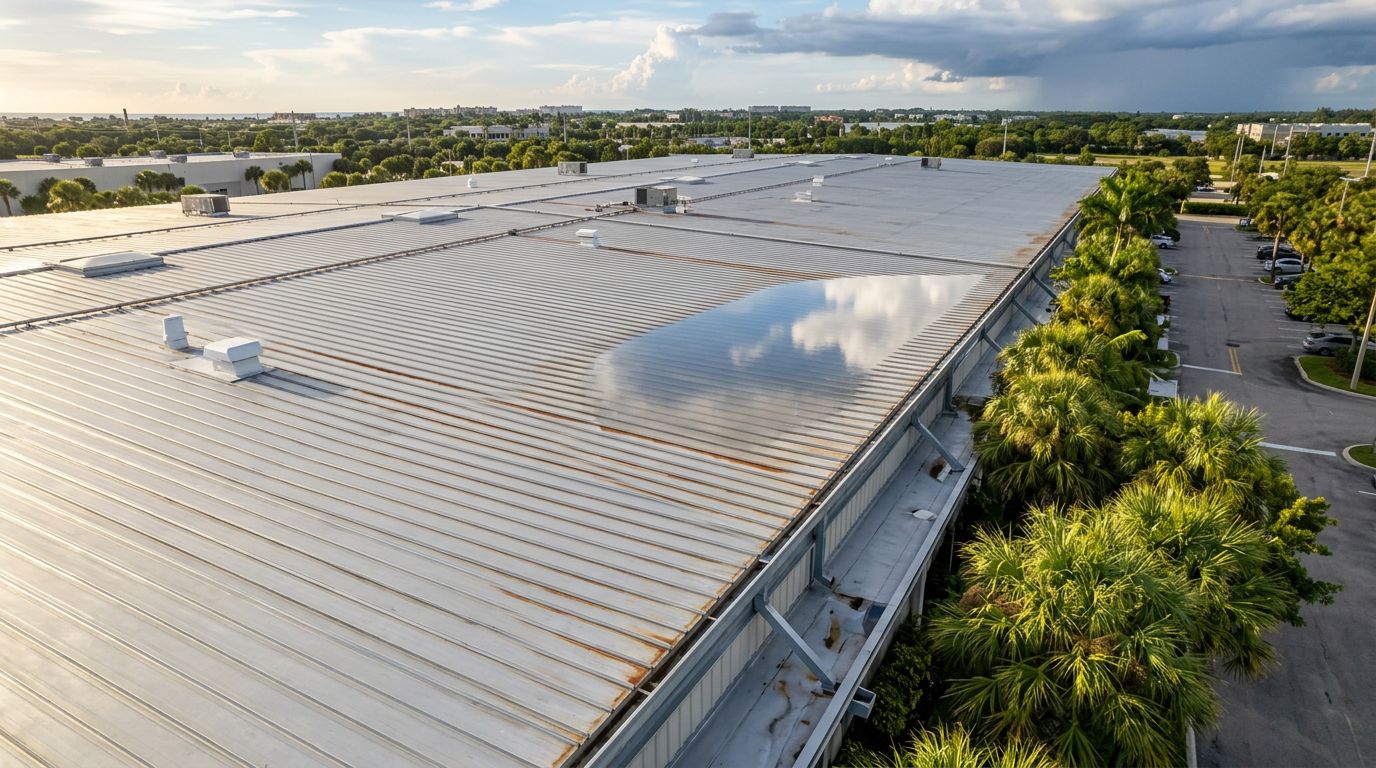
A small puddle on a roof can turn into a costly repair in Florida. On a low-slope metal roof , water that lingers after a storm can push against seams, fasteners, flashings, and coatings.
Florida makes that problem worse. Heavy downpours, tropical storms, hurricanes, salt air near the coast, heat, and humidity all put stress on the roof and slow drying time.
If you manage a commercial property, HOA building, or large home with a low-slope roof, ponding water deserves attention before it becomes rust, leaks, or a structural issue. The key is knowing what causes it, what counts as a real concern, and when to bring in a qualified roofing contractor.
Why ponding water shows up so often on Florida low-slope roofs
Low-slope roofs depend on positive drainage . Water has to move to drains, scuppers, gutters, or the roof edge. If the slope is too shallow, or a section settles over time, water collects in the same low spot.
Florida storms load a roof fast. A roof that drains fine during a light shower can still pond during a hard afternoon rain. Add wind-blown debris, rooftop equipment, or a blocked drain, and water has nowhere to go.
Metal roofing handles low slopes well when the system matches the roof pitch. Profile, seam design, and installation all matter. If you're planning a new roof or replacement, check minimum roof slope requirements for drainage before you order panels. The right slope on paper is easier to protect than a roof that is already holding water.
What usually causes standing water on a metal roof
Ponding rarely has one single cause. Most of the time, it comes from a drainage problem plus a weak spot in the roof assembly.
Not enough slope or a sagging section
A roof can look flat from the ground and still have enough slope to drain. The trouble starts when a section dips. That dip may come from framing movement, settling, or compressed insulation.
Even a small low spot can hold water after every storm. Over time, repeated wetting makes the area more vulnerable to coating wear and corrosion.
Clogged drains, scuppers, and gutters
In Florida, palm debris, leaves, dirt, and roof grit can block drainage points fast. During hurricane season, the problem gets worse because storms dump large amounts of water in a short time.
If water backs up near a drain or runs slowly toward an edge, the drainage path needs attention. Cleaning the system often fixes part of the issue, but not always all of it.
Flashing and rooftop penetrations
HVAC units, vents, skylights, and pipe penetrations can interrupt the water path. If the flashing detail is weak, water may collect upslope of the opening instead of moving around it.
That matters on commercial roofs, where several penetrations may sit close together. A detail failure at one curb can create a ponding spot that keeps returning after each storm. For those areas, roof curb flashing for metal roof water management is worth a close look.
Panel layout and seam direction
Panel direction affects how water moves across the roof. If seams or laps face the wrong way, water can slow down at the joint or work against the intended drainage path.
That matters during re-roofing and repairs. Metal roof side lap installation directions help explain why overlap direction and water flow should match the roof design, especially in wind-driven rain.
How to tell whether ponding is normal or a warning sign
A little water after a storm does not always mean disaster. The question is whether the water leaves on its own and whether the same spot keeps filling up.
The table below gives a simple way to judge what you're seeing.
| What you see | What it may mean | What to do |
|---|---|---|
| A small puddle dries after a short time | The roof is shedding water, but the area should still be watched | Check it again after the next rain |
| Water stays in the same low spot | Slope, insulation, or deck movement may be creating a dip | Schedule a roof inspection |
| Ponding shows up near a curb, vent, or unit base | Flashing or drainage detail may be wrong | Have the detail checked |
| Rust streaks, stained seams, or worn coating appear | Water may be sitting there too long | Act quickly |
| Interior staining follows heavy rain | A seam, fastener, or flashing may already be leaking | Call a roofing contractor |
If water keeps returning to the same place, the roof is showing you where the weak spot is.
A common field rule is that water still sitting about 48 hours after rain usually points to a drainage problem. That rule is useful, but it isn't absolute. Shade, weather, roof shape, and humidity can change drying time.
When ponding water becomes a serious concern
Ponding becomes more serious when it repeats, spreads, or shows signs of damage. A roof can handle a small amount of standing water for a while, but recurring ponding means the system is fighting itself.
Watch for these signs:
- The same spot ponds after ordinary rain, not just after a storm.
- Water sits near seams, fasteners, or flashing.
- Rust, staining, or surface wear appears in the wet area.
- Interior leaks show up after heavy rain.
- The roof deck feels soft, uneven, or out of level.
Water adds weight too. Even shallow standing water puts extra load on the roof structure. In Florida, that matters during long rainy periods, tropical systems, and days when the roof never gets a real chance to dry.
Salt air adds another layer of risk near the coast. When water lingers, corrosion can move faster on exposed edges, worn coatings, and damaged fasteners. That doesn't mean every puddle is an emergency. It does mean recurring ponding should not be ignored.
For HOAs and commercial properties, the pattern matters as much as the puddle itself. If several roof sections pond after normal rain, the issue may be design-related rather than a one-time clog.
Practical fixes that address the root cause
The right fix depends on why the water is staying put. A good contractor will trace the drainage path first, then choose the repair.
Here are the most common solutions:
- Clean drainage points so water can move off the roof.
- Repair or replace damaged flashings around curbs, vents, and other openings.
- Correct crushed or wet insulation that has created a low area.
- Add tapered insulation or crickets to create slope where the roof needs it.
- Replace damaged panels, fasteners, or sealants if the roof has already started to fail.
- Review the roof system before replacement so the panel profile matches the slope and drainage plan.
Sometimes the repair is small. A blocked drain or bad flashing detail can be fixed without major work. Other times, ponding water points to a roof that was never pitched or detailed the right way.
That is why roof choice matters during design and replacement. The best-looking panel on paper can still fail on a roof that is too flat for that profile. Good planning saves money later, especially on commercial buildings with multiple rooftop units and long drainage runs.
When to call a roofing contractor
Call a qualified roofing contractor when ponding keeps coming back, when water sits near seams or flashings, or when you see signs of rust and interior leaks. Those are not issues to watch casually through another rainy season.
Bring in a pro sooner if the roof has settled, the insulation feels soft, or the ponding is near an HVAC curb or other penetration. Those areas often need more than a surface repair.
For Florida buildings, a contractor should understand low-slope metal roofing, wind-driven rain, corrosion risks, and approved panel details. That matters whether the roof is on a warehouse, office, condo, school, barn, or home.
Conclusion
Ponding water on low-slope metal roofs in Florida is common, but it should never be treated as normal if it keeps returning. The real causes are usually slope, drainage, roof movement, or weak details around seams and penetrations.
When water lingers after rain, leaves rust behind, or shows up in the same place again and again, the roof needs a closer look. A dry roof lasts longer, holds up better in Florida weather, and gives you fewer surprises when the next storm rolls in.
Share Our Metal Roofing News Articles
Related Posts