Metal Roof Sealant Compatibility for PVDF and SMP
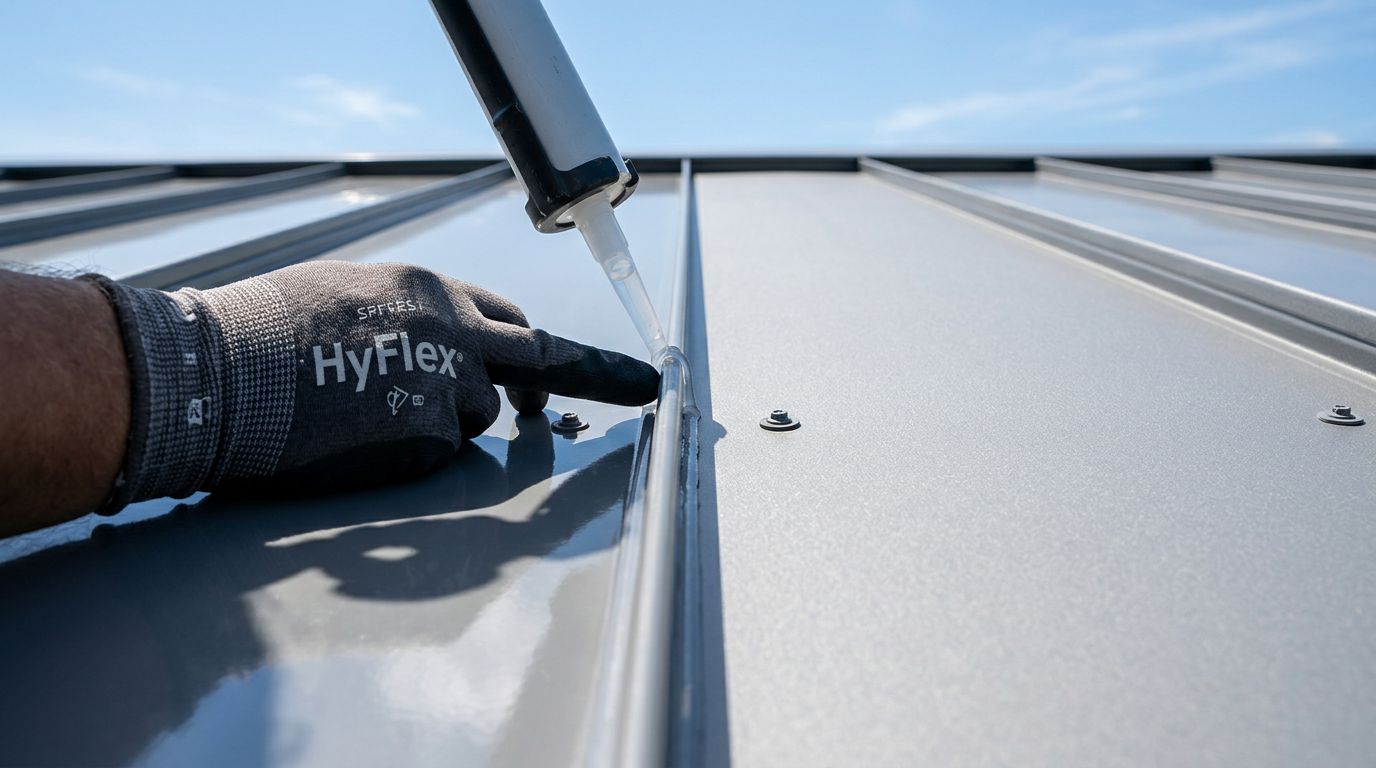
A metal roof can look perfect on day one and still fail at the seams a season later. The weak point is often the sealant, especially when the panel finish and the sealant chemistry do not match.
For Florida roofs, heat, UV, and heavy rain push every joint harder. That makes metal roof sealant compatibility a real specification issue, not a guess based on habit or brand names.
Before a bead goes on the panel, the coating, the sealant, and the prep method all need to line up.
Why PVDF and SMP finishes need different checks
PVDF and SMP are both common on prefinished metal roofing, but they do not behave the same way. PVDF, a fluoropolymer coating, is known for strong UV resistance and long color life. SMP, or silicone-modified polyester, is also widely used and can perform well in many roof systems.
The coating chemistry matters because sealants bond to the finish, not just the metal underneath. If the sealant cannot wet out the surface well, adhesion can suffer. If the finish carries residue, chalk, or a release agent, the bond can drop fast.
The exact sealant formula matters too. One product may bond well to one PVDF panel and fail on another SMP panel. That is why broad claims like "silicone works on everything" or "polyurethane is fine for all coated metal" create trouble.
Here is a quick side-by-side look at the two finishes and the points that deserve attention.
| Finish | Typical traits | Sealant concerns | What to verify |
|---|---|---|---|
| PVDF | High UV resistance, smooth, durable finish | Some sealants struggle if the surface is dirty, chalked, or not fully cured | Written approval, prep method, cure time |
| SMP | Common, durable, many color options | Some sealants can stain, soften, or collect dirt at the edge | Compatibility approval, test bead, cleaning method |
The table does not give a green light by itself. It only shows where the questions start. The final answer still comes from the panel maker, the sealant maker, and the actual job conditions.
Where sealants get tested hardest on a roof
Sealant problems show up fastest at joints that move, flex, or stay wet. Hidden laps, exposed fastener terminations, penetrations, and roof-to-wall details all demand different products and different prep.
For hidden metal-to-metal laps, butyl tape versus tube sealant matters because compression and exposure change how the joint performs. A bead that looks fine in open air may not be the best choice where two panels press together.
At wall transitions, sealant should support the flashing detail, not replace it. If a roof edge depends on caulk alone, the joint has already been asked to do too much. That is why roof-to-wall flashing details matter before anyone starts sealing the edge.
Sealant should support the detail. It should not become the detail.
Florida weather makes this even more important. Panels expand and contract, so a stiff or poorly bonded sealant can crack or peel. Sunlight can also age some sealants faster at exposed joints, while dirt and pollen can cling to sticky edges.
A joint can fail in a few different ways:
- Adhesion failure happens when the sealant releases from the coating.
- Staining can show up as a halo, smear, or color shift near the joint.
- Softening can leave the bead gummy or weak.
- Dirt pickup can make the seam look dirty long before the roof is worn out.
- Warranty issues can follow if the sealant was never approved for that finish.
These problems rarely come from one bad choice alone. More often, they come from a mix of the wrong chemistry, rushed prep, and missing approval.
How to check metal roof sealant compatibility before install
The safest path is simple. Check the documents first, then test the product on the actual coating system before full installation.
- Read the technical data sheet for the sealant.
- Read the technical data sheet for the panel finish.
- Confirm that the panel or coating manufacturer approves the sealant.
- Confirm that the sealant manufacturer approves the coating.
- Test a small area on the same finish that will be used on the roof.
- Let the sealant cure, then inspect for lift, stain, tack, or edge dirt.
If the approval is missing in either direction, treat the product as unverified until you get written confirmation. A product that worked on one roof is not automatically approved for another finish, color, or coating batch.
Adhesion testing does not need to be fancy to be useful. A small field test on a scrap piece or hidden area can reveal a lot. If the bead lifts cleanly, stays soft, or leaves a stain, that is a warning sign before the roof is closed up.
You should also check the project spec, if there is one. Some jobs call for non-staining sealants. Others call for specific primers, surface cleaners, or cure windows. If the spec and the product sheet conflict, stop and get direction before proceeding.
Surface prep and application details that affect bond
Even the right sealant can fail on a dirty or poorly prepared panel. Dust, oil from handling, chalking, cutting residue, and moisture all work against adhesion. So does a rushed application on a hot panel.
Surface prep has to match the exact coating system. Some finishes allow a dry wipe. Others call for a cleaner approved by the panel maker. A few need a primer. Never assume a solvent wipe is safe just because it worked on another roof.
The surface also has to be dry and stable. Sealant applied over standing moisture can trap water at the joint. Sealant applied over an uncured touch-up coating can soften the repair or lose grip.
Application matters just as much as prep. A thin, underfilled bead can tear apart as the roof moves. A massive bead can skin over on the outside while staying soft inside. Both are problems.
Keep these points in mind during install:
- Clean the panel the way the manufacturer requires.
- Use only approved cleaners and primers.
- Apply sealant within the recommended temperature range.
- Keep the bead size and compression consistent.
- Protect the joint from foot traffic until it cures.
A good bead looks simple. It is even, fully contacted, and free of voids. That takes discipline on hot Florida days, when the clock moves fast and the roof heats up even faster.
What specifiers and contractors should ask for
The best projects have paperwork that matches the roof on site. That means more than a product name on a submittal sheet.
Ask for the sealant technical data sheet, the panel finish data sheet, and any compatibility letter from both manufacturers. If the finish is PVDF or SMP, make sure the exact coating line is listed, not just the paint family. A general statement about "metal roofing" is too broad.
Also ask who is responsible if the sealant stains the finish or fails early. If nobody can answer that question, the project is missing the documentation it needs. That gap can become a warranty problem later.
For contractors, the practical rule is simple. Do not substitute a sealant on site unless the substitution is approved in writing. Color match is not the same thing as chemical compatibility. A bead can look right and still be wrong for the finish.
For homeowners, the same lesson applies. If a repair crew says "we always use this product," ask what finish it is approved for. A confident answer should come with a product sheet or manufacturer confirmation.
Conclusion
PVDF and SMP finishes can both work well on Florida metal roofs, but they are not the same surface. That means sealant choice has to start with the exact coating, not a guess based on past jobs.
The safest metal roof sealant compatibility check is simple, testable, and documented. Read the data sheets, confirm approval from both manufacturers, and verify the bead on the actual finish before full install.
A roof joint is small, but the decision behind it carries a lot of weight. When the coating, sealant, and prep all match, the joint has a far better chance of staying tight, clean, and covered by the warranty.
Share Our Metal Roofing News Articles
Related Posts