How to Inspect a Metal Roof After a Florida Windstorm
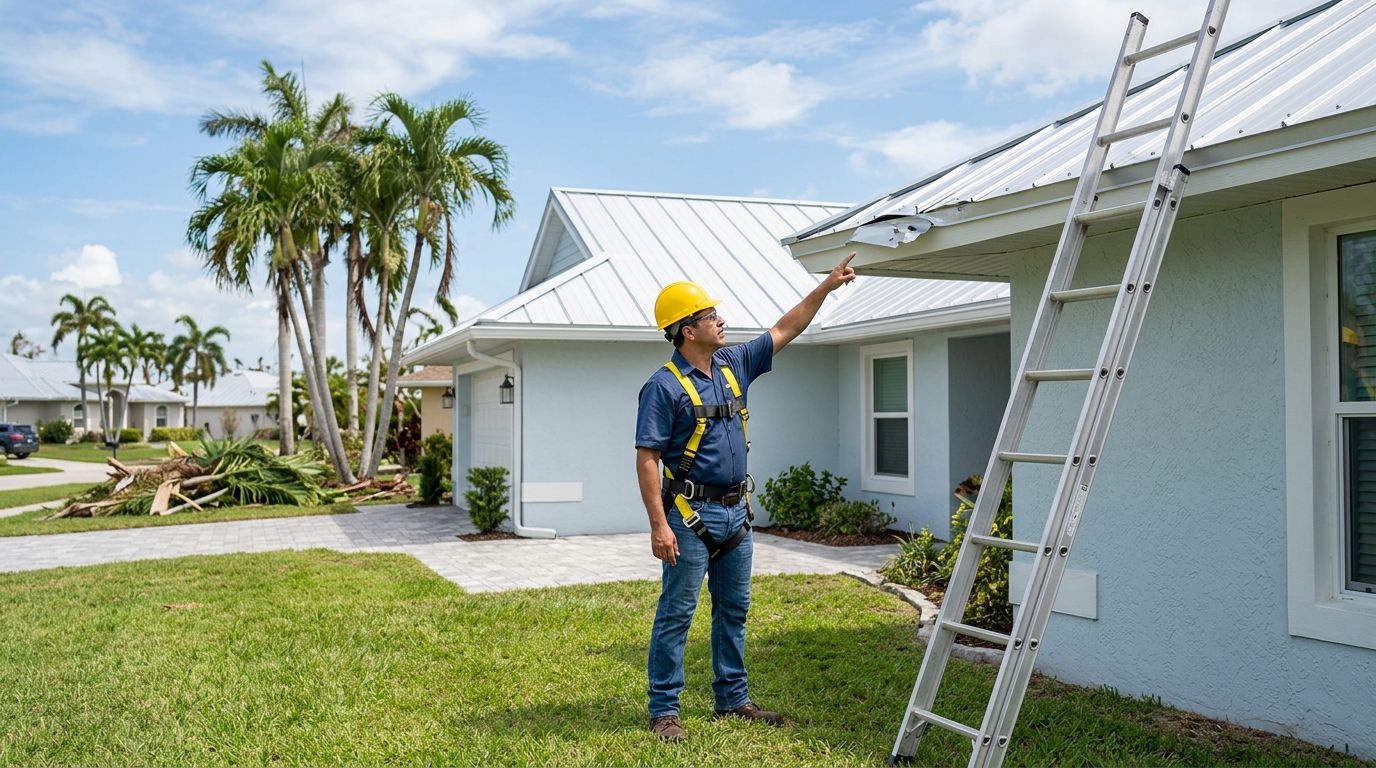
High winds can loosen metal roof parts long before a leak shows up inside. After a Florida windstorm, a roof can look fine from the street and still have bent flashing, backed-out fasteners, or lifted seams. A careful metal roof inspection starts on the ground, stays safe, and focuses on the small damage that turns into bigger repairs later.
The order matters. One rushed mistake can hide the clue you need, and a wet metal panel can turn a simple check into a fall.
Start with safety before you look at the roof
Wait until the storm has fully passed, the sky is clear, and the ground is dry enough to walk safely. Check for downed power lines, broken tree limbs, loose gutters, and unstable ladder footing before you move closer to the house. If anything around the roof looks unsafe, stop there and call for help.
Most homeowners should stay off the roof. Metal panels can be slick, and a roof can dent under weight. A quick look from a ladder or the ground is enough for the first pass, as long as you keep your feet on stable ground.
If you can see a problem from the yard, the storm may have done more than cosmetic damage.
Use binoculars or your phone camera zoom to inspect edges, ridges, flashings, and seams. A helper on the ground can also point out details you may miss while you're focused on one side of the house. After a strong windstorm, patience is safer than speed.
Build a ground-level checklist around the property
A slow walk around the home catches more than a quick glance from the driveway. Start at one corner and move all the way around the building so you don't skip any side. If you keep a regular roof care routine, a metal roof maintenance checklist makes it easier to compare what the roof looked like before and after the storm.
Use this simple scan:
| Area | What to look for | Why it matters |
|---|---|---|
| Roof edges and ridges | lifted trim, bent caps, open gaps | Wind often starts at the edges |
| Seams and fasteners | missing screws, backed-out screws, open laps | These spots can turn into leaks |
| Flashing around vents, walls, and chimneys | loose metal, cracked sealant, bent pieces | These are common entry points for water |
| Gutters and the ground below | fallen screws, trim, shavings, roof debris | Debris often tells you what moved |
| Soffits and fascia | dents, gaps, loose metal | Wind can push damage beyond the roof surface |
If you find matching debris on the ground, treat it as a clue. A screw, trim piece, or panel fragment can point you to the section that moved in the wind.
Know the damage signs that matter most on metal roofs
Some wind damage is easy to spot. Other damage hides in small changes that look harmless at first. The problem is that a roof does not need to lose a full panel to start leaking.
Look for these signs during your roof inspection:
- lifted ridge caps or edge trim
- missing, loose, or backed-out fasteners
- torn or cracked washer seals on exposed-fastener systems
- gaps at seams or overlaps
- bent flashing around vents, skylights, and walls
- dented panels with scratched or broken coating
- loose gutter sections or detached downspouts
- new rust spots where the finish was damaged
Small dents in the middle of a panel are often less urgent than movement at seams or edges. However, dents near fasteners, overlaps, or trim deserve attention. That is where wind can open a path for water.
Exposed-fastener panels
On exposed-fastener roofs, wind can work screws loose over time. Look closely at screw heads and washers. If washers are split, flattened, or missing, water can get in even when the panel still looks tight.
You may also see slight lifting around horizontal laps or at the roof edge. That is a sign the panel has shifted. In that case, the issue is usually more than surface wear.
Standing seam systems
Standing seam roofs often hold up well in wind, but they still need a close look. Check for raised seams, deformed trim, and movement near clips, valleys, and perimeter edges. A seam that looks slightly open can let water blow in during the next hard rain.
Pay extra attention to roof-to-wall transitions, chimney flashings, and skylight details. Wind tends to stress those points first. A roof can look solid from below and still have one weak spot in a corner or along a penetration.
Check the attic and interior for hidden leak clues
Water often shows up inside after it gets past a small roof opening. That means the attic and ceilings matter just as much as the roof surface. If you only inspect the outside, you can miss the first sign of trouble.
Grab a flashlight and check the attic, ceiling corners, and upper walls. Look for fresh stains, damp insulation, wet wood, drips around vents, or a musty smell. If light shines through the roof deck where it should not, treat that as a real problem.
Interior clues can be subtle. Paint bubbles, a damp drywall seam, or a stain that grows after the next rain all point to active water entry. If you see wet insulation or dripping near an electrical fixture, stop and keep the area clear until it can be checked safely.
Document everything before you clean up
Photos matter most before anything gets moved. Take pictures of the roof from the ground, then get wider shots of the whole house and closer images of each problem area. Use the same angle for different sides of the roof if you can, because that makes changes easier to compare.
Write down the date of the storm, the time you first saw damage, and the exact spots that look affected. Use simple location notes like "north side above garage" or "rear slope near chimney." If you notice debris on the ground, photograph that too before sweeping it away.
A clean record helps with insurance claims and repair estimates. It also helps if you need to explain why a repair was delayed because of weather or access issues.
When a professional needs to look right away
Some damage should not wait. If you see a missing panel, a split seam, a lifted section, or open flashing, the roof needs a professional inspection soon. The same goes for any puncture, tree strike, or sign that the roof structure moved under the wind load.
If the roof shows obvious panel damage, matching the right profile and thickness matters. For that kind of repair, see how replacing damaged metal roof panels works before you guess at a fix.
Call for help right away if:
- water is coming inside during or after rain
- a seam or flashing is visibly open
- the roof has lifted at the edge
- you can see bent framing, soffit damage, or structural movement
- the roof section is too steep, too high, or too slick to inspect safely
A fast response can keep a small failure from turning into a larger one. That matters in Florida, where another storm or a sudden rain can follow soon after the first.
Conclusion
A metal roof can survive a Florida windstorm and still need close attention. The safest approach is simple, start on the ground, look at edges and seams first, then move inside and check for water signs. After that, document everything before you clean up or call for repairs.
The most important clue is often the smallest one, like a loose fastener, open flashing, or a stain that was not there yesterday. Catching that early keeps the next storm from finding the same weak spot again.
Share Our Metal Roofing News Articles
Related Posts