Can You Reuse Metal Roof Screws During Repairs?
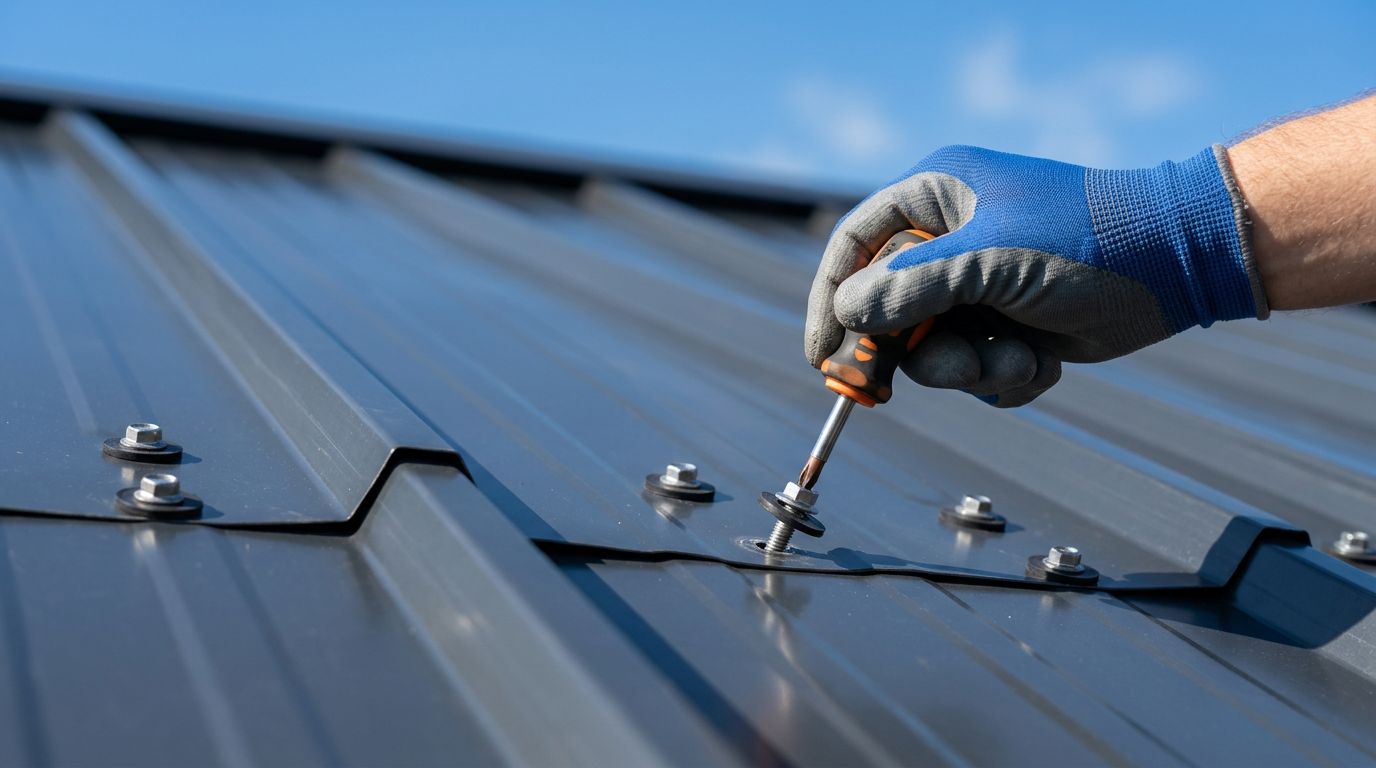
Yes, you can sometimes reuse metal roof screws during repairs, but only when the screw still holds tight, the washer still seals, and the hole has not worn out. In many cases, replacement is the safer move because a roof fastener has one job: keep water out while the panel moves a little with heat and wind.
That matters in Florida. Sun, storms, and humidity punish small parts fast, and a screw that looks fine on the surface can still fail at the washer or in the hole. If you're unsure, treat the old screw as suspect until it passes a close inspection.
When reusing old screws can work
Reusing screws makes sense on small repairs when the fastener came out clean, the panel hole stayed snug, and the screw threads still bite well. That can happen after a limited trim repair, a small panel swap, or a fastener that was removed once and not abused.
The old screw should go back only if the neoprene washer is still soft and round. If it feels hard, cracked, or flattened, it won't make a reliable seal. The screw body also needs clean threads and an undamaged head, because a stripped driver recess invites overdriving during reinstallation.
For replacement work, matching the right screw type matters as much as the size. If you're changing fasteners in the middle of a repair, a quick review of choosing the right roofing screws can save you from installing the wrong head or washer on the wrong panel.
A reused screw should feel like it is biting into the panel, not spinning in place. If it does not tighten with normal pressure, stop there.
Why old screws often fail after removal
Once a screw comes out, it has already been through stress. The washer has been compressed, the threads may have scraped against the panel, and the hole may have opened a little. That wear can turn a decent screw into a leak path.
The washer is the weak spot most of the time. A neoprene washer seals by pressing against the panel at the right amount of force. If the screw was overdriven the first time, the washer may already be crushed. If it was underdriven, the hole may have shifted and broken the seal anyway.
Corrosion is another problem. Rust on the shank, white oxidation on coated screws, or pitting near the head all point to trouble. Even light corrosion can weaken the fastener and keep it from clamping the panel the way it should.
Panel movement matters too. Metal roofing expands and contracts all day. A screw that once fit tightly can loosen after the panel shifts through heat cycles, especially on long Florida runs. When that happens, the washer no longer stays compressed evenly.
A screw can look reusable and still fail the seal once the washer or hole has changed shape.
What to inspect before you decide
A careful check takes less time than cleaning up a leak later. Pull the screw, wipe it clean, and inspect the washer, threads, and shank under good light.
| Part to inspect | Reuse it if... | Replace it if... |
|---|---|---|
| Neoprene washer | soft, round, and uncracked | flat, split, hardened, or missing shape |
| Threads | sharp and clean | stripped, bent, or rusty |
| Screw hole | snug and round | enlarged, oval, or torn |
| Screw head | solid and drives cleanly | rounded out, rusted, or damaged |
After that, test the fit by hand before you drive anything home. If the screw starts loose, the hole has probably lost grip. If you have to force the driver hard, the screw may be damaged or the hole may not accept it cleanly.
Pay close attention to the metal around the hole. If it has become ragged or stretched, the screw may tighten at first and still loosen later. That kind of damage is common after repeated service work, and it often shows up as a stain around the fastener before a real leak starts.
Avoid these common mistakes:
- Reusing a washer that already shows cracks or flattening.
- Driving a screw back into an enlarged hole.
- Cranking the screw down until the washer bulges out.
- Mixing old screws with new ones in the same repair area.
- Reusing fasteners that show rust near the head or tip.
Each of those mistakes can create a leak that shows up after the next hard rain. That's why a quick visual check is never enough on its own.
When replacement is the better call
Replacement is the better call when the repair affects multiple screws, the panel holes have widened, or the roof already shows signs of past leaks. It is also the safer choice when the old screw came out hard, the washer stayed stuck to the panel, or the threads look worn down.
If you're replacing screws on a roof fastened into steel, the fastening method matters too. Some jobs call for a different screw style than others, so a reference like self-drilling vs self-tapping roofing screws can help you match the fastener to the substrate instead of guessing.
New fasteners also give you a clean match on length and washer size. That matters when the old screw was slightly short, or when the panel sits over purlins that demand a stronger bite.
New screws are cheap compared with water damage. A stained ceiling, soaked insulation, or rusted framing costs far more than a fresh box of fasteners. For that reason, many contractors replace screws on any repair that affects seal quality, not just the one that failed.
The safer choice on repairs
Metal roof screws can be reused in narrow cases, but only when the washer, threads, and hole all pass inspection. If any one of those parts looks tired, replacement is the smarter move.
When a roof has to stay dry through Florida heat and storm season, a fresh screw is often the better seal . That small decision can keep a repair from turning into a bigger job later.
Share Our Metal Roofing News Articles
Related Posts