What Causes Stripped Screw Holes in Metal Roofing
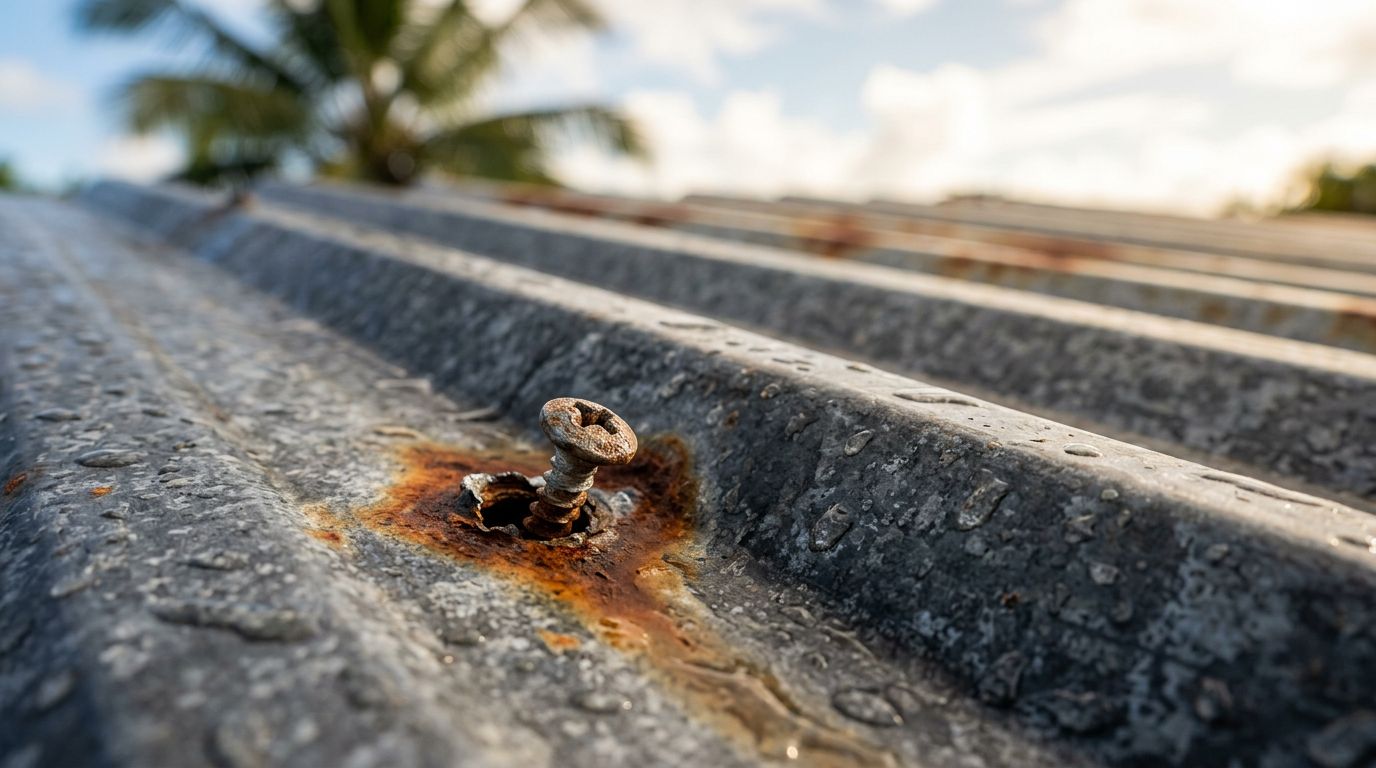
Stripped screw holes in metal roofing often start as a tiny defect, then turn into a leak during the next hard rain. In Florida, heat, wind, and heavy storms can make that small problem grow faster than many people expect.
The right fix depends on why the hole failed. A screw that was overdriven needs a different repair than a hole worn out by movement, corrosion, or repeated removal.
Once you know the cause, you can tell whether a larger fastener, sealant, a repair plate, or a panel replacement is the right move. The goal is simple, keep water out and keep the panel locked down.
Why screw holes strip in metal roofing
A screw hole strips when the fastener no longer has enough material to bite into. That can happen in the panel, the wood deck, or the steel framing below it.
One common cause is overdriving . When a screw is driven too hard, the washer can flatten, the hole can widen, and the screw loses its grip. Underdriving causes trouble too, because a loose screw lets the panel move and wear the hole larger over time.
Thermal movement is another major cause. Metal expands in the sun and contracts at night. In Florida, that daily cycle puts a lot of small stress on fasteners. Add afternoon storms and high winds, and the screw works back and forth like a hinge pin.
Wrong fasteners create problems as well. A screw that is too short, too small, or made for the wrong substrate will not hold well. Wood-thread screws belong in wood. Self-drilling screws belong in steel. The wrong choice often fails early, even if the roof looks fine at first.
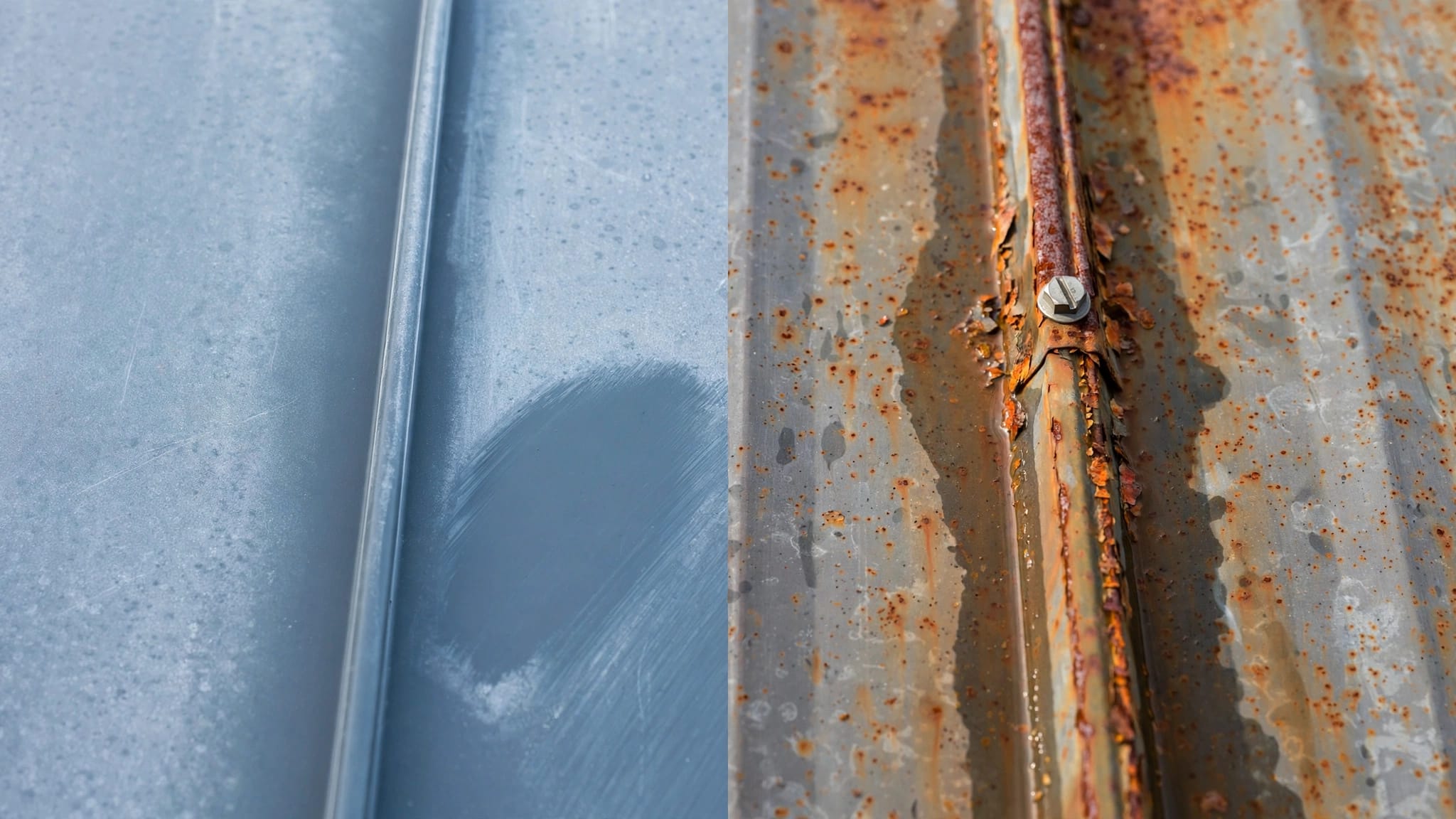
Corrosion can also weaken the hole. Rust eats away at the fastener and the surrounding metal. On coastal properties, that risk rises if the screw coating or material does not match the environment.
The metal roofing installation manuals are useful here because they spell out fastener type, spacing, and attachment details for common panel systems.
How to tell a stripped hole before it leaks
A stripped hole does not always announce itself with a drip. More often, the signs show up around the fastener line.
Look for these warning signs:
- The screw spins without tightening.
- The washer no longer compresses evenly.
- The screw head sits crooked or lifts slightly.
- The panel feels loose near the fastener.
- Rust marks, staining, or water trails appear around the hole.
- The hole looks oval instead of round.
- Sealant around the screw has cracked or pulled away.
A screw that spins without grip is more than a loose fastener. It is a path for water.
If the fastener moves easily by hand, the hole has already lost strength. Even if the roof is not leaking yet, the next storm can push water through the opening. That is why a small repair now is cheaper than chasing ceiling stains later.
Repair choices that match the damage
The best repair depends on how much material is left around the hole.
| Condition | Best repair | Works best when |
|---|---|---|
| Hole is only slightly worn | Oversized fastener | The panel and substrate are still sound |
| Hole leaks but the surrounding metal is intact | Sealant plus proper fastener or repair plate | The damage is small and contained |
| Hole is elongated, torn, or rusted | Panel or substrate replacement | The fastener cannot hold a new screw |
A clean repair starts with a clear diagnosis. If the hole is only a little loose, you may not need a full panel change. If the metal is torn or the deck is weak, a patch will not last.
Oversized fasteners when the base still has strength
An oversized fastener works when the original hole has opened up but the surrounding material still has grip. The new screw needs enough bite to anchor in fresh material, but it should not be so large that it splits wood or distorts thin metal.
For wood decking, a larger-diameter screw can often restore holding power if the wood is dry and solid. For steel framing, a different self-drilling screw may solve the problem if the original fastener was undersized or worn.
This repair works best when the hole has not turned into a slot. If the screw head still seats flat and the washer can compress, the fix has a good chance of holding. If the screw still spins after replacement, the substrate is the problem, not the screw.
Do not mix in an oversized fastener and hope for the best. Use the correct length, coating, and washer so the new screw matches the panel and the support below it. A bigger screw is a repair, not a cure for rotten wood or corroded steel.
Sealant and repair plates for small leaks
Sealant has a place in metal roof repair, but it should not be the only answer when a hole has stripped. It works best as part of a mechanical fix.
If the hole is only slightly worn and the surrounding panel is solid, a compatible roofing sealant can help block water around the new fastener. The surface needs to be clean and dry. Dirt, chalk, oil, and old sealant all reduce adhesion.
A repair plate can help when the hole is stretched but the panel metal is still usable. The plate spreads the load over a wider area, so the fastener is not pulling against a tiny ring of damaged metal. That is useful on flat areas where there is room for a small reinforcement piece.
Sealant and repair plates do not solve structural failure. If the panel has torn metal, deep corrosion, or repeated movement, the repair will only buy time.
When panel replacement is the better choice
Sometimes the hole has gone too far. If the fastener hole is elongated, the metal around it is fatigued, or the panel has started to buckle, replacement is the safer call.
The same is true when the substrate is weak. A new screw into rotten wood or rusted steel is just a faster failure. In that case, the problem sits below the panel, so the deck or framing needs repair first.
Panel replacement also makes sense when the hole is near a high-stress area, such as a seam, edge, penetration, or transition. Those spots take more movement and more wind load. A patch there may not survive long enough to justify the labor.
If a section has repeated leaks or the fastener line looks worn across a wide area, replacing the panel can save time and future callbacks.
How to keep new holes from stripping
Prevention starts with the right fastener and the right installation habits. That matters even more on Florida roofs, where heat and storms test every screw.
Use fasteners made for the panel and the substrate. Wood framing needs wood-thread screws. Steel framing needs self-drilling screws with the correct point. The washer should be intact, flexible, and sized for the fastener head.
Placement matters just as much. Follow the panel maker's fastening pattern and set screws in the approved location for that profile. A screw in the wrong spot can distort the panel and start a leak path.
Torque control is the other big factor. Run the driver slowly and stop as soon as the washer seats and compresses slightly. If the washer bulges, the head sinks too deep, or the metal puckers, the screw is too tight. If the screw head still rocks, it is too loose.
A driver with a clutch helps a lot. So does a careful hand during final tightening. Many stripped holes start with a tool set too hot for the job.
Use corrosion-resistant fasteners that fit the roof system, especially near the coast. Also, replace old screws instead of reusing them. Worn washers and tired threads do not hold like new hardware.
Before a repair or new install, the metal roofing installation best practices are a solid reference for fastening, spacing, and tool setup.
Conclusion
Stripped screw holes usually come back to a few plain causes, too much torque, the wrong fastener, panel movement, corrosion, or weak material below the roof. Once the hole loses its grip, water can follow fast.
Small damage may respond to an oversized fastener or a sealed repair. Wider damage, torn metal, or a weak substrate usually calls for panel or deck replacement.
A loose screw is a warning, not a minor detail. Fix it before the next storm gives water a place to enter.
Share Our Metal Roofing News Articles
Related Posts