Armored Coast Standing Seam vs Standard Standing Seam
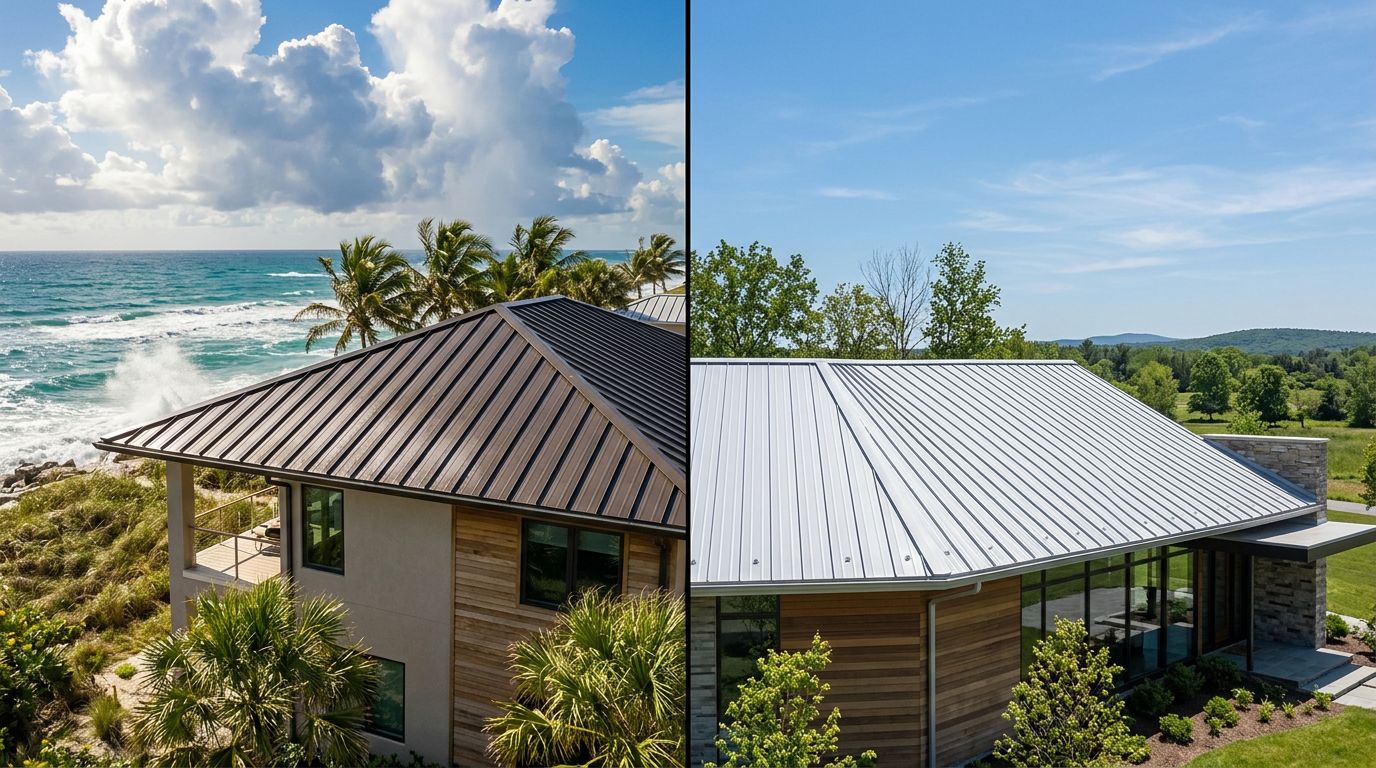
Salt air, hurricane winds, and intense Florida sun can expose weak points in a roof system quickly. When comparing armored coast standing seam with standard standing seam, the right choice depends on more than appearance. Panel construction, coating, attachment method, trim, fasteners, and local approvals all affect performance.
Standard standing seam may fit many inland and coastal projects, while the Armored Coast profile is designed for homeowners who want a coastal-focused option. Before choosing, compare the complete approved roofing assembly, not only the panel name.
Key Takeaways
- Armored Coast standing seam is a coastal-oriented panel option, but its exact benefits depend on the specified material, finish, and approved system.
- Standard standing seam offers concealed fasteners, clean lines, and strong performance when properly selected and installed.
- Salt exposure makes material, coating, fastener compatibility, and maintenance especially important near Florida's coast.
- Clip-fastened and nail-strip systems attach differently and handle thermal movement in different ways.
- Verify Florida Product Approval, wind-load ratings, permitting rules, and insurance requirements before ordering materials.
What Makes Standing Seam Suitable for Florida Homes?
Standing seam panels use raised vertical seams that connect adjacent panels. The fasteners are hidden beneath the seams or covered by an integrated fastening flange, depending on the system. This design reduces exposed screw heads across the main roof surface and creates long, uninterrupted drainage paths.
For Florida homes, that design has practical value. Heavy rain can move quickly across the panels, and concealed attachment points reduce the number of exposed penetrations. However, a standing seam roof isn't automatically suitable for every property. The roof deck, slope, panel width, seam type, clips, fasteners, underlayment, and edge details must work together.
Wind performance also depends on the complete assembly. Perimeter and corner zones often experience higher pressure than the center of the roof. As a result, installers may need different attachment spacing or trim details in those areas.
Homeowners should also separate general standing seam characteristics from product-specific claims. A standard standing seam profile may offer excellent wind resistance when it carries the right approval and receives a correct installation. Armored Coast may offer additional coastal-focused specifications, but the current product data must confirm those details.
Florida standing seam panels are available in multiple gauges, widths, colors, and attachment configurations. The product page and current technical documents can help contractors match a panel to the project rather than selecting by appearance alone.
Armored Coast Standing Seam: Where It May Fit
Armored Coast standing seam is intended for Florida projects where coastal conditions deserve closer attention. The name points to a system designed for homes and buildings exposed to salt-filled air, high humidity, strong sunlight, and tropical weather. Still, the actual protection comes from the product specifications and installation details.
Coastal exposure can affect metal roofing in several ways. Salt deposits may collect on panels and trim. Moisture can remain around laps, cut edges, fasteners, valleys, and penetrations. Incompatible metals may also create corrosion problems when they contact each other in a wet environment.
An Armored Coast system may be the stronger candidate when the project is near the Gulf or Atlantic coast, especially if the supplier offers a finish, substrate, or warranty suited to that exposure. Ask for the current technical data before committing. Confirm the base metal, paint system, gauge, warranty terms, compatible accessories, and approved installation method.
The panel alone doesn't protect every vulnerable area. Ridge caps, rake trim, eave trim, valleys, roof-to-wall transitions, skylights, vents, and pipe flashings need compatible materials and careful detailing. A coastal roof can fail at a poorly sealed penetration even when the field panels remain in good condition.
Coastal performance depends on the entire roof assembly. A corrosion-resistant panel paired with incompatible trim or fasteners can still develop problems.
Armored Coast may also make sense when the homeowner wants a standing seam appearance with a product line positioned for coastal Florida use. That decision should remain tied to documented approvals and the home's exposure, not marketing language alone.
Standard Standing Seam for Coastal and Inland Properties
Standard standing seam is a broad category, not one single product. It can include different panel widths, seam heights, gauges, finishes, and attachment methods. Some systems use separate clips, while others use an integrated nail strip. Those differences affect movement, installation, repair, and code documentation.
A standard system can work well in coastal Florida when the selected configuration matches the site's wind zone and exposure. It may also be the practical choice for homes farther inland, where salt exposure is lower but wind and rain remain serious concerns.
Standard standing seam often gives homeowners a broad selection of colors and finishes. It can also provide a familiar installation method for contractors who regularly work with the profile. That experience matters because panel alignment, clip placement, fastener spacing, seam engagement, and trim installation all affect the finished roof.
The main limitation is that "standard" doesn't tell you enough. Two standing seam panels can look similar while having different tested pressures, attachment requirements, and warranty conditions. One may use 24-gauge steel, while another uses 26-gauge steel. One may be approved for a clip-fastened installation, while another requires a nail-strip configuration.
Before comparing prices, request the exact system information:
- Panel profile and seam height
- Base metal and thickness
- Finish and color availability
- Clip or nail-strip attachment
- Approved fasteners and spacing
- Wind-load or design-pressure documentation
- Trim and flashing requirements
- Warranty terms for the panel and finish
A lower material price doesn't necessarily produce a lower project cost if the system requires different trim, labor, or engineering.
Armored Coast vs Standard Standing Seam: Main Differences
The most useful comparison focuses on exposure, documentation, attachment, and maintenance. The following table provides a practical starting point.
| Factor | Armored Coast standing seam | Standard standing seam |
|---|---|---|
| Primary fit | Coastal-focused Florida applications | Broad residential and commercial applications |
| Salt-air considerations | Review the specified coastal materials, finish, and accessories | Confirm that the selected system suits the property's exposure |
| Attachment | Depends on the exact Armored Coast configuration | May use clips or an integrated nail strip |
| Wind performance | Must be verified through current system approvals | Must be verified through the selected system approvals |
| Appearance | Raised-seam metal roof appearance | Raised-seam metal roof appearance |
| Maintenance | Requires coastal inspection and salt removal when needed | Maintenance needs vary with distance from the coast |
| Best selection method | Match the documented system to exposure and code | Match the documented system to exposure and code |
Armored Coast has a clearer coastal purpose, while standard standing seam offers more general flexibility. Neither label replaces the need to review technical documents.
Homeowners within a short distance of open water should give extra attention to fasteners, trim, cut edges, and dissimilar metals. Inland homeowners may prioritize panel availability, color, budget, and the contractor's experience, while still meeting Florida wind requirements.
Clip-Fastened and Nail-Strip Systems Matter
The attachment method is one of the most important differences between standing seam systems. Clip-fastened panels attach to the deck or framing with separate clips under the seam. The clips can allow controlled movement as the metal expands and contracts with temperature changes.
Nail-strip panels use an integrated flange with fasteners concealed beneath the next panel. This method can simplify some installations, but the fastening pattern and panel design must match the approved assembly. Long roof runs, roof geometry, and temperature swings all affect the decision.
Florida's heat creates regular expansion and contraction. Dark-colored panels can reach high surface temperatures under direct sun, so the attachment system must accommodate movement without stressing seams, fasteners, or trim.
The two systems can both be appropriate. The better choice depends on roof length, slope, layout, substrate, wind pressures, installer experience, and the exact product approval. Read more about standing seam attachment methods before comparing a nail-strip Armored Coast option with a clip-fastened standard panel.
A contractor should never substitute one attachment method for another without confirming that the change is allowed. The panel profile, clips, screws, spacing, and trim details form one tested system.
Coastal Florida Code and Approval Checks
Florida homeowners should confirm compliance before materials arrive at the job site. Local requirements can vary by jurisdiction, and coastal counties often apply demanding wind provisions. Miami-Dade and Broward County projects may involve additional approval documentation, while other areas may use Florida Product Approval records and local permitting rules.
The product name is only one part of the review. The approval should match the actual panel profile, gauge, substrate, attachment method, fasteners, clip spacing, edge treatment, and installation direction.
Ask the roofing professional to verify:
- The required design pressure for the home's location and roof zones.
- The approved panel and attachment configuration.
- The deck type and underlayment requirements.
- The permitted fastener and clip spacing.
- The approved edge metal, trim, and flashing details.
- Any local inspection, permit, or engineering requirements.
- Documentation requested by the homeowner's insurance company.
A system can be close to compliant and still fail review if the trim or perimeter attachment doesn't match the approval. Use current documents, because product approvals, color offerings, and installation instructions can change.
This Florida metal roofing compliance guide covers the details contractors should compare, including deck type, design pressures, clips, fasteners, and trim.
Maintenance Near the Gulf and Atlantic
Metal roofing requires less routine attention than many homeowners expect, but coastal homes still benefit from regular inspections. Salt and airborne contaminants can settle on horizontal trim, valleys, gutters, and sheltered areas. After major storms, wind-driven debris may scratch the finish or damage flashings.
A simple maintenance plan includes:
- Inspecting the roof after tropical storms or hurricanes.
- Checking valleys, penetrations, ridge caps, and trim.
- Removing leaves and debris that hold moisture.
- Clearing gutters and downspouts.
- Rinsing salt deposits when the roof system and finish instructions allow it.
- Looking for scratches, corrosion, loose trim, or damaged sealant.
- Avoiding unapproved touch-up paint or incompatible caulking.
Never walk on standing seam panels without guidance. Foot traffic can dent panels or damage seams, especially in areas without proper support. A qualified roofer can inspect the roof safely and identify issues before water reaches the deck or interior.
For coastal properties, maintenance also protects warranty coverage. Follow the manufacturer's care instructions and keep records of inspections and repairs.
Which Standing Seam System Should You Choose?
Armored Coast is worth considering when salt-air exposure is a major concern and the available documentation supports the home's location and design. Standard standing seam may be the better fit when a specific approved profile, finish, attachment method, or contractor installation process fits the project more closely.
Budget should include more than the panel price. Compare trim, clips, fasteners, underlayment, delivery, labor, permits, engineering, and any required tear-off. A system with a higher material cost may reduce rework if it matches the roof design and approval requirements.
Ask for a written estimate that identifies the exact product and installation method. Avoid estimates that say only "metal roof" or "standing seam" without listing the panel profile and accessories.
A qualified local roofing professional should review the roof slope, deck, wind zone, exposure, and existing flashing. Before work begins, verify current Florida building-code, permitting, wind-load, Product Approval, Miami-Dade NOA, and insurance requirements.
Conclusion
The choice between Armored Coast and standard standing seam comes down to the complete roofing system. Coastal exposure may favor the Armored Coast option, while a properly approved standard profile can suit many Florida homes. Panel material, coating, attachment method, trim, fasteners, and installation quality all matter.
Start with the home's exposure and required design pressure. Then compare current documentation and complete system costs with a qualified local roofing professional. The strongest coastal choice is the system that matches the site, approval, and installation details , not simply the one with the more specialized name.
Share Our Metal Roofing News Articles
Related Posts