Metal Roof Lightning Protection for Florida Homes
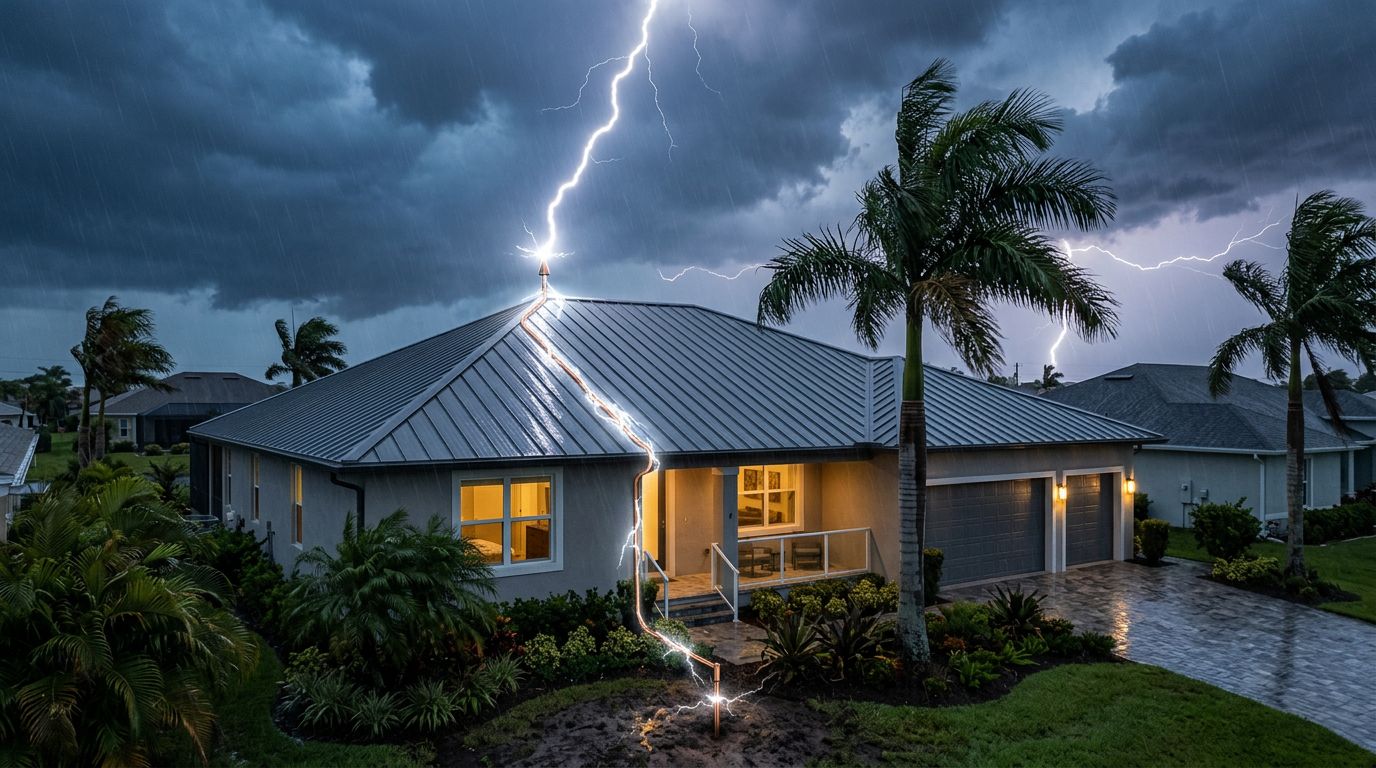
A Florida thunderstorm can turn a roof into the highest point on your property within seconds. While high-quality metal roofing boasts a superior class A fire rating and is a naturally non-combustible material, metal roof lightning protection helps manage that risk because a metal roof alone cannot prevent a lightning strike.
Metal roofing conducts electricity, which can help carry lightning current when panels are part of a properly designed system. However, the roof, gutters, electrical service, plumbing, wiring, and other metal components need professional evaluation, bonding, and grounding. The goal is to give lightning a controlled path away from people, structural materials, and sensitive equipment.
Key Takeaways
- Metal roofing doesn't attract lightning any more than traditional asphalt shingles do, though it can conduct a strike if a lightning strike reaches the home.
- A complete lightning protection system may include air terminals, conductors, grounding electrodes, and bonding connections.
- Surge protection is separate from external lightning protection and can help protect wiring and electronics.
- Panel styles like a standing seam metal roof, 5V, and PBR require project-specific review because panel continuity isn't automatic for effective metal roof lightning protection.
- Qualified professionals should design and install the system according to applicable codes, standards, and local requirements.
Does a Metal Roof Attract Lightning?
Metal roofing doesn't make a house more likely to receive a lightning strike. Lightning tends to connect with the tallest or most exposed objects in an area, regardless of whether the roof is metal, asphalt shingles, wood shakes, or another material.
Metal is a non-combustible material that provides an inherent class A fire rating and an exceptional fire resistance rating, meaning it won't ignite when a lightning strike hits. Steel panels conduct electrical current, while many nonmetal roofing materials can burn, crack, or break apart when lightning travels through nearby building materials. A metal roofing system may distribute current across a larger surface, but that result depends on how the roof and building components connect.
A roof can also contain gaps in electrical continuity and electrical conductivity. Paint, coatings, sealants, fasteners, clips, laps, and insulation may interrupt the path between panels. Standing seam panels often use concealed clips, while exposed-fastener systems connect through different parts of the panel assembly. Those details matter during an inspection, and panels alone don't replace the need for lightning rods.
Lightning can also travel through gutters, downspouts, electrical wiring, plumbing, telephone lines, and metal framing. If the current can't follow a controlled route to ground, it may jump between nearby components. That arc can damage the roof deck, start a fire, or injure someone touching connected equipment.
A metal roof is conductive material, not a complete lightning protection system.
The safest approach is to treat the metal roofing as one part of the structure. A qualified professional must evaluate the full path from the roof to the grounding system, and may recommend adding lightning rods if the structure requires comprehensive protection against a severe lightning strike.
What Metal Roof Lightning Protection Includes
A complete lightning protection system typically uses several connected components. The design depends on the home's height, roof shape, location, construction, utilities, and exposure.
Air terminals are placed at selected roof locations to provide strike collection points. These air terminals, traditionally called lightning rods, catch strikes at high points, although the complete lightning protection system includes much more than the terminals themselves. Placement should follow a recognized design method instead of relying on the assumption that one rod protects the entire roof.
Main conductors connect the air terminals to the grounding system. These conductor leads route energy downward, and they need appropriate routing, secure attachment, and suitable bends. A qualified installer selects the conductor type and layout based on the building and applicable safety standards.
Grounding electrodes provide the path into the earth. Grounding electrodes safely sink energy into the ground, and the installer may need to evaluate existing grounding components, such as ground rods or a concrete-encased electrode, before adding or connecting parts. Grounding work must comply with electrical requirements and local inspection rules.
Bonding connections connect accessible metal parts to the lightning protection system or building grounding system when required. Common items for review include gutters, downspouts, metal chimneys, rooftop equipment, solar equipment, plumbing, electrical service components, and metal-framed additions.
Surge protective devices help reduce voltage surges on electrical systems. These surge protection devices can protect service equipment, branch circuits, appliances, computers, security systems, and HVAC controls. However, a surge protector doesn't replace a complete external lightning protection system.
The National Fire Protection Association's NFPA 780 provides installation guidance for a lightning protection system. NFPA 780 isn't a substitute for local code review, and the applicable Florida building codes and electrical requirements still matter. Your contractor should identify the building codes, safety standards, and permitting requirements that apply to the project.
How Florida Homes Should Be Evaluated
Florida homes face frequent thunderstorms, high humidity, salt air in coastal areas, and strong wind conditions. Because of the state's high lightning strike density and severe weather patterns, evaluating a property correctly is essential for protecting the structure.
Start with the structure itself. A professional should review the roof plan, ridge and hip lines, dormers, valleys, porches, garages, screened enclosures, solar panels, antennas, and nearby trees. Factors such as building height, roof pitch, and unique architectural features heavily influence exposure to a potential lightning strike, changing where lightning protection components belong.
Next, inspect the home's electrical and grounding systems. The service equipment, grounding electrode conductor, communications systems, and metal water piping may need bonding or surge protection. Older homes may have grounding conditions that don't match current building codes and modern safety standards.
The home's surroundings also matter. A house on an open lot, a tall two-story home, and a property surrounded by mature trees each present different exposure conditions. Proximity to overhead power lines, detached garages, barns, pools, and irrigation equipment adds more items for review.
Coordinating the metal roof installation with the design of a comprehensive lightning protection system ensures that everything works harmoniously. A roofing contractor can evaluate the panel system, flashings, fasteners, penetrations, and roof attachments. A qualified electrical or lightning protection professional should handle the electrical design and connections to ensure strict safety standards are met. One contractor may coordinate the work, but the responsibility for each part should remain clear.
Before work begins, ask for:
- A written scope showing what the system covers.
- The proposed grounding and bonding method.
- The applicable code or installation standard, including local building codes.
- Permit and inspection responsibilities.
- Compatibility details for roof panels, coatings, gutters, solar equipment, and other attachments.
No system can guarantee that a lightning strike won't occur or that damage will never happen. Professional design reduces uncontrolled paths and helps the home's components work together.
Choosing Metal Roofing Panels for a Protected Home
Metal roofing protection shouldn't determine your panel choice by itself. The panel profile, coating, thickness, attachment method, roof slope, underlayment, flashing, and wind requirements all affect the roof assembly. Homeowners also evaluate how a non-combustible material provides a reliable class a fire rating for better safety.
Florida homeowners commonly compare 5V, exposed-fastener, PBR, and standing seam metal roof systems. A standing seam metal roof uses concealed clips and fasteners, which can create different access and bonding considerations than exposed-fastener panels. A contractor may need to install approved attachments without compromising the roof's water-shedding details.
If you're comparing roof profiles, this guide to metal roof panel types can help organize the differences between common systems. The right choice still depends on the home's design, location, required approvals, and installation method.
Coastal properties need additional attention to corrosion resistance. Salt exposure can affect fasteners, connectors, flashings, and grounding components. Compatible metals and suitable materials help maintain the roof and protection system over time. Avoid mixing metals without professional review because galvanic corrosion can damage connections.
Roof penetrations deserve careful planning. Air terminals, conductors, satellite equipment, vents, solar attachments, and service equipment must not create leaks or weaken the panel system. Improper techniques during metal roof installation or lightning protection setup could void a manufacturer's roof warranty or lifetime warranty. The roofing contractor and lightning protection installer should coordinate locations before panels and trim are installed.
Florida product approvals, wind-load requirements, and local permitting can also affect panel selection. Modern metal roofing options also enhance energy efficiency for the household. The material supplier can provide product information, while a qualified contractor confirms that the proposed assembly fits the home's requirements.
Bonding, Grounding, and Surge Protection
Bonding and grounding are easy to confuse. Bonding connects conductive parts together to ensure electrical continuity. Grounding provides a path into the earth via a reliable grounding source. A lightning protection system may require both to safely handle energy.
For example, a metal gutter may need a bonding connection so lightning current doesn't jump across a gap to a nearby conductor. The grounding system then provides the intended route away from the structure, utilizing proper grounding electrodes to safely dissipate the charge. The exact method depends on the building and the applicable installation requirements.
Never attach lightning conductor leads to a random pipe, plumbing fitting, fence, or unapproved ground rod without professional direction. An unsuitable connection can compromise the electrical conductivity of the installation, creating a dangerous path through the home or damaging components through corrosion.
Surge protection addresses a different problem. A lightning strike nearby can create a surge on utility or communication lines, even when your lightning protection system isn't directly tested. A qualified electrician can evaluate whole-house surge protection devices at the service equipment and additional protection for sensitive circuits.
Surge protection devices have ratings, installation requirements, and replacement considerations. They also work best when the home's grounding source and bonding network are correctly installed. Plug-in protectors can add another layer for electronics, but they can't replace service-level protection or proper wiring.
The roof system and electrical system should be reviewed together, because lightning can move between them through more than one route.
Installation and Maintenance Concerns
Installation should begin with coordination, not drilling. The roofing contractor needs to know where lightning protection components, equipment supports, solar attachments, and other penetrations will go, especially when working on a new metal roof installation that must also preserve your roof warranty. Early planning helps protect panel coatings, flashing details, underlayment, enhanced energy efficiency, and your roof warranty, which might even offer a lifetime warranty if specified by your manufacturer.
A qualified installer should secure conductors and components without creating sharp edges, loose hardware, or unsealed penetrations during metal roof installation. The finished work should have a clear path through the system, with connections accessible for inspection where required to meet strict safety standards.
After installation, keep records of the system design, equipment, inspections, and repairs. Those records help when another contractor later installs solar panels, replaces gutters, adds an addition, or modifies the electrical service.
Inspect the roof and protection system after major storms to verify that all air terminals, also known as lightning rods, remain secure. Look for loose panels, lifted trim, damaged conductors, separated connections, corrosion, punctured sealant, and displaced air terminals or lightning rods so you can maintain required safety standards. Don't touch a suspected damaged conductor or attempt a temporary repair. Have a qualified professional inspect it instead.
Routine roof maintenance still matters. Keep gutters and downspouts clear, check weatherproofing around penetrations, repair damaged coatings, and address corrosion before it reaches fasteners or connectors. If the roof is replaced, the lightning protection system may need to be removed and reinstalled by a qualified contractor.
Frequently Asked Questions
Does a metal roof make a home more likely to be struck by lightning?
No, a metal roof does not attract lightning any more than traditional roofing materials do. Lightning strikes the highest or most exposed point in an area based on height and surroundings, not the specific material of the roof.
Can a metal roof act as a complete lightning protection system on its own?
While metal roofing is conductive and non-combustible, it cannot safely dissipate a direct strike without a complete system. Proper metal roof lightning protection requires air terminals, dedicated main conductors, grounding electrodes, and bonding connections.
Why are bonding and grounding both necessary for a metal roof?
Bonding connects various metal parts together to ensure electrical continuity and prevent dangerous electrical arcing between components. Grounding provides a safe, controlled path for the electrical energy to dissipate directly into the earth.
Conclusion
A Florida metal roof with durable metal roofing provides an exceptional class a fire rating, but the panels alone don't protect the home. A complete metal roof lightning protection strategy must account for air terminals, conductors, grounding electrodes, bonding, electrical service, utilities, and surge protection.
Before installing or replacing a roof, coordinate the roofing and electrical work with qualified professionals. Proper planning helps preserve the roof assembly and gives lightning a controlled path to a reliable grounding source, especially when you install a certified lightning protection system designed to meet strict nfpa 780 standards, while recognizing that no system can guarantee complete protection from a strike.
Share Our Metal Roofing News Articles
Related Posts