When to Order a Metal Roof Pullout Test in Florida
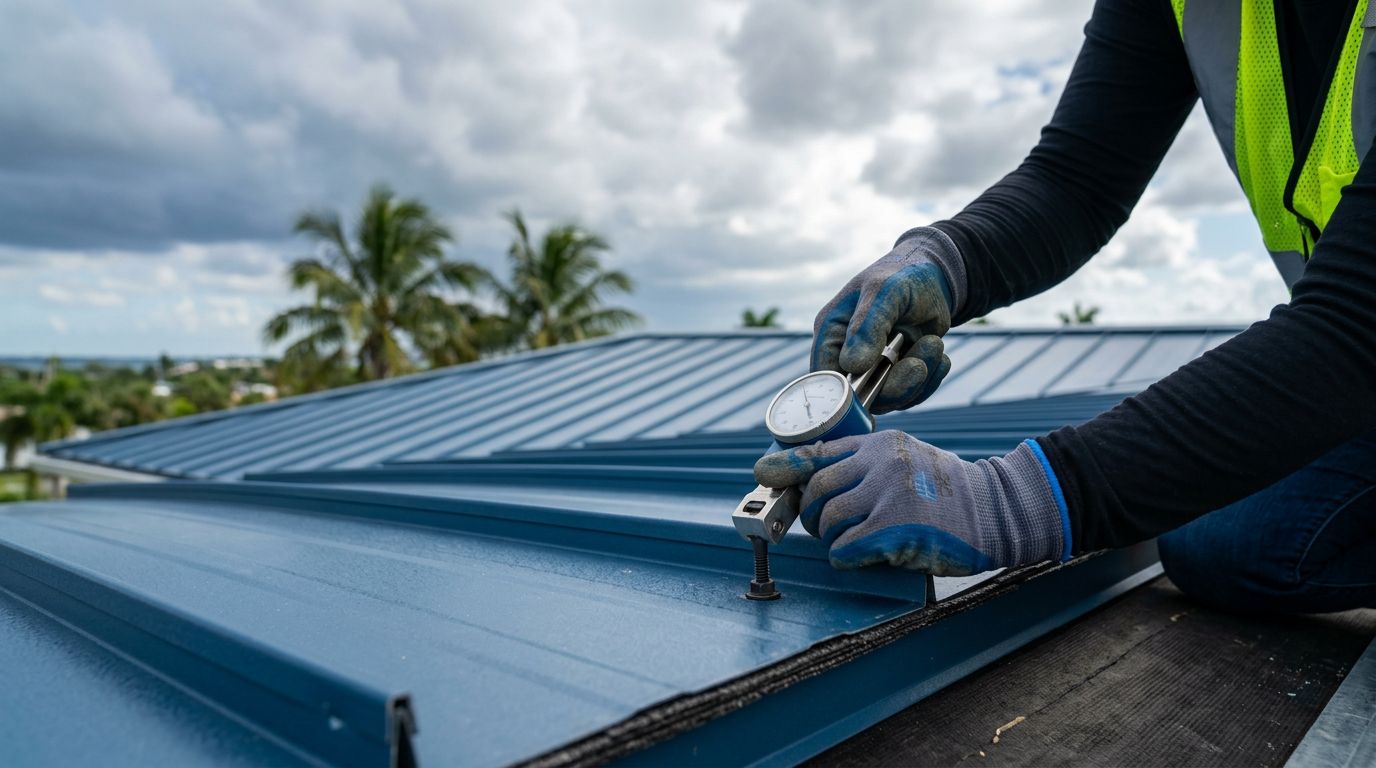
A screw can look tight and still have poor holding power. A metal roof pullout test measures how much force an installed fastener can resist before it withdraws from the roof deck or supporting material.
Florida roofs face high wind demands, changing substrates, and frequent repair work. Testing is most useful when you can't verify the existing deck, fastener performance, or approved roof assembly from documents alone. The right time to order one is usually before you finalize a retrofit or fastening plan.
When a Metal Roof Pullout Test Makes Sense
A metal roof pullout test is a site-specific check of the actual fastener and substrate. It doesn't replace the approved roof system design, but it can show whether existing conditions support that design.
The existing deck is unknown or damaged
Order testing before a reroof when the deck's age, material, or condition is uncertain. Older homes may have plywood, OSB, plank decking, or previous repairs in the same roof area. Those materials can produce different withdrawal results.
Water damage also changes the decision. Soft OSB, delaminated plywood, rot, rusted steel, and weakened framing can reduce fastener resistance. A visual inspection may identify damage, but it can't measure the remaining withdrawal strength.
Testing is especially useful when:
- The roof will receive new metal panels over an existing deck.
- Previous leaks may have affected the sheathing.
- Fasteners pull out during inspection or repair.
- The substrate varies across the roof.
- The original construction records are missing.
Test locations should represent the areas where the new fasteners will go. A single strong result from one section doesn't describe an entire roof with inconsistent decking.
The project has high wind or unusual fastening demands
Florida's wind design requirements depend on the building location, roof geometry, exposure, edge zones, and selected roof assembly. A contractor may need field data when the proposed work doesn't match a documented assembly exactly.
Testing can help when you're changing the panel profile, screw type, fastener length, spacing, or substrate. It may also be appropriate for hurricane repairs, partial reroofing, commercial maintenance, and projects where an engineer or building official requests verification.
Review the approved roof system before ordering materials. The Florida Product Approval guidance for metal roofs explains why panel type, deck, fastener, spacing, trim, and wind pressure must match the selected assembly.
A pullout result is useful only when it represents the fastener, substrate, and installation condition used in the roof design.
When Testing May Not Be Necessary
Testing isn't automatically required for every metal roof. A new project with a known substrate and a documented, approved roof assembly may already have the information needed for installation.
New construction has documented conditions
If the builder knows the deck material and thickness, the roof system matches the approval documents, and the fastener schedule is clear, field pullout testing may not add useful information. The contractor should still follow the approved installation instructions and project specifications.
The same principle applies to a straightforward replacement where the deck remains sound and the new system matches the existing approved design. However, the authority having jurisdiction, engineer of record, insurer, or project specification can require testing even when the conditions appear familiar.
Do not treat a test as a substitute for product approval. A strong fastener result cannot make an unapproved panel, screw, or spacing pattern acceptable.
Confirm the roof details before ordering
Before scheduling a test, gather the information that controls the fastening decision:
- Panel profile and thickness
- Fastener type, diameter, length, and washer
- Deck or structural substrate
- Fastener embedment and installation condition
- Roof slope, height, and geometry
- Field, perimeter, and corner spacing
- Required design wind pressure
- Florida Product Approval, Miami-Dade NOA, or engineered details
For screw selection and placement, use a project-specific guide such as this reference on choosing the right metal roofing fasteners. A pullout test cannot correct a fastener that doesn't match the roof system.
What the Test Actually Evaluates
The test measures withdrawal resistance, which is the force required to pull a fastener out of its supporting material. The result depends on more than the screw itself.
The substrate controls the result
Wood, OSB, steel, concrete, and other deck materials require different testing methods and interpretations. Thickness, moisture damage, density, corrosion, edge distance, and fastener embedment can all affect performance.
The tester should record the exact fastener and location. A structural screw installed through a panel into framing is not equivalent to a stitch screw joining two panels. Likewise, a result from sound plywood shouldn't automatically be applied to weakened OSB or a thin steel deck.
Florida TAS 105-20 addresses field withdrawal resistance testing for roofing fasteners attached to substrate materials. Its purpose is to determine whether a particular fastener and substrate provide enough static uplift resistance for a specific building's wind requirements.
Field testing differs from laboratory testing
ASTM D1761 covers laboratory testing of fastener withdrawal and lateral resistance in wood and wood-based materials. The procedure controls the test setup and withdraws the fastener at a uniform rate while recording maximum load. It is useful for material and fastener evaluation, but it isn't a project-specific roof approval by itself.
Field work follows procedures such as Florida TAS 105-20 and, where applicable, ANSI/SPRI FX-1. FM guidance for existing OSB calls for no less than five field tests, regardless of roof size. That recommendation applies to the stated OSB condition, not as a universal test count for every roof or substrate.
How to Order and Document the Test
Use qualified personnel and calibrated equipment
Hire an approved testing agency or qualified roofing professional familiar with Florida requirements. The pull tester must be calibrated and capable of measuring the applied withdrawal force accurately.
Testing should occur at representative points, including areas with different deck conditions or repair history. The tester should avoid choosing only the strongest-looking locations. If test points damage the roof or deck, the contractor must repair them according to the roof system details.
TAS 105-20 requires an approved testing agency, and the report must be signed by a Professional Engineer or Registered Roof Consultant. Confirm those requirements before work begins.
Request a report that supports the project record
A useful report should identify the building, roof area, test date, weather or site conditions, fastener manufacturer and size, substrate type and thickness, embedment, test locations, equipment calibration, and measured results.
The report should also state how the results compare with the project's design wind demand and approved assembly. There is no universal pass/fail value for every metal roof. The acceptable resistance depends on the fastener, substrate, roof system, wind design, spacing, and project specifications.
Give the report to the engineer, contractor, building official, or insurer reviewing the work. Keep it with the permit and roof records so future repairs don't begin with the same unanswered questions.
Conclusion
A metal roof pullout test makes sense when the existing deck or fastener performance is uncertain, the roof faces demanding wind conditions, or the proposed repair differs from a documented assembly. It is most valuable before ordering a final fastening package or approving installation.
Use qualified personnel, calibrated equipment, representative test locations, and project-specific acceptance criteria. When the test results match the actual roof design, your fastener decision rests on measured conditions rather than assumptions.
Share Our Metal Roofing News Articles
Related Posts