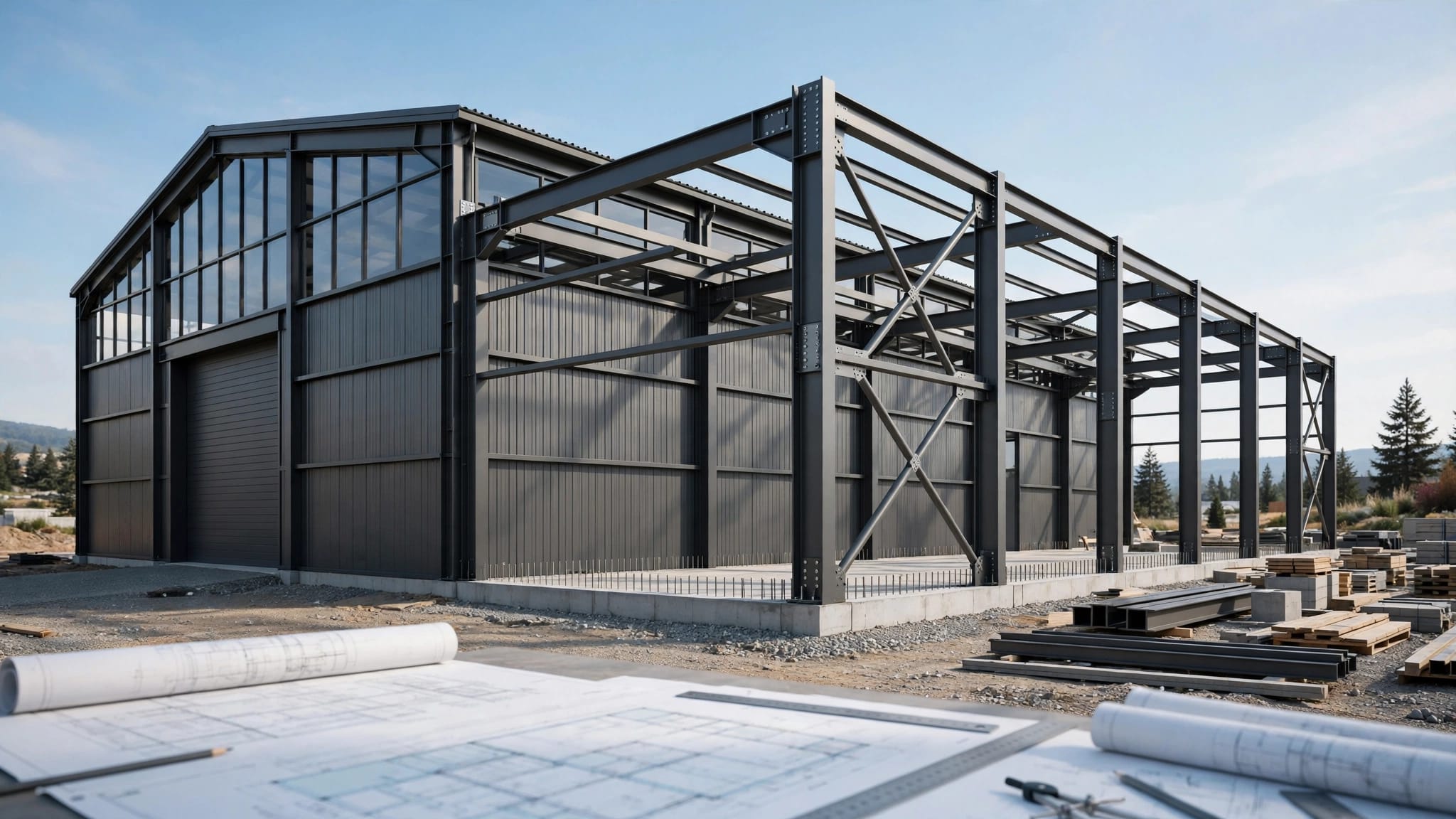
Condensation Blanket vs. Spray Foam for Metal Buildings
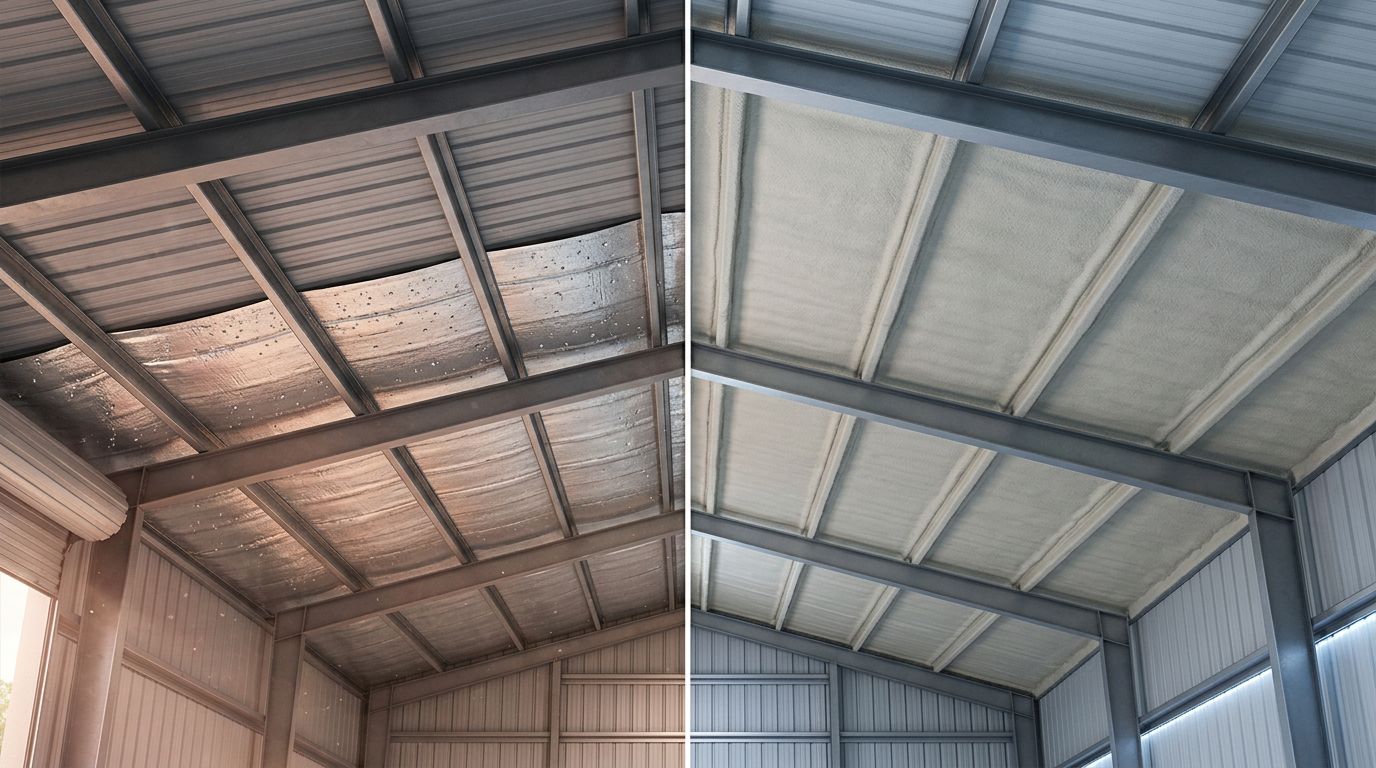
Metal panels can look dry from the ground while humid air wets the underside. The condensation blanket versus spray foam decision affects how well your metal building insulation controls moisture, heat, and future repairs.
Florida buildings face high humidity, strong sun, and frequent temperature changes. A blanket may suit an open agricultural structure, while a conditioned workshop may need the tighter air control of closed-cell spray foam. Start with the building's use and moisture pattern, then compare each system's cost, installation, and long-term value.
How Condensation Starts Under Metal Panels
Condensation forms when warm, moist air reaches a surface that has fallen below the air's dew point. Since metal conducts temperature quickly, the underside of a roof panel can become cold enough to collect moisture.
Why Florida buildings are prone to condensation
An enclosed metal building holds more moisture when people, animals, wet equipment, or unsealed soil release water vapor into the air. Air conditioning can lower indoor temperatures while outdoor humidity remains high. If that humid air reaches the cooler underside of a roof panel, droplets can form.
The same problem can occur in an unconditioned building. A roof may cool overnight, then meet warm, humid air the next morning. Poor airflow, gaps around wall panels, and unsealed penetrations can increase the amount of moisture reaching the roof assembly.
Insulation helps, but it isn't the only part of the solution. Air sealing, ventilation, roof design, and moisture control layers must work together.
When condensation looks like a roof leak
Condensation often produces broad dampness across insulation or several roof bays. A leak usually follows a more defined path from a penetration, end lap, fastener, flashing detail, or damaged panel.
Moisture that appears after a dry night deserves attention, especially if it doesn't match recent rainfall. Before adding insulation, inspect the roof and document when the moisture appears. This guide to Florida metal roof condensation solutions covers common causes and ways to separate condensation from water intrusion.
Metal Building Insulation: Condensation Blanket Versus Spray Foam
For this comparison, a condensation blanket means fiberglass blanket insulation with a factory-applied facing. Some products marketed for condensation control use an anti-condensation fleece bonded to the back of the panel instead. Those products don't provide the same insulation value, so confirm the product type before comparing quotes.
What a condensation blanket includes
A faced fiberglass blanket is commonly installed over the purlins before the metal roof panels go on. The facing points toward the building interior and acts as a vapor-retarding layer when the installer handles seams, overlaps, penetrations, and edges correctly.
The fiberglass slows heat flow. Its final R-value depends on the product's thickness and installation. The facing can also reduce direct contact between humid interior air and the metal panel, which helps limit sweating.
This system is practical for new construction because the crew can place the blanket across the framing before installing the roof. It also works well in shops, barns, storage buildings, and other structures that don't need a fully sealed interior envelope.
Strengths and limits of blanket insulation
The main advantages are lower material cost, simple placement during construction, and easier access for future roof work. A damaged section can usually be repaired or replaced without removing a large area of cured material.
However, fiberglass blanket insulation doesn't fill every gap around framing and penetrations. Tears, compressed areas, loose seams, and gaps at the eaves can allow humid air to reach cold metal. Sagging can also reduce the intended performance and leave pockets where moisture collects.
The facing must remain continuous enough for the planned moisture-control strategy. A blanket that is installed loosely or cut around every obstruction without proper detailing may provide less condensation control than the product label suggests.
How Closed-Cell Spray Foam Performs
Closed-cell polyurethane spray foam is applied directly to the underside of the roof panels and framing. It expands in place, adheres to clean metal, and fills small irregularities that are difficult to cover with blanket insulation.
Why spray foam controls humid air
When installed continuously at the specified thickness, closed-cell foam can provide insulation and tighter air control in one layer. It has a higher R-value per inch than many fiberglass products, so it can deliver more insulation where framing depth is limited.
The direct bond reduces air movement against the metal. That matters in a conditioned workshop or pole barn where warm, humid air can enter through wall joints, electrical openings, framing gaps, and roof penetrations.
Closed-cell foam can also work well in retrofit projects. An installer can spray it under an existing roof when the panels are in sound condition and the interior has enough access.
For a broader look at materials used in Florida structures, review these Florida pole barn insulation options, including closed-cell foam and blanket systems.
Spray foam trade-offs
Spray foam usually costs more upfront, and the finished result depends heavily on surface preparation and installer technique. The metal must be dry, clean, and free of conditions that could prevent adhesion.
Foam can hide corrosion, loose fasteners, and future leaks. Once it covers the underside of a panel, inspection and repair may take more time. It also isn't a replacement for roof flashing, sealant, underlayment, or proper panel installation.
Open-cell foam has different moisture and vapor-control properties. It shouldn't be treated as an automatic substitute for closed-cell foam under Florida metal roof panels. The product's technical data and the planned roof assembly should guide the selection.
Comparing Cost and Long-Term Value
The right choice depends on how the building operates. A low initial price can make sense for an unconditioned storage area, while better air control may justify a higher cost in a regularly cooled space.
| Factor | Condensation blanket | Closed-cell spray foam |
|---|---|---|
| Initial cost | Usually lower, especially during new construction | Usually higher because of material and specialized labor |
| Installation timing | Easiest before roof panels are installed | Can work during new construction or as a retrofit |
| Air sealing | Depends on seams, edges, and penetrations | Provides tighter coverage when sprayed continuously |
| Future access | Easier to remove or repair | Harder to inspect behind or remove |
| Best fit | Storage buildings, barns, and many unconditioned spaces | Conditioned shops, enclosed pole barns, and difficult retrofits |
A blanket quote often includes insulation, facing, and installation. Spray foam pricing may also reflect travel, surface preparation, protective coverings, thickness, access, ventilation during application, and required fire-protection measures.
Long-term value depends on actual energy use. If the building stays open and unconditioned, reducing air leakage may not produce enough savings to justify foam. If air conditioning runs often, foam's continuous coverage can improve temperature control and reduce the moisture load on the building.
Ask each contractor to state the insulation type, thickness, expected R-value, facing or vapor-control details, preparation work, and any required coatings. Comparing only the material price leaves out several parts of the finished assembly.
Match the System to the Building
Use the building's purpose, occupancy, and construction stage to narrow the choice. The same roof insulation that works for a storage shed may be a poor fit for an air-conditioned workshop.
Open storage and agricultural buildings
A condensation blanket often fits buildings used for equipment storage, agricultural storage, and open-sided shelter. These structures may need protection from dripping panels and radiant heat without the cost of a sealed conditioned envelope.
Ventilation still matters. Natural openings may help, but enclosed areas need a planned intake and exhaust path. See this guide to ventilation for metal roofing before assuming insulation alone will solve moisture buildup.
If the building will later receive drywall, HVAC, plumbing, or regular occupancy, plan for that future use before choosing a basic blanket system. Retrofitting air control after the interior is finished can cost more.
Conditioned workshops and enclosed pole barns
Closed-cell spray foam is often a stronger fit when the building has regular air conditioning, valuable equipment, or irregular framing that makes blanket installation difficult. Continuous coverage can reduce the paths humid air uses to reach the roof panels.
Still, foam shouldn't cover a problem roof. Repair leaks, replace badly corroded panels, and correct drainage or flashing defects first. The installer should also explain how the foam assembly meets the project's insulation, ignition-barrier, thermal-barrier, and fire-safety requirements.
Installation Details and Code Checks
The insulation product is only one part of the roof assembly. Panel profile, purlin spacing, closures, fasteners, underlayment, ventilation, and interior finishes can change the correct installation method.
Plan blanket installation before panel delivery
For new construction, confirm the blanket width, thickness, facing direction, lap details, and support method before the roof panels arrive. The crew should avoid crushing the fiberglass and should keep the facing intact around penetrations.
Roof edges, ridge areas, panel laps, and wall transitions need careful detailing. If the project uses an underlayment or secondary moisture-control layer, match it to the roof assembly rather than adding layers at random. These metal roof underlayment options for Florida provide useful context for hot, humid conditions.
Prepare carefully for spray foam
A spray foam contractor should inspect the underside of the panels before application. Wet insulation, surface rust, oil, dirt, loose coatings, and active leaks can interfere with the finished system.
Application also requires ventilation and site protection. Foam overspray can damage equipment and finished surfaces. Occupants may need to stay out of the building during installation and until the product manufacturer permits re-entry.
Local building codes and professional installation requirements must be verified before work begins. Check the applicable Florida code provisions, local permitting requirements, occupancy classification, energy requirements, and any rules for foam plastic materials. A licensed contractor, building official, or qualified design professional can confirm which barriers, coatings, inspections, and documentation the project needs.
Conclusion
Condensation blanket and closed-cell spray foam solve different metal building problems. Blanket insulation usually offers a lower upfront cost and easier future access, while spray foam provides tighter coverage for buildings that need stronger air and moisture control.
The best metal building insulation choice starts with the building's use, not with the product alone. Confirm the roof's condition, plan ventilation and moisture-control layers, compare complete installed quotes, and verify local code requirements before selecting the system.
Share Our Metal Roofing News Articles
Related Posts