Metal Roof Sealant Cure Time in Florida Heat and Humidity
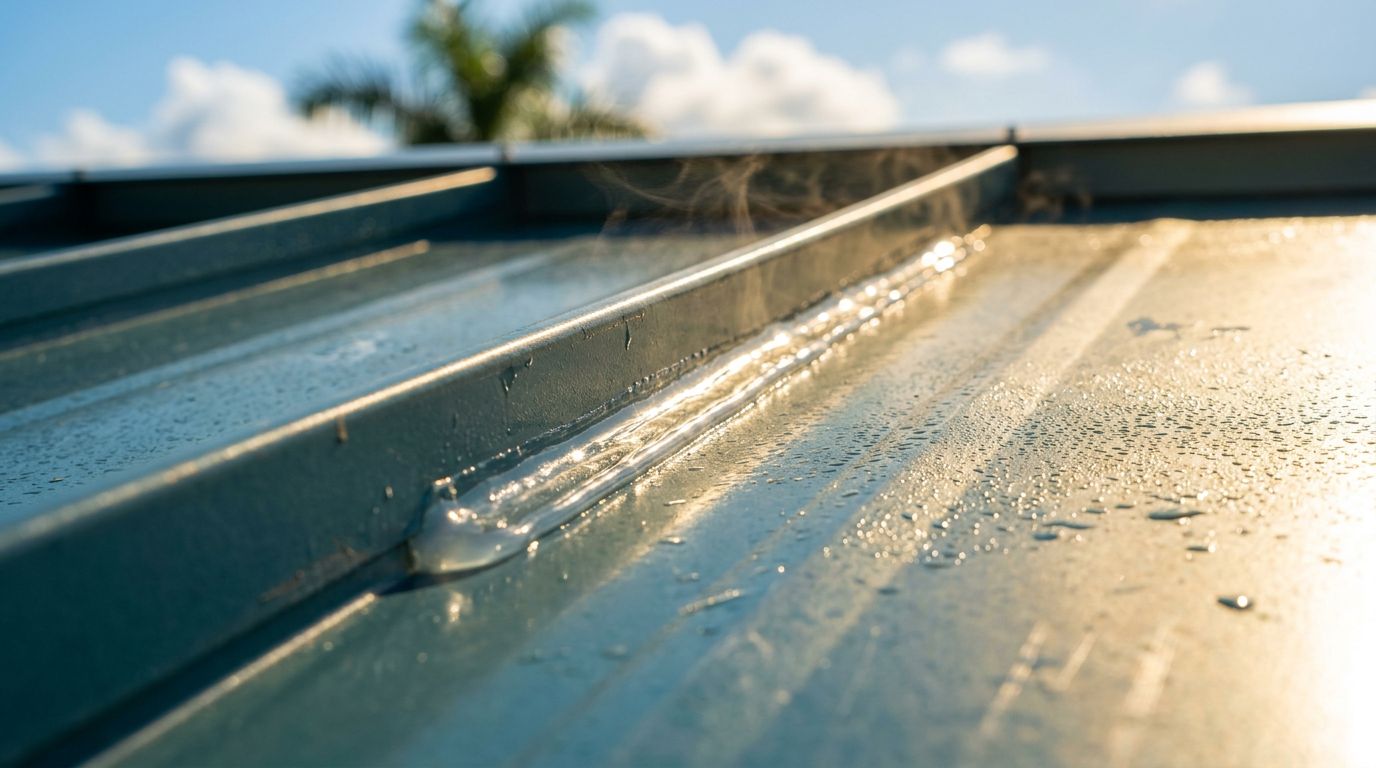
Florida can make sealant behave in a hurry. A bead may look ready on the surface while the middle is still soft, and that gap can decide whether a repair holds through the next storm.
Heat, humidity, morning dew, and roof temperature all change metal roof sealant cure time . If you work on standing seam panels, exposed fasteners, or trim joints, the clock on the tube is only part of the story.
What cure time really means on a Florida roof
Sealant does not move from wet to finished in one step. It passes through several stages, and each stage matters on a metal roof.
A product may feel dry to touch long before it is strong enough to handle rain or movement. It may become skin-over on top while the bead underneath stays soft. It may even feel tack-free , yet still need more time before full performance.
That difference matters on Florida roofs because the weather changes fast. A calm morning can turn into a wet afternoon, and a bead that looked fine at 9 a.m. may be under stress by 2 p.m.
For long seams and hidden laps, the material choice matters as much as the clock. Butyl tape vs tube sealant for metal roof seams in Florida explains why compression seals often make more sense than a caulk-only patch in some joints.
Why Florida heat and humidity change the cure clock
Florida does not just speed things up. It speeds some parts up and slows others down at the same time.
Sealant chemistry sets the pace
Different sealants cure in different ways. Some are moisture-cure products, which react with humidity in the air. Others depend more on evaporation-cure , where water or solvent has to leave the bead before it firms up.
That difference matters in Florida. Moisture-cure products may skin over quickly in humid air, but they still need the right surface conditions. Evaporation-cure products can slow down when the air is heavy and damp, even if the day feels hot.
In plain terms, humidity can help one product and slow another. That is why the label and data sheet matter more than any rule of thumb.
Roof surface temperature can be hotter than the air
Air temperature does not tell the full story. A metal roof in direct sun can be much hotter than the weather report suggests, especially on dark panels.
That extra heat can shorten working time. It can also make sealant skin over before it has a chance to wet the surface properly. On very hot panels, the bead may set on top while losing bond at the edges.
High heat can also make application awkward. The caulk may drag, slump, or start to cure in the tube or nozzle faster than expected. Morning work often gives better control than late afternoon work on sun-baked metal.
Overnight condensation changes the next morning
Florida roofs cool fast after sunset. When that happens, moisture can form on the panel before sunrise, even if the roof looked dry the day before.
That thin film is enough to hurt adhesion. It can also keep some sealants from curing the way they should. In short, a roof that was ready yesterday may not be ready at dawn.
On a Florida roof, the panel temperature and overnight moisture often matter more than the number on your phone.
The stages people confuse most often
The labels below sound similar, but they do not mean the same thing. A sealant can pass one stage and still fail at the next if the weather turns.
| Stage | What it means | Florida reality | What it does not mean |
|---|---|---|---|
| Dry to touch | The surface no longer smears easily | Can happen fast in heat | The bead is not fully cured |
| Skin-over | A thin outer film has formed | Often happens sooner in direct sun | The inside is still soft |
| Tack-free | The surface does not grab a finger | May happen the same day in hot weather | The joint is rain-ready by default |
| Rain-safe | The product can handle moisture after the maker's stated window | Can vary a lot by chemistry and bead size | It can stand up to heavy runoff or standing water |
| Full cure | The sealant has cured through the bead | Often takes longer in humidity, shade, or thick applications | It is still changing after this point |
The safest habit is simple. Treat the longest stated cure window as the real one, not the fastest result you saw on another roof.
A product that skins in an hour may still need a full day or more before it is ready for weather. Thick beads, cool nights, and humid air can stretch that window.
Practical timing for Florida crews and property owners
A good repair schedule starts with the weather, but it should not end there.
Start early in the day when the panel is cooler. Cooler metal gives you more working time and a better chance for proper wet-out. It also lowers the chance that the sealant will skin before you finish tooling the bead.
Check the roof surface, not just the forecast. A partly cloudy day can still leave panels hot enough to create trouble. At the same time, a light breeze may help one product while doing little for another.
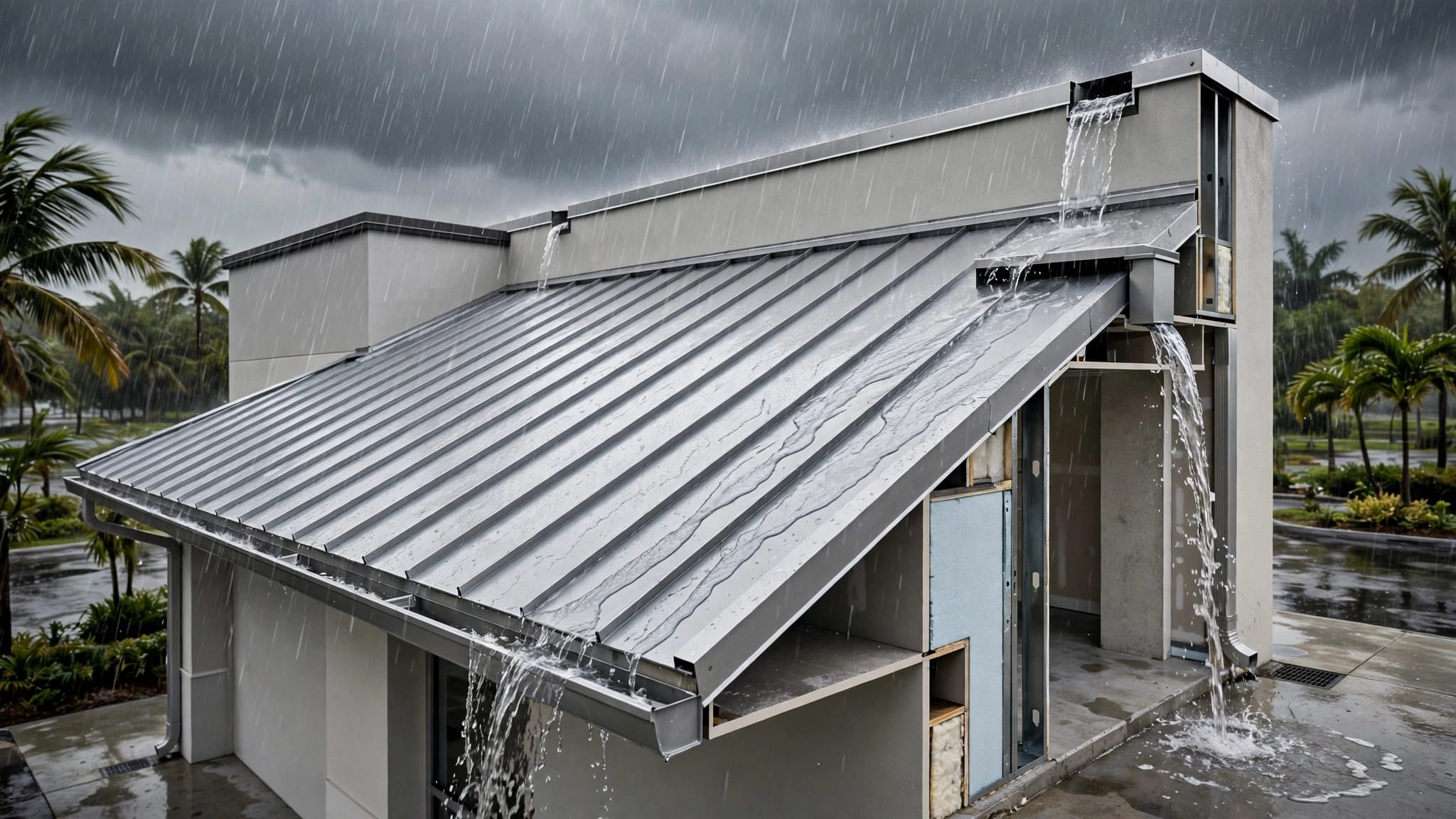
Leave a wider buffer before rain than you would in a dry climate. Florida afternoon storms can build quickly, and some sealants can wash out or lose bond if water hits them too soon.
When a leak is tied to a fastener, sealant alone may not solve it. Repairing stripped metal roof screw holes shows why the hole itself may need a mechanical fix, not just more caulk.
Here are a few field habits that help:
- Watch the panel temperature . If the metal feels too hot to work safely, wait.
- Plan around dew and condensation . Morning moisture can be invisible and still cause failure.
- Respect the cure window . A product that is tack-free is not always rain-safe.
- Give thick beads more time . Extra material cures slower, especially in humidity.
- Avoid pressure from foot traffic too soon . Fresh sealant can shift before it sets.
- Read the product data sheet . Manufacturer cure times and primer needs are product-specific.
Surface prep matters as much as the sealant
Florida weather puts a lot of strain on a repair, but bad prep can ruin even a good product.
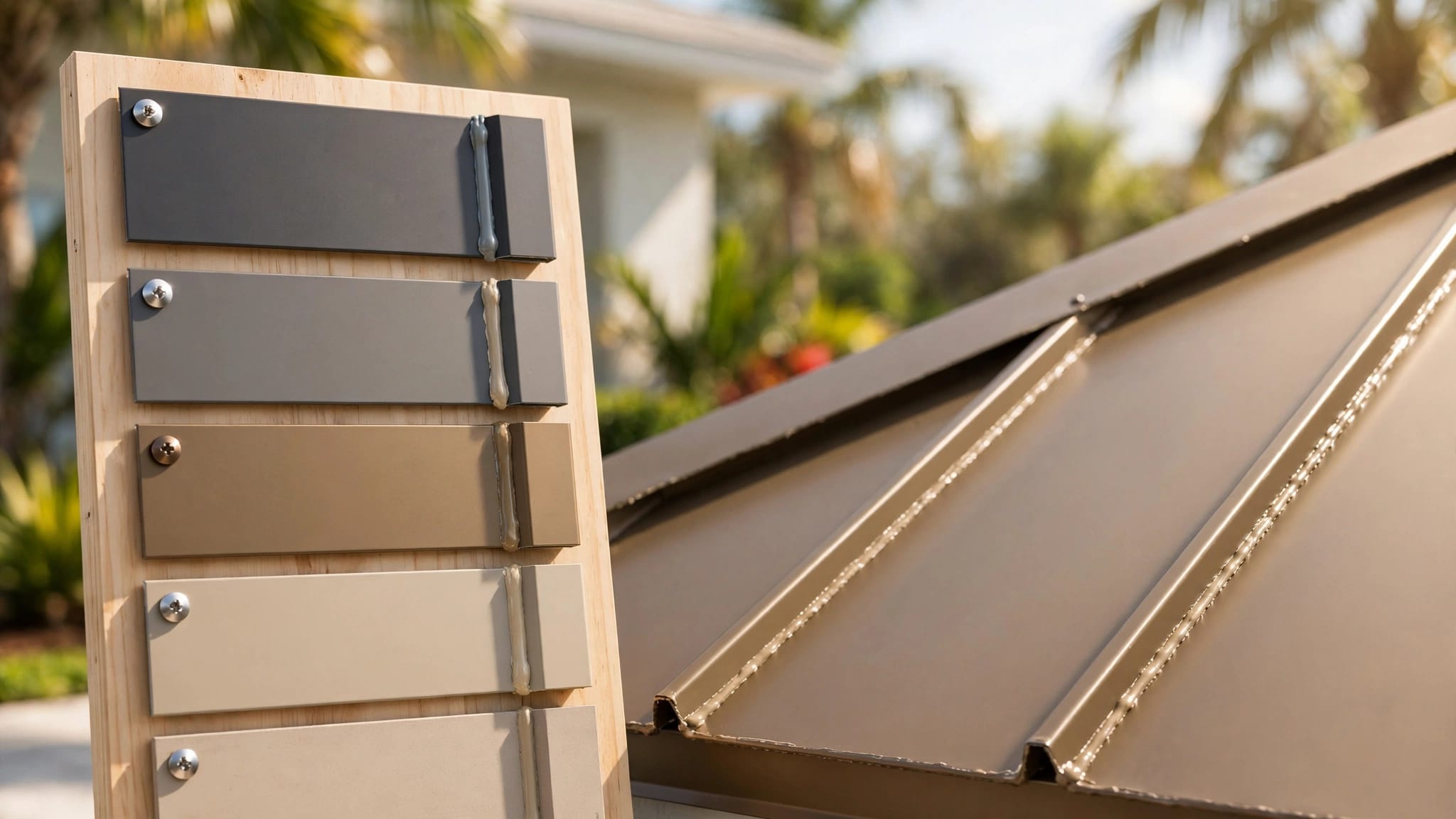
Metal must be clean and dry before sealant goes down. Dirt, chalk, oil, loose coating, and fine rust all weaken adhesion. A bead may look neat and still fail if it was laid over a dirty edge.
Rust needs close attention. Light oxidation can be a warning sign, while heavy rust often means the surface is no longer sound enough for a simple seal. Wet metal is another problem. Even a thin film from dew or condensation can keep the sealant from bonding the way it should.
Old failing coatings create their own issues. If the coating is peeling or powdery, the new sealant may stick to the weak layer instead of the panel. That bond can peel off with the old finish.
Primer also matters. Some products need it on bare metal, coated metal, or tricky surfaces. Others do not. Use the primer the manufacturer asks for, and use it within the stated cure window.
If you are sealing around an opening, trim edge, or panel joint, the product must match the detail. The wrong sealant on the right spot still causes trouble. That is one reason roof repair materials need to be matched to the job, not bought by habit.
How to set realistic expectations in Florida
A Florida metal roof repair should be timed for the weather, the product, and the surface. That means looking beyond the first dry skin on the bead.
High heat can speed skin formation. High humidity can slow full cure for some products. Afternoon storms can wash uncured sealant, and overnight condensation can undo a clean-looking surface before the next workday starts.
That is why the most useful question is not, "How fast does it dry?" The better question is, "How does this sealant cure on this roof, in this weather, on this surface?" Once you answer that, the repair becomes much easier to trust.
Conclusion
On a Florida metal roof, sealant cure time is a moving target. Heat can make a bead look ready early, while humidity, condensation, and a hot panel can still slow the real cure underneath.
The safest approach is to match the sealant to the seam, prep the surface well, and follow the manufacturer's cure window and primer instructions. When you do that, the repair has a much better chance of holding through sun, steam, and the next afternoon storm.
Share Our Metal Roofing News Articles
Related Posts