Aluminum vs Stainless Rivets for Metal Roof Trim
A roof trim joint can look perfect on day one and still fail early. The wrong rivet can stain the metal, loosen under wind, or set up corrosion where water lingers.
That matters in Florida, where heat, humidity, salt air, and hard storms all work on the same detail. For metal-to-metal trim joints, fastening metal roof trim with rivets often gives a cleaner look than screws, but the rivet material still has to match the job.
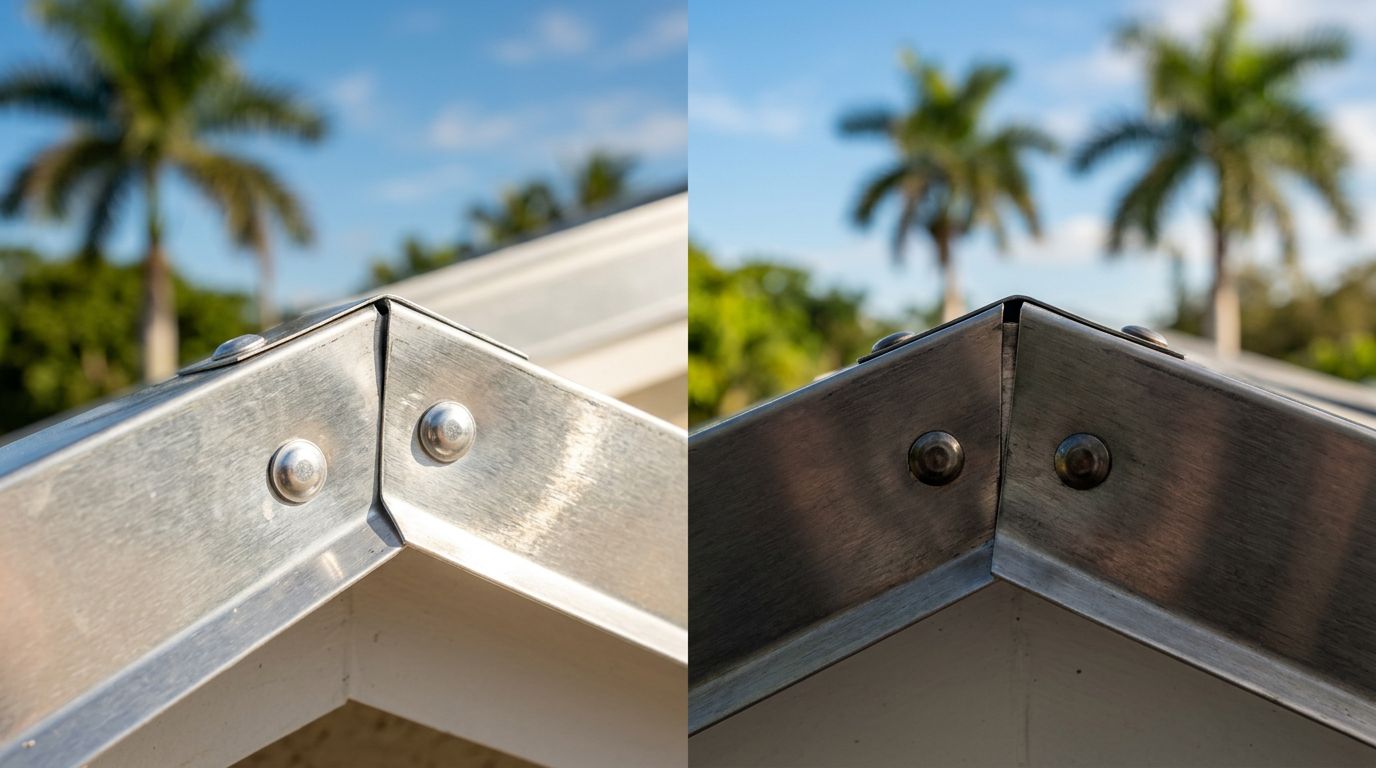
Aluminum and stainless rivets at a glance
Here's the quick side-by-side view for roof trim and flashing work.
| Factor | Aluminum rivets | Stainless rivets |
|---|---|---|
| Cost | Lower | Higher |
| Strength | Good for light trim and short spans | Better for exposed trim and heavier joints |
| Corrosion resistance | Good when matched to aluminum parts | Strong in wet, coastal, and high-wind areas |
| Ease of setting | Softer and easier to install | Harder material, needs a solid set |
| Best fit | Aluminum trim, light flashing, low-stress joints | Steel trim, exposed edges, harsh weather |
The short version is simple. Aluminum rivets work well in matched, lighter-duty trim details. Stainless rivets cost more, but they hold up better when weather and movement get tougher.
What matters most on a metal roof edge
A roof edge is not a calm place. Wind pushes against trim, water works into seams, and sun bakes sealant day after day. Because of that, the rivet choice is about more than holding two pieces together.
The joint type matters too. Some trim details need a fastener that stays low-profile and clean. Others need extra strength because the piece sees uplift, vibration, or repeated movement. In those cases, rivets are often a better fit than screws, especially on metal-to-metal trim where a smooth finish matters.
The metal around the rivet matters just as much. Aluminum, galvanized steel, painted steel, and stainless each react in different ways. If the fastener and the trim do not get along, the joint may still tighten at first, but problems can start under the surface.
When aluminum rivets make sense
Aluminum rivets are a solid choice when the job is light and the metals match. They are often used on aluminum trim, small flashing pieces, and other details that do not carry much load.
They are also easier to set. That helps on long trim runs where installers want a smooth pace and a clean finish. If the trim is thin, painted, and sheltered, aluminum rivets can do the job without adding unnecessary cost.
Still, they have limits. Aluminum is softer than stainless, so it is easier to deform. That makes it less forgiving on joints that flex, rattle, or take a lot of wind pressure. On a roof in a storm-heavy area, that weakness matters.
Use aluminum rivets when:
- The trim and the rivet are both aluminum.
- The joint is light and well supported.
- The area has less direct weather exposure.
- You want a lower-cost option for non-critical trim details.
Aluminum rivets are not the first pick for exposed coastal trim, high-wind corners, or joints that get hit with constant movement.
When stainless rivets make sense
Stainless rivets are the tougher option. They hold up well where the trim sees more abuse, more moisture, or more salt in the air. That is why they are common on exposed roof edges, outside corners, and flashing details that face the weather all day.
They also bring more pull and shear strength than aluminum rivets. On a trim piece that can vibrate in wind, that extra holding power helps. Stainless is also a better fit when you want long-term durability and fewer service calls later.
The tradeoff is cost and setup. Stainless rivets cost more, and they take more effort to install cleanly. If the trim is thin or the detail is light-duty, stainless may be more fastener than you need.
Stainless rivets are often the better call when:
- The roof is near salt air or standing moisture.
- The trim is steel or another harder metal.
- The joint is exposed and sees wind stress.
- The project needs a longer service life with less upkeep.
Stainless is strong, but it is not a free pass. It still has to be matched correctly to the trim metal and sealed the right way.
Galvanic corrosion starts with the metal match
Dissimilar metals can create a corrosion problem when moisture gets involved. That risk rises on Florida roofs, where rain, humidity, and salt can sit on trim for long periods.
If a stainless rivet goes into bare aluminum without proper isolation, the aluminum can corrode faster around the contact point. The same idea applies when an aluminum rivet meets steel or another dissimilar metal. The rivet may not fail first, but the trim around it can suffer.
Paint, coatings, sealants, and washers help, but they do not fix a bad metal match by themselves. The whole stack has to work together. That means checking the trim material, the fastener material, and the exposure level before you choose.
A rivet can look fine on install day and still create corrosion later if the metals and moisture do not play well together.
If the project has mixed metals, isolation is not optional. It is part of the fastening decision.
Choose rivets based on the roof and trim material
The safest choice usually starts with matching the fastener to the trim metal. Then the weather exposure decides whether you stay with aluminum or move to stainless.
For aluminum trim on aluminum panels, aluminum rivets are often the cleanest match. They keep the metal pairing simple and work well on lighter trim details. If the trim is sheltered and the joint is not highly loaded, that option makes sense.
For steel trim or steel panel accessories, stainless rivets are usually the better fit. Steel systems often live in more exposed spots, and stainless gives more strength and better wear resistance.
For mixed-metal details, slow down and check the whole assembly. The answer may depend on coatings, sealant, and how much direct weather the joint sees. Getting the right rivet grip range matters too, because a rivet that is too short or too long can loosen or crush the trim. Choosing the right rivet grip length helps keep the head tight without damaging the stack.
A simple rule works well on most roof trim jobs:
- Match aluminum to aluminum when the detail is light and sheltered.
- Use stainless on steel, exposed trim, and coastal work.
- Treat mixed metals with caution and add isolation where needed.
- Check the full thickness of the joint before you buy the rivet.
That approach keeps the fastener choice tied to the real roof detail, not just to price.
Common mistakes that shorten trim life
Most rivet problems on metal roof trim start with small misses. The good news is that they are easy to avoid.
- Using aluminum rivets on heavy, exposed trim can lead to loosening over time.
- Putting stainless rivets into bare aluminum without isolation can speed up corrosion.
- Choosing the rivet by color instead of metal type leads to weak matches.
- Ignoring grip range can leave the rivet loose or distort the trim.
- Assuming sealant alone will protect a bad metal combination is a costly mistake.
One more mistake shows up often on Florida jobs. Installers sometimes pick the cheapest rivet because the piece looks small. Small trim still sees wind, water, and heat. The fastener has to match that reality.
Conclusion
The best rivet choice for metal roof trim comes down to three things: the trim metal, the exposure level, and the chance of corrosion. Aluminum rivets work well for lighter aluminum trim and low-stress joints. Stainless rivets are the stronger pick for exposed edges, coastal conditions, and steel trim.
If the roof will face humidity, salt air, or high wind, stainless usually earns its place. If the detail is light and the metals match, aluminum can be a smart, clean solution. The key is to match the fastener to the job before the first hole gets drilled.
Share Our Metal Roofing News Articles
Related Posts