Hurricane Roof Preparation for Unfinished Metal Roofs
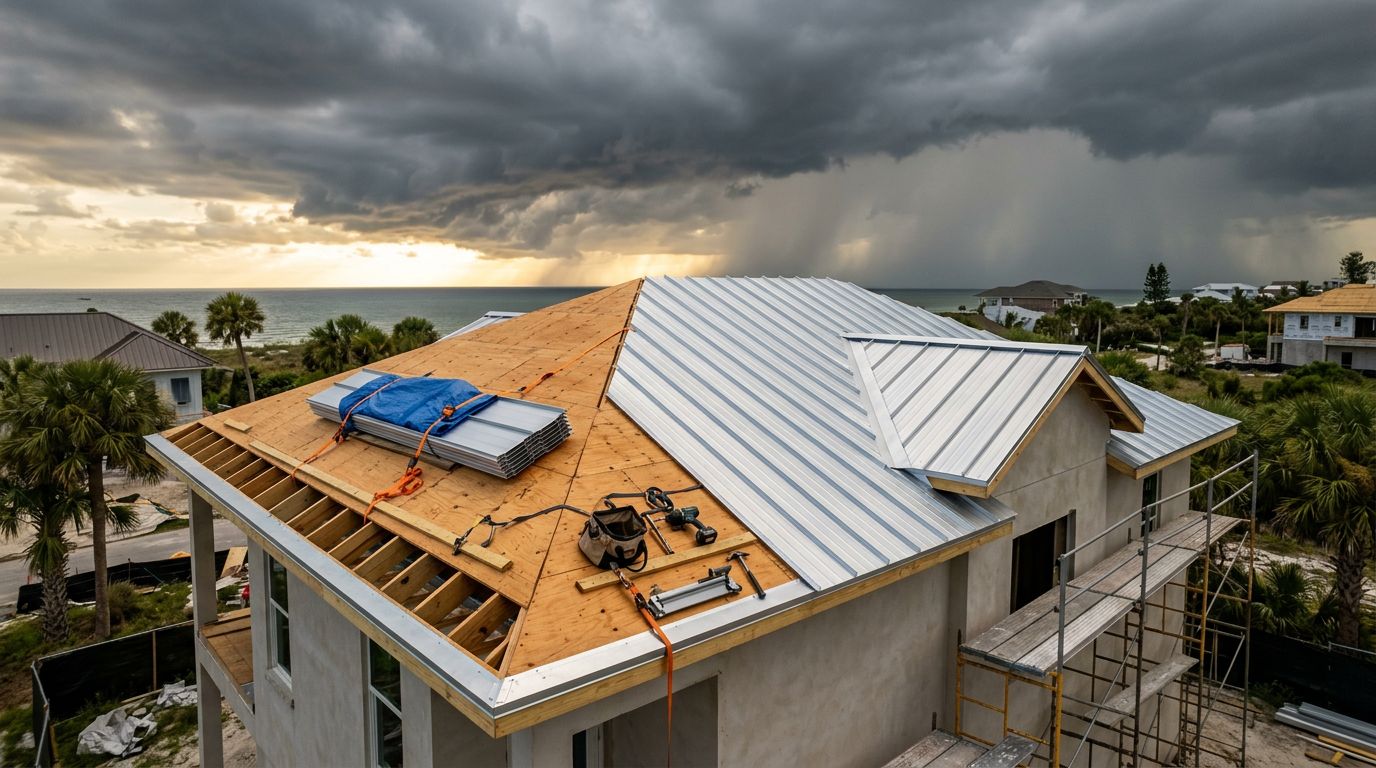
A hurricane warning changes priorities on a roof that is still under construction. Exposed decking, loose panels, open edges, and stacked materials can take wind and water before the final fasteners and trim are installed. Good hurricane roof preparation starts with a safety decision, not a race to finish.
Personal safety, local emergency directives, and evacuation orders always come first. Never remain at a property or climb onto a roof to protect materials when authorities advise evacuation. Once conditions become unsafe, stop work and leave the site. These steps help Florida homeowners and contractors secure an unfinished project before the weather turns.
Start hurricane roof preparation with a safety decision
A partially completed roof needs an early plan. Waiting until rain bands arrive can leave workers exposed and make simple tasks dangerous. Review the storm forecast, the county emergency management guidance, and the project schedule as soon as a threat becomes credible.
Set a firm cutoff for roof work. Wet metal panels become slippery, wind can shift sheets without warning, and lightning creates a serious hazard around ladders, scaffolds, tools, and metal framing. Roof work should stop before those conditions develop.
Use this first-stage checklist:
- Follow evacuation orders, shelter instructions, road closures, and other local emergency directives.
- Confirm who is responsible for securing the building, materials, equipment, and temporary coverings.
- Keep workers off the roof during rain, lightning, high winds, or any condition that affects balance.
- Do not enter a building with structural damage, standing water near electrical equipment, or downed power lines.
- Move occupants, workers, and pets away from the work area before securing materials.
- Contact the general contractor, roofing contractor, property owner, and insurer when project responsibility is unclear.
A ground-level inspection is safer than climbing up for one last look. Use binoculars or photos from the ground when possible. If the roof condition requires close inspection, schedule it with trained workers who have the right fall protection and equipment, and only while weather conditions remain safe.
A temporary roof covering can be replaced. A serious fall or delayed evacuation cannot.
Identify the unfinished condition before the storm
The right preparation depends on which part of the roofing system remains incomplete. A roof with no panels needs different treatment than one missing only ridge caps and rake trim.
Walk the property from the ground and record the project stage. Check the roof plans, installation instructions, and material list before assigning work. Common conditions include:
- Exposed roof decking: The deck may need a temporary weather barrier installed by a qualified roofing professional. Use a product approved for the expected exposure period, and follow its fastening and seam instructions. Ordinary plastic sheeting is not a reliable substitute for a properly installed roofing underlayment.
- Underlayment installed without panels: Check whether the underlayment remains within its stated exposure limit. Loose edges, open seams, and unprotected penetrations need attention before the storm. The product instructions and local requirements control the repair.
- Panels installed over part of the roof: Look for unfinished eaves, rakes, valleys, ridges, side laps, and transitions. Do not add random screws or remove installed panels without confirming the required detail.
- Panels installed but trim is incomplete: Open edges can allow wind-driven rain beneath the panels. Store the matching trim safely and have a qualified installer address exposed edges before severe weather.
- Roof openings or unfinished penetrations: Vents, skylights, chimneys, and equipment curbs need temporary protection that will not lift or allow water into the building.
The most important part of hurricane roof preparation is knowing what the current assembly can and cannot withstand. A roof that looks mostly covered may still have vulnerable edges or open joints.
Move stored materials and furniture away from areas below exposed decking or open roof sections. Water can enter through a small opening and damage insulation, drywall, electrical equipment, inventory, or stored tools.
Protect the temporary weather barrier
An unfinished roof needs a controlled path for water. Before the storm, inspect the temporary underlayment or covering from a safe position. Look for lifted corners, loose fasteners, unsealed seams, torn sections, and areas where water can collect.
If a section requires a tarp or other temporary cover, have a qualified contractor install it before unsafe weather arrives. A loose tarp can lift like a sail, scrape finished surfaces, trap water, or become airborne debris. Never climb onto a roof during gusts or rain to place, adjust, or remove one.
Temporary protection should account for the whole opening, not only the center of the exposed area. The contractor may need to address:
- The upper edge where water can run beneath the covering.
- Side edges that wind can lift.
- Low points where rain can collect.
- Roof penetrations and wall intersections.
- The transition between completed metal panels and unfinished work.
Keep water-sensitive materials inside a dry, secure space. Protect insulation, sealants, fasteners, paperwork, electrical tools, and installation components from rain and wind. If the building cannot remain dry, move stored goods to another location rather than leaving them below a known opening.
Check the interior as well. From the attic or upper floor, if access is safe, look for daylight, wet insulation, dripping water, and movement at the deck. Do not enter a damaged structure or walk on surfaces weakened by water. Report problems to the contractor and property owner before covering them.
Good hurricane roof preparation also includes drainage. Keep gutters, downspouts, roof drains, and nearby ground drainage clear of packaging, scrap metal, leaves, and other debris. Water should have a clear route away from the building, but workers should not climb onto a roof to clean drains once conditions become hazardous.
Secure metal roofing panels and jobsite materials
Loose metal roofing materials can damage property and injure people during a hurricane. Treat every panel, trim piece, bundle, tool, and scrap section as a potential projectile.
If panels are stored on the roof, remove them when it can be done safely with suitable equipment and enough workers. Roof storage adds weight and gives wind more material to move. Follow the panel manufacturer's instructions for lifting and ground storage.
Keep bundles on stable, level supports that can carry their weight. Secure them against sliding or tipping without crushing the panels. Do not lean loose sheets against walls, fences, vehicles, or temporary structures. Store trim and flashing in a location where wind cannot lift the pieces or bend their profiles.
Walk the entire site and secure the following items:
- Loose panels, cutoffs, ridge pieces, rake trim, closures, and flashing.
- Ladders, scaffolding components, lifts, saws, cords, hoses, and hand tools.
- Packaging, insulation scraps, plastic wrap, pallets, buckets, and jobsite signs.
- Fastener boxes, sealant tubes, drawings, approvals, and other project records.
- Temporary fencing, portable toilets, dumpsters, and unsecured equipment.
Use the fastening method and storage limits supplied by the manufacturer. Improvised weights or makeshift tie-downs may fail or damage the material. Keep fasteners and sealants in their original labeled containers so the installer can identify the correct products after the storm.
Take photographs of the unfinished roof, stored materials, temporary protection, and interior areas before the storm. Record the project stage and any existing damage. These records can help separate pre-storm conditions from later damage during insurance and construction discussions.
Keep approved roofing details ready for the restart
A hurricane can interrupt work for days or weeks. Protect the installation documents so the project does not restart with guesswork. Keep the panel profile, fastener schedule, trim drawings, underlayment instructions, and permit information together in a dry location.
Florida projects may also involve state product approvals or Miami-Dade Notices of Acceptance. In Miami-Dade and Broward counties, which make up the High-Velocity Hurricane Zone, local requirements can be more demanding. Other Florida jurisdictions may also request approved assemblies. The building department determines which documents and details apply to a specific project.
Review this Florida Product Approval and Miami-Dade NOA guide before selecting replacement panels, trim, clips, or fasteners. Approval documents can identify the permitted panel profile, attachment pattern, edge treatment, and compatible components.
Do not replace missing screws with whatever fastener is available. Do not substitute trim because it looks similar. A metal roofing system depends on the relationship between the panel, fasteners, clips, closures, flashing, substrate, and edge details.
After the storm, ask the contractor to compare the installed work with the approved plans and manufacturer instructions. If wind lifted a panel or bent an edge, adding extra screws may hide the problem without correcting the damaged substrate or connection.
Inspect safely before work resumes
Wait until local officials say it is safe to return. Avoid floodwater, downed lines, unstable trees, damaged walls, and buildings with signs of structural movement. Even after the wind stops, wet metal, hidden electrical damage, and weakened decking can create serious hazards.
Start with a ground-level inspection. Photograph missing or displaced panels, bent trim, torn underlayment, damaged gutters, exposed openings, and debris. Inside the building, document leaks, wet insulation, ceiling damage, and water near electrical systems. Keep people away from areas where the roof or structure appears unstable.
Use this restart checklist:
- Confirm that the property is safe to enter and that utilities do not create a hazard.
- Have a qualified roofing professional inspect the deck, purlins, framing, panels, fasteners, trim, and temporary weather barrier.
- Document damage before cleanup or repair, unless immediate action is needed to protect people or prevent additional damage.
- Remove water-damaged or wind-damaged materials according to the contractor's instructions.
- Repair the substrate and framing before reinstalling panels.
- Replace damaged panels, trim, fasteners, and closures with components that match the approved system.
- Complete eave, rake, ridge, valley, penetration, and wall-transition details before treating the roof as finished.
- Arrange required building inspections before concealed work makes the damage harder to evaluate.
Never resume roof work during lingering storms, gusts, lightning, or rain. A clear sky does not make a damaged roof safe. The contractor should set the restart date after inspecting the structure and confirming that workers can use fall protection on a stable work surface.
Conclusion
Unfinished metal roofing projects need more than a last-minute tarp before a hurricane. Secure the site early, protect the temporary weather barrier, move loose materials off the roof, preserve approved installation details, and document the project condition.
Personal safety and evacuation instructions always outrank the roof, panels, tools, and building contents. Once authorities clear the area, a qualified contractor can inspect the structure and restart the work with the correct materials and fastening details. Good hurricane roof preparation reduces preventable damage without asking anyone to take an unsafe risk.
Share Our Metal Roofing News Articles
Related Posts