Galvalume vs galvanized steel for Florida outbuildings
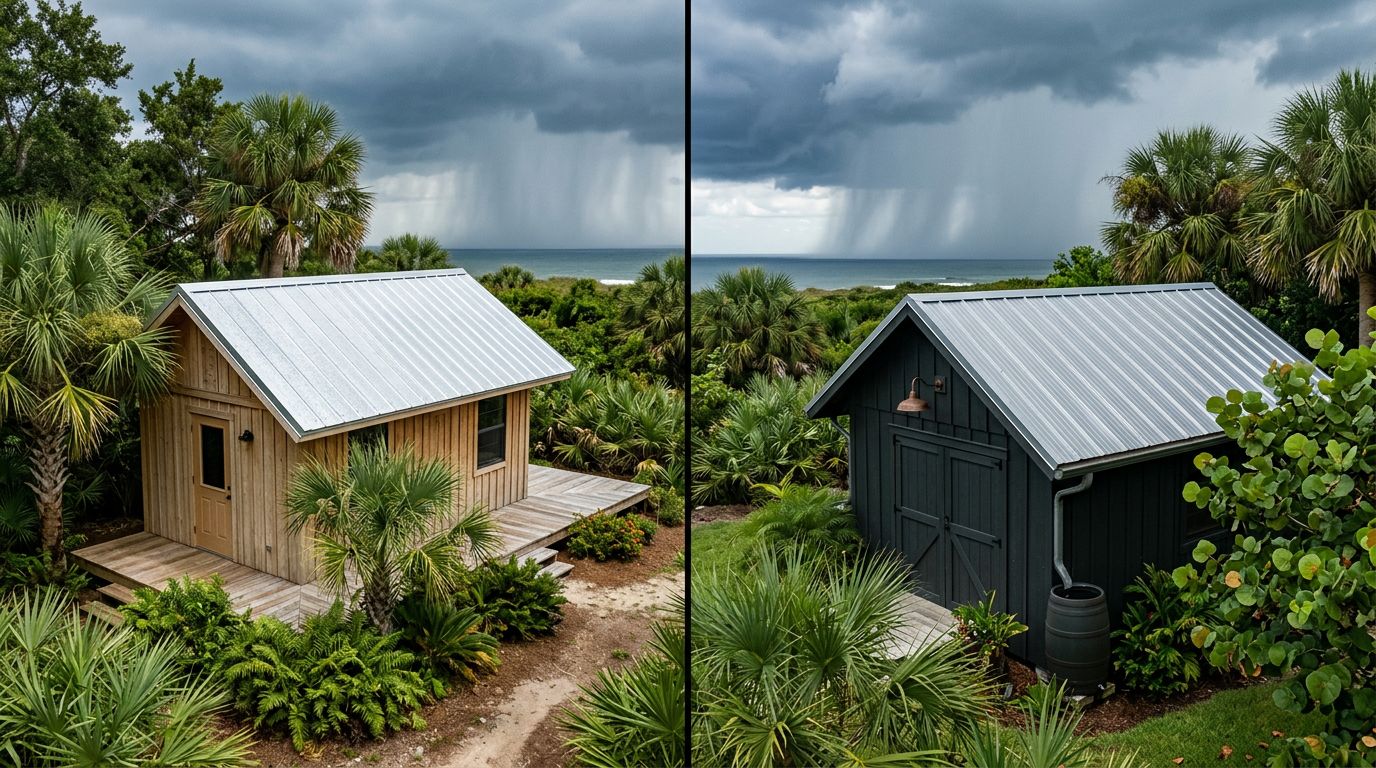
A Florida outbuilding faces heat, heavy rain, high humidity, and strong wind. Near the coast, salt air adds another source of corrosion. Choosing the right metal roof can affect maintenance, appearance, and service life.
When homeowners compare Galvalume vs galvanized steel , the better choice depends on the building's location, roof system, exposure, and approval requirements. A dry inland shed may have different needs than a coastal garage or livestock barn. Start with the differences between these coatings, then match the material to your site.
Galvalume vs galvanized steel: What separates them?
Both materials use a steel core with a protective metallic coating. The coating protects the steel from moisture and oxygen, but each material uses a different approach.
Galvalume steel has an aluminum-zinc coating, commonly made with about 55% aluminum, 43.4% zinc, and 1.6% silicon by weight. Aluminum creates a barrier that slows corrosion across the panel surface. Zinc adds sacrificial protection where minor damage exposes the coating.
Galvanized steel has a zinc coating over the steel. Zinc protects the base metal by corroding before the steel does. The amount of zinc varies by product, so coating designations and manufacturer specifications matter when comparing panels.
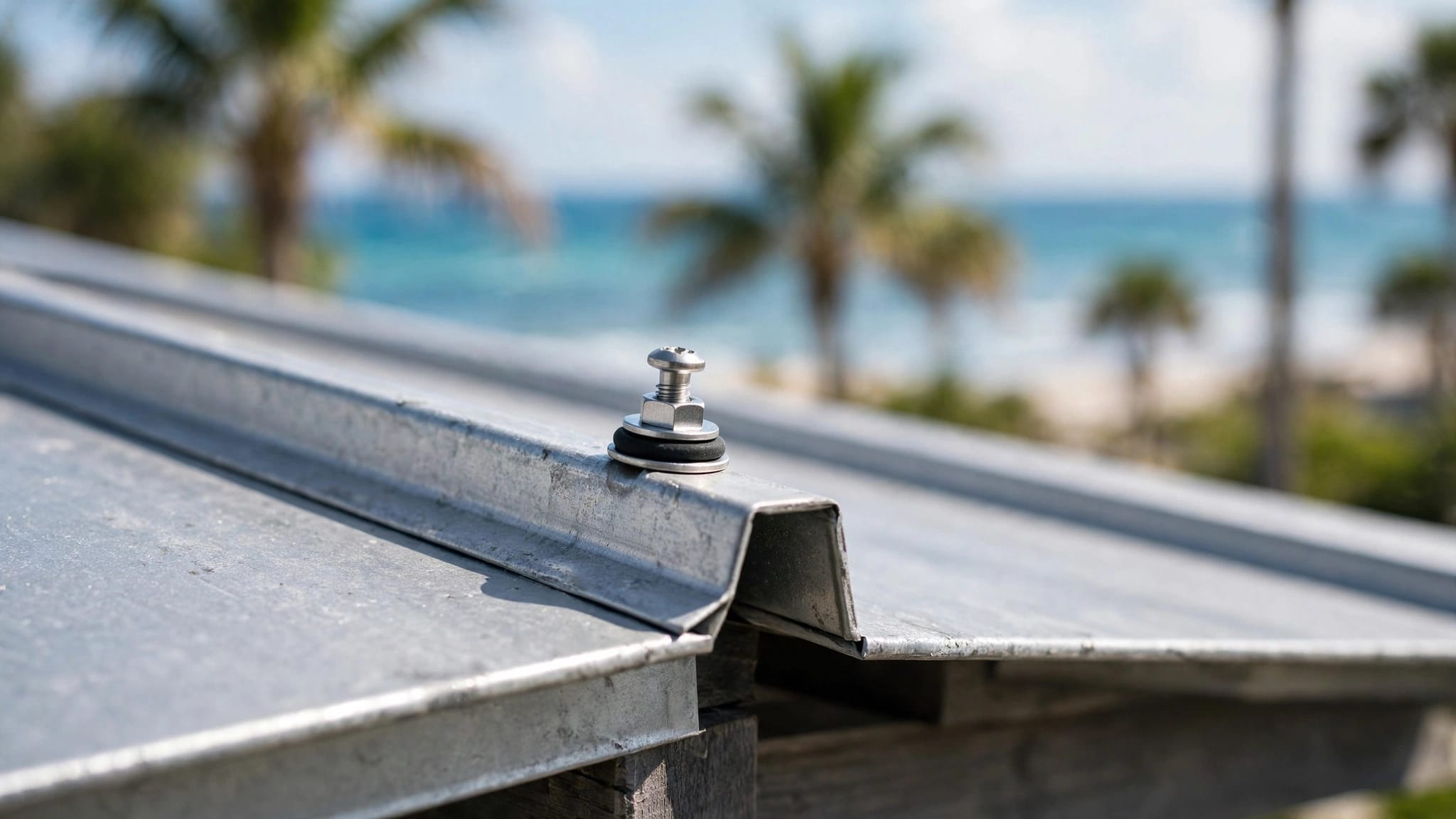
For roofing, the panel profile, gauge, finish, fasteners, and installation method matter as much as the base coating. A 26-gauge panel is thicker than a 29-gauge panel, but thickness alone doesn't establish the wind rating. Rib shape, support spacing, screw placement, substrate, and the complete tested assembly all affect performance.
How each coating handles damage
Galvalume often provides strong protection across large, exposed surfaces. Its aluminum content creates a durable barrier, while zinc helps protect small scratches. Galvanized steel provides more active sacrificial protection at exposed areas because of its zinc coating.
Neither material makes a roof immune to corrosion. Deep scratches, poorly sealed fastener holes, trapped moisture, and metal filings left after cutting can damage the coating. Cut edges deserve attention, especially on panels exposed to frequent rain or salt air.
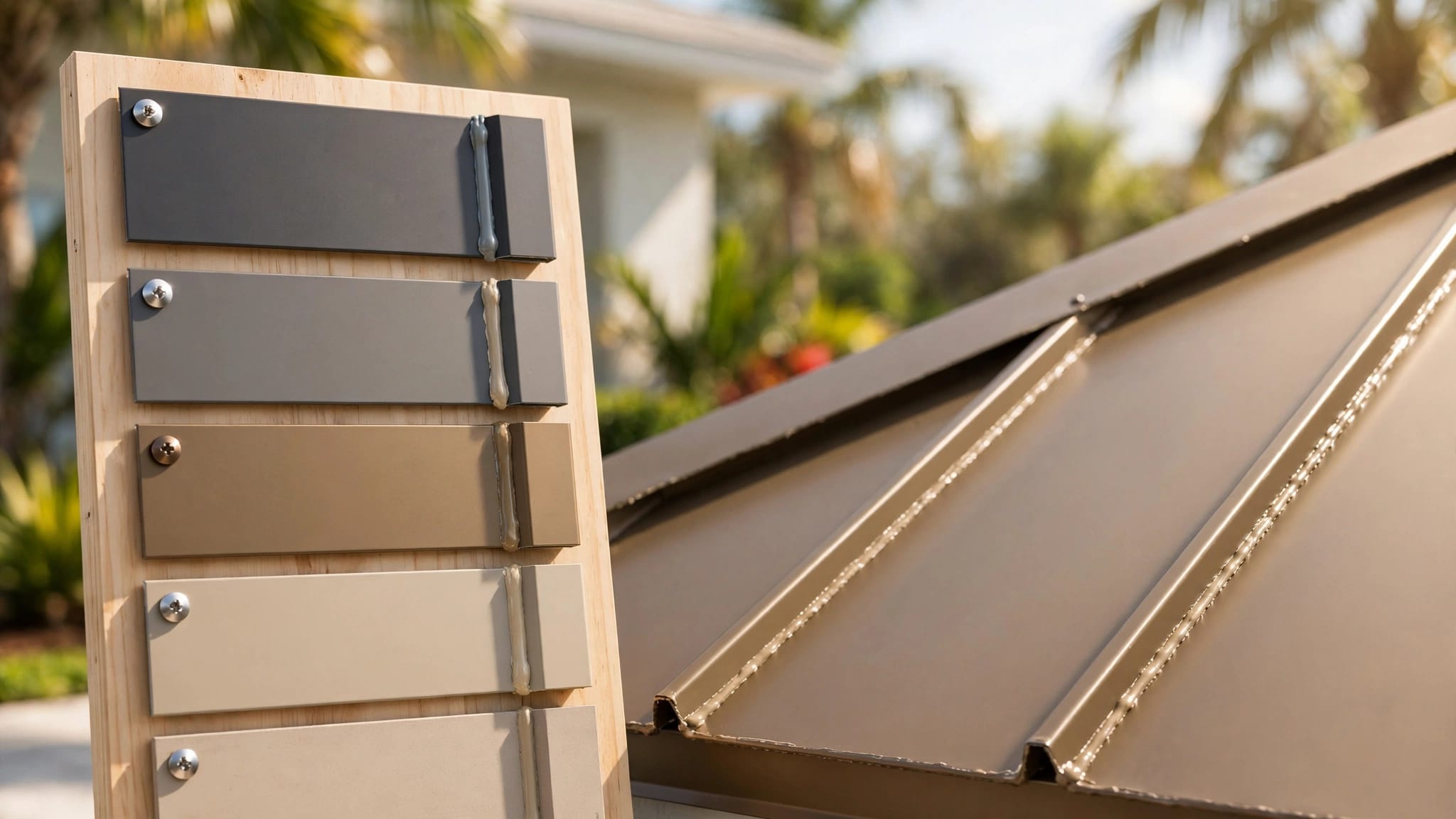
The finish also affects the roof. Bare Galvalume has a bright, metallic appearance that weathers over time. Galvanized steel usually has a gray, spangled appearance. Factory-painted panels are available in both material types, but the paint system, preparation, and warranty must be reviewed as part of the product specification.
Florida weather changes the material decision
Florida's climate creates conditions that test every exposed metal surface. Heat expands panels during the day, afternoon storms create repeated wetting, and high humidity can keep surfaces damp after sunset. Roof ventilation and drainage help, but the coating still has to match the location.
Salt air deserves extra attention. A property near the Atlantic or Gulf Coast receives airborne salt deposits that can collect around fasteners, laps, trim, cut edges, and scratches. The farther an outbuilding is from the coast, the less severe the exposure may be, but wind can carry salt inland.
A coastal building may need a painted finish, compatible fasteners, carefully selected trim, and a maintenance plan that includes regular inspection. Galvalume is common in Florida roofing, but its name alone doesn't confirm that a particular product is suitable for every marine exposure. Galvanized steel also needs protection and proper installation in salty conditions.
Salt exposure attacks the full roof system, not only the flat panel surface. Fasteners, cut edges, flashing, and debris-filled seams often show problems first.
Condensation creates another concern. A metal roof over an unventilated shed can collect moisture on the underside, especially when warm, humid air meets a cooler panel. Proper roof slope, ventilation, underlayment, and insulation can reduce that risk. Water that remains against the panel or framing can shorten the life of either coating.
Agricultural buildings add chemical exposure. Fertilizer dust, animal waste, ammonia, and damp organic material can corrode metal faster than ordinary outdoor air. A barn or workshop near a fertilizer storage area needs product guidance based on the actual use, not a general preference for one coating.
Quick comparison for Florida outbuildings
The following comparison helps narrow the choice before you review project-specific approvals.
| Factor | Galvalume steel | Galvanized steel |
|---|---|---|
| Primary coating | Aluminum-zinc alloy | Zinc |
| Surface protection | Strong barrier protection with zinc assistance | Sacrificial zinc protection |
| Common appearance | Bright metallic or factory-painted | Gray metallic or factory-painted |
| Florida use | Common for roofs, barns, sheds, and wall panels | Common where zinc-coated steel is specified |
| Coastal exposure | Requires a suitable finish, fasteners, and maintenance | Also requires a suitable coastal system |
| Scratches and cut edges | Can resist surface corrosion well, but exposed steel still needs care | Zinc can protect small exposed areas, but the zinc coating is consumed |
| Main buying concern | Product coating, paint system, approvals, and compatibility | Coating weight, finish, approvals, and compatibility |
The takeaway is simple: Galvalume often makes a strong general-purpose roofing choice , while galvanized steel remains useful when a project specification, exposure condition, or available system favors zinc-coated steel. Compare the complete assembly instead of choosing by the sheet name alone.
Match the material to the outbuilding
Sheds and workshops
For many residential sheds and workshops, Galvalume panels offer a practical balance of corrosion protection, availability, and appearance. Exposed-fastener AG or Multi-Rib panels work well for many utility buildings when the framing, roof slope, and fastening pattern meet the required specifications.
Panel gauge should match the design and support spacing. A heavier panel may provide a more substantial feel, but the building still needs proper purlins, screws, closures, trim, and wind-uplift details. A low-profile 5V panel may suit a traditional appearance, while a ribbed panel can fit a modern utility design. Review this comparison of metal roofing profiles for barns and sheds before selecting a profile.
Workshops often benefit from a painted finish because it offers more color choices and can help the building match a home or garage. The finish won't correct poor drainage or condensation, so ventilation and flashing still need attention.
Garages and larger storage buildings
A garage usually has more wall area, more openings, and greater value inside. Water control around eaves, ridge caps, skylights, doors, and roof penetrations becomes more important as the building grows.
Galvalume or galvanized steel can work for a garage when the selected panel system meets the local wind and installation requirements. Standing seam may suit a building where concealed fasteners and a cleaner roofline are priorities. Exposed-fastener panels can be practical when the design, maintenance access, and fastener schedule fit the project.
Barns and agricultural buildings
Galvalume is widely used for agricultural roofs and wall panels. Mid Florida Metal Roofing Supply lists ag multi-rib panels in 26-gauge and 29-gauge Galvalume, along with painted options. The current product information also identifies Florida approvals for certain non-HVHZ roof and wall assemblies over specified substrates.
A livestock building needs more than a corrosion-resistant sheet. Ventilation, interior moisture, ammonia, dust, and chemical storage can affect the roof system. Keep wet material, manure, and fertilizer away from panel surfaces, and follow the manufacturer's guidance for agricultural exposure.
For a larger pole barn, a package can simplify coordination between framing, panels, trim, and fasteners. Some pole barn kits in Florida specify 26-gauge Galvalume Multi-Rib panels with ridge, rake, eave, and warranted screws. Confirm the current kit details and approval limits before ordering.
Installation and Florida code requirements
A coating cannot compensate for an under-designed roof. Florida building departments review factors such as wind speed, exposure category, roof height, building location, and construction type. Requirements can vary between counties and municipalities.
The High-Velocity Hurricane Zone includes Miami-Dade and Broward counties, where additional testing and approval requirements apply. Other Florida locations also require the roof assembly to meet the current Florida Building Code and local rules.
Before purchasing panels, verify:
- The approved roof or wall assembly for the installation location.
- The roof slope, substrate, purlin spacing, and maximum panel spans.
- The required gauge, fastener type, washer material, and screw pattern.
- The wind-uplift rating and edge-zone fastening requirements.
- The correct trim, closures, ridge ventilation, flashing, and sealant.
- Whether the approval applies to HVHZ, non-HVHZ, or a specific substrate.
A Florida Product Approval for one panel configuration doesn't automatically approve every gauge, substrate, fastener pattern, or installation method. Manufacturer specifications must match the building as designed. Your contractor and local building department should verify the current requirements before installation.
Use cutting methods that avoid excessive heat, and remove metal filings from the roof after fabrication. Install compatible screws and flashing. Copper, lead, wet concrete, and other incompatible materials can create corrosion problems when they contact coated steel or remain against it.
Store panels off the ground in a dry, ventilated location. Water trapped between tightly stacked sheets can stain or damage the coating. During installation, keep laps clean and seal penetrations according to the panel manufacturer's instructions.
How to choose between Galvalume and galvanized steel
The best decision starts with the site rather than the color chart. Identify the building's distance from saltwater, intended use, roof slope, framing system, and expected maintenance access. Then ask the supplier for a complete material recommendation.
Compare the total roof package, including panels, trim, closures, fasteners, sealants, underlayment, delivery, and labor. A lower sheet price may not reduce the project cost if the system needs different fasteners or extra fabrication.
Ask for current documentation that identifies the coating, gauge, finish, panel profile, warranty terms, and approval information. If the building is in a coastal or agricultural setting, describe those conditions before the order is prepared.
For many Florida outbuildings, Galvalume is a practical starting point. Galvanized steel can be the better fit when the specification calls for it or when a particular zinc-coated system matches the exposure and installation details. In either case, proper drainage, compatible components, and correct wind-rated installation carry as much weight as the coating choice.
Conclusion
Choosing between Galvalume and galvanized steel requires more than comparing two metal names. Galvalume often suits Florida sheds, workshops, garages, and barns, while galvanized steel remains a sound option for projects built around a zinc-coated specification.
The strongest choice is the complete approved roof system that fits your location, wind requirements, exposure, building use, and maintenance plan. Verify the current local code and manufacturer specifications before ordering, especially for coastal properties and buildings in the HVHZ.
Share Our Metal Roofing News Articles
Related Posts