How To Walk On A Metal Roof Safely
If you can avoid it, don't walk on a metal roof . Metal panels get slick fast, edges are sharp, and one bad step can dent a panel or cause a fall. For many inspections, a ladder, binoculars, drone photos, or attic check is the safer call.
Still, sometimes roof access can't wait. A contractor may need to set trim, inspect fasteners, or service a vent. In those cases, the goal is simple: protect the person, protect the panels, and follow the panel maker's instructions before a boot ever touches the roof.
First, decide if you should be up there at all
A metal roof isn't like walking across plywood. It behaves more like a car hood in the rain, solid enough to look safe, yet easy to slip on and easy to dent in the wrong spot. That risk gets worse in Florida, where dew, heat, pollen, and sudden showers can turn a roof surface slick in minutes.
So, start with a hard rule. Only walk on a metal roof when it's necessary . If the job is visual, stay on the ground. A good example is flashing inspection. You can often spot bad flashing safely without roof climbing by checking problem areas from below and from the attic after heavy rain.
Next, check conditions. Don't go up in rain, wind, lightning, or early morning dew. Also skip the hottest part of the day if panels are too hot to touch comfortably. Heat doesn't just punish the person on the roof, it can make footing less stable and turn a careful job into a rushed one.
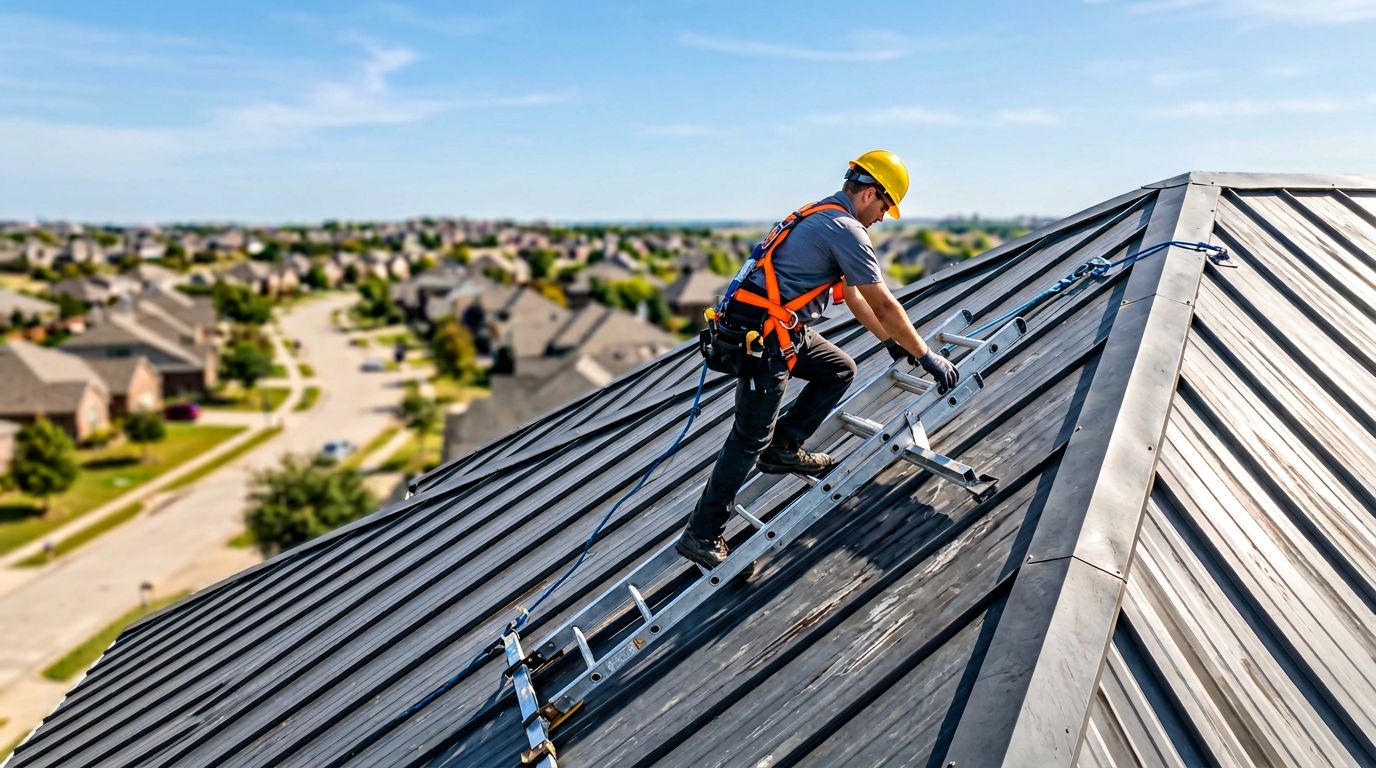
For contractors, OSHA's construction rules generally require fall protection at 6 feet or more above a lower level, plus worker training. In practice, that means using guardrails, warning lines, or a personal fall arrest system when the work calls for it. A harness without a proper anchor is just a costume, not protection.
If you don't have a safe access plan and fall protection, stay off the roof.
How to walk on a metal roof safely when it can't wait
When roof access is necessary, slow wins. Fast steps, long reaches, and carrying too much at once lead to slips and bent panels. Before you walk on metal roof surfaces, plan the path from the ladder to the work area.
Here are the basics that matter most:
- Set up safe access : Use a ladder on stable ground, tie it off, and extend it at least 3 feet above the roof edge.
- Wear the right gear : Choose clean, soft-soled, slip-resistant boots. Add gloves, eye protection, and a harness when needed.
- Check the roof first : Look for wet spots, loose debris, skylights, damaged panels, and edge hazards before stepping out.
- Move with control : Keep your knees slightly bent, take short flat-footed steps, and keep your weight centered.
- Stay off the edges : Don't work near eaves, rakes, or hips without proper fall protection in place.
Keep tools in a pouch or raise them with a rope. Don't climb while holding panels, buckets, or loose fasteners. Also, never assume an anchor point is good just because it looks strong. Standing seam roofs often use non-penetrating seam clamps for tie-off, but only if the roof system and anchor manufacturer allow that setup.
Panel support matters too. A panel over solid decking behaves differently than one spanning purlins. Gauge, rib height, clip type, and spacing all change how much foot traffic the roof can take. That's why it's smart to download panel installation manuals and read the product-specific walking, fastening, and warranty notes before the job starts.
Some warranties limit damage from foot traffic. Others require repairs if panels are creased, scratched, or distorted. In other words, safe walking isn't just about not falling. It's also about not leaving behind hidden damage that causes leaks later.
Where to step on different metal roof panel types
There's no one-size-fits-all answer here. Manufacturer guidance can vary, and that's not a small detail. The right foot placement depends on panel profile, slope, support below, and whether the panels are fully installed.
This quick guide helps as a starting point:
| Panel type | General foot placement | Main caution |
|---|---|---|
| Standing seam | Usually on the flat next to the seam, not on top of the seam | Don't crush seams or assume they can hold an anchor |
| PBR or R panel | Usually in the lower flat areas near structural support | Don't step between supports where the panel can flex |
| 5V crimp | Usually in flatter bearing areas, with weight spread evenly | These panels can dent fast if you step high or off balance |
| New or loose panels | Avoid walking on them until secured as directed | Unfastened panels can shift, buckle, or cut hands and legs |
That table is only a starting point, not a rule book. A steep roof changes everything. So does low slope, especially when water or dust is present. If you're comparing panel profiles or planning a new roof, review the standing seam vs 5V vs PBR slope requirements before deciding how the roof will be built and serviced.
Standing seam deserves extra caution. Many people think the raised rib is the strongest place to step. Often, it isn't. On many systems, the safer spot is the flat area close to the seam, with weight centered and movement kept smooth. Exposed-fastener profiles like PBR and 5V also punish bad foot placement. Step too far from support, and the metal can oil-can, crease, or loosen fasteners over time.
Common mistakes that lead to falls or panel damage
Most roof accidents don't come from dramatic mistakes. They come from small shortcuts.
The first mistake is walking a wet roof because "it'll only take a minute." The second is going up without fall protection because the task seems simple. The third is stepping wherever looks solid instead of following the panel maker's guide.
A few more problems show up all the time:
- Dirty soles : Sand, mud, and metal shavings reduce grip fast.
- Wrong footwear : Hard, worn, or slick soles slide easier.
- Overconfidence near edges : People drift toward the eave without noticing.
- Stepping on seams or unsupported flats : That can damage panels and throw off balance.
- Ignoring the manual : Product details change by profile, gauge, and installation method.
For contractors, training matters as much as gear. OSHA also expects workers to know hazard recognition, not just wear a harness.
Conclusion
The safest way to walk on a metal roof is to avoid doing it unless the job truly requires it. When access is necessary, use fall protection, move slowly, and follow the exact panel guidance for that roof system. Before anyone steps out, check the installation manual and warranty notes, because safety and panel protection go hand in hand. A metal roof should protect the building for decades, and that starts with treating every step like it matters.
Share Our Metal Roofing News Articles
Related Posts