Standing Seam Lock Repairs Without a Full Tear-Off
A loose seam does not always mean a new roof. A standing seam lock repair can often solve the problem when the panels are still sound, the corrosion is limited, and the roof can still hold its shape.
The hard part is figuring out what failed first. A seam can open because of movement, a bad original lock, loose clips, storm damage, or hidden rust. In Florida, heat cycles, wind, and heavy rain expose those weak points fast, so the repair has to match the real cause, not just the leak stain.
What a standing seam lock repair can actually fix
Standing seam roofs depend on formed panel legs, concealed clips, and tight seams. When one of those parts moves, the roof can start leaking even if the panels still look decent from the ground.
A repair without a full tear-off works best when the damage is local. That usually means a few opened seams, a damaged transition, a loose fastener at trim, or one panel that took the hit from wind or debris. If the roof surface is still flat, the coating is intact, and the panel edges have not split, the roof may be repairable.
The warning signs are usually easy to spot once you know where to look. A seam that has lifted, a ridge that looks distorted, rust at the cut edge, or repeated leaks after storms all point to a seam problem. Water stains in the attic can also show that the leak is tracking away from the visible opening.
A seam leak is often a symptom, not the whole problem. If the panel keeps moving, the leak usually comes back.
Repair gets much harder when the roof has widespread corrosion, crushed panel legs, or long-term movement that has already distorted the lock profile. At that point, the roof may need more than a seam fix.
How to inspect the seam before you choose a fix
Good diagnosis saves time and keeps repairs from turning into repeat visits. Start by looking at the roof from both sides, outside and inside. The goal is to find the source of movement, not just the lowest point where water showed up.
Check the seam line closely. If the legs still align and the panel shape is intact, the roof may accept a re-lock or a localized repair. If the seam is twisted, split, or pulled apart at several points, a repair may not hold for long. The same goes for panels that have a permanent crease from impact or a bend near the clip zone.
Inside the building, look for these signs:
- Rust stains or wet insulation near the same area after each storm
- Drips that show up away from the obvious roof opening
- Darkened wood or metal around penetrations, valleys, and terminations
- Fastener marks or movement at trims and flashings
Access matters too. Some roofs allow a cleaner repair because the damaged area is easy to reach. Others need more work to protect the finish, open the seam correctly, and avoid bending the panel legs during the repair. If the installer cannot get to the problem area without damaging nearby panels, the scope may shift from repair to partial replacement.
The seam profile also matters. Some systems give more room for correction than others. A lock that still has shape can often be reclosed. A lock that has torn open or lost its memory may not hold a new fold.
Repair methods that avoid a full tear-off
The best non-tear-off repair depends on what failed first. In many cases, the fix is a mix of seam work, trim work, and small section replacement.
Common repair approaches include:
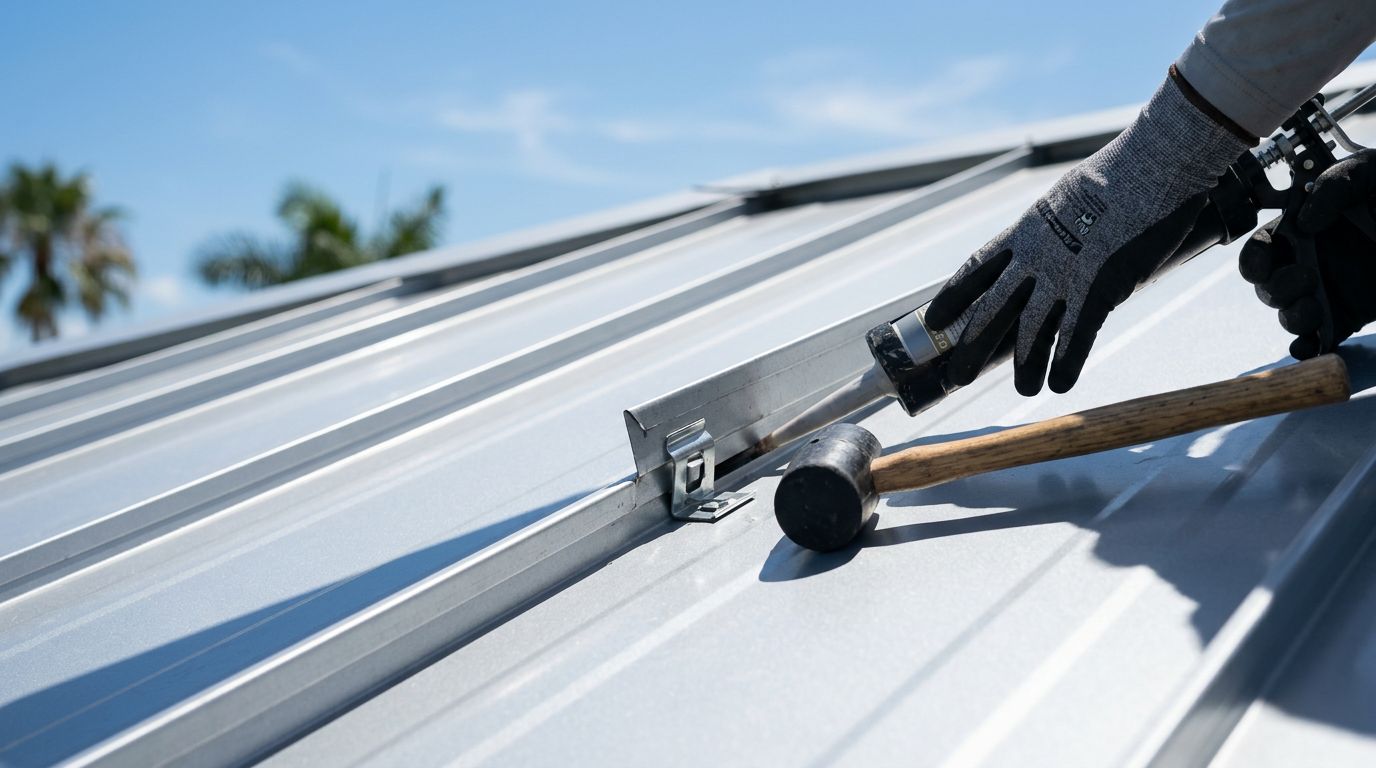
- Re-closing the seam, when the panel legs still line up and the lock can be formed again without damaging the finish.
- Correcting clips or fasteners, when movement comes from loose attachment points rather than a failed seam line.
- Reworking flashings and transitions, especially around walls, ridges, skylights, and pipe penetrations.
- Replacing isolated panels, when one section is bent, torn, or corroded beyond a clean repair.
Sometimes a repair is cleaner when the panel itself comes out. If the damage is limited to one area, replacing that section may stop the leak faster than trying to patch the failure point. A good reference for that kind of work is replacing a damaged standing seam panel, especially when the panel profile still needs to match the existing roof.
Sealants can support a repair, but they should not carry the whole load. A quality sealant belongs in the right place, such as a transition or a fastener detail. It should not be asked to hold a moving seam together by itself. That usually fails once the roof heats up and expands again.
Material compatibility matters too. If a repair introduces the wrong metal, the wrong screws, or the wrong coating at a cut edge, corrosion can start faster. On a standing seam roof, small mistakes at the repair edge can create a bigger problem than the original leak.
Why temporary patches fail on standing seam roofs
Temporary fixes have a place, but they do not solve a seam that is still moving. Caulk, roof cement, tape, and quick coatings can slow a leak long enough to get through a weather window. They should not be treated as a lasting repair unless the underlying issue has already been corrected.
Florida roofs put a lot of stress on patch materials. Sun heat, daily expansion, wind lift, and sudden rain all work against a surface patch. A bead of sealant that looks fine on a cool morning can split once the panel expands in the afternoon.
Temporary patches also hide the problem. Once the leak stops showing, it becomes harder to see whether the seam is still opening, whether the clip system is failing, or whether water is entering somewhere else. That can turn a small repair into a bigger one later.
A patch can also trap moisture. If water gets under the repair material, it may stay there longer than before. On a metal roof, that trapped moisture can speed up corrosion or stain the finish around the repair.
Repair, partial replacement, or full replacement?
The right answer depends on how much of the roof is still healthy. A small seam failure is one thing. A roof with broad corrosion, repeated leaks, or panels that no longer hold their shape is another.
This quick comparison helps sort the usual path.
| Condition of the roof | Typical solution | What it means in practice |
|---|---|---|
| A few opened seams, panels still sound | Repair | Re-close the seam, correct the attachment point, and rework the nearby flashing |
| One or several damaged panels, limited area | Partial replacement | Remove the affected section and install matching panels or trim |
| Widespread seam failure, heavy corrosion, repeated leaks | Full replacement | New roof system is usually the more reliable fix |
The strongest signal is spread. If the issue is isolated, repair or partial replacement can make sense. If the problem shows up in several places, the roof may be telling you that the system is at the end of its useful life.
Age matters too, but age alone does not decide it. A newer roof with a storm-damaged seam may be a repair candidate. An older roof with fading finish, hard-to-match panels, and multiple leak points may point toward replacement instead. In Florida, sun exposure can also make matching color and finish harder, which matters when the repair has to blend with the rest of the roof.
Conclusion
Standing seam lock repairs without a full tear-off are possible when the roof still has a healthy structure behind the leak. The key is finding out whether the problem is a local seam issue, a fastening issue, or a broader failure in the panel system.
If the seam is still shaped correctly and the damage stays in one area, repair can be a practical choice. If the panels are warped, rusted, or moving too much, a patch will only delay the bigger fix. The smartest repair is the one that matches the roof's condition, not just the spot where the water showed up.
Share Our Metal Roofing News Articles
Related Posts