Jobsite Brake Trim vs Factory Trim for Complex Details
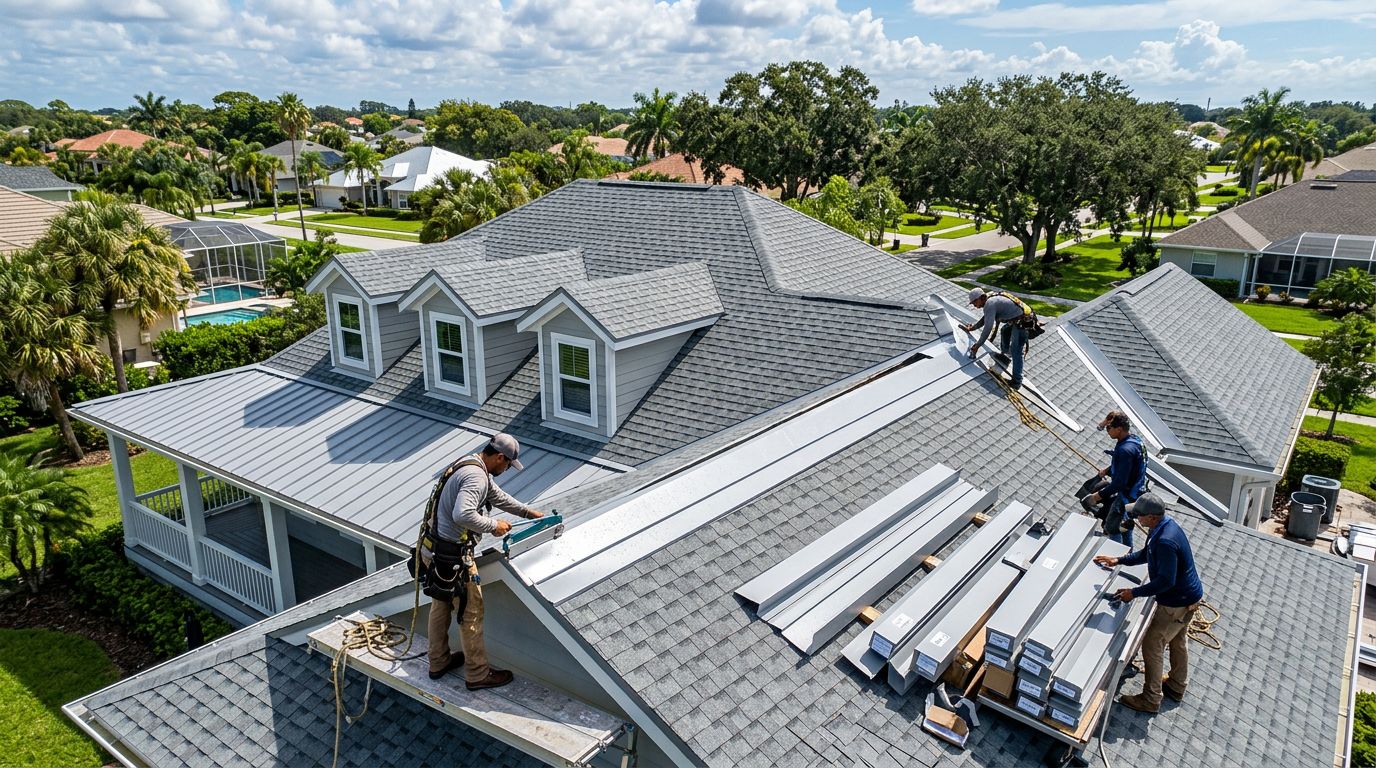
Complex roof details expose every weak spot in trim planning. When hips don't line up, walls run out of square, and penetrations land where the drawings never expected them, the trim choice matters as much as the panel choice.
A crew can solve some of that on site with a brake. Other details are cleaner with factory-formed pieces. The right answer depends on dimensions, sequencing, and how much correction the job will need once the crew is on the roof.
That choice matters on Florida jobs, where heat, sudden rain, and long sun exposure can turn a small trim mistake into a leak or a delay. The best fit is the one that matches the roof in front of you, not the one that looked good on paper.
Why complex details change the trim decision
A simple gable roof gives you straight runs and predictable corners. Complex work does not. Add a porch tie-in, a wall transition, a dormer, or a retrofit over older framing, and the trim has to work around the building's real shape.
That is where planning gets harder. A ridge cap, sidewall, headwall, rake, or transition flashing may need to cover small errors in framing while still shedding water cleanly. If the leg lengths are off by even a little, the piece can look fine from the ground and still leave a weak spot.
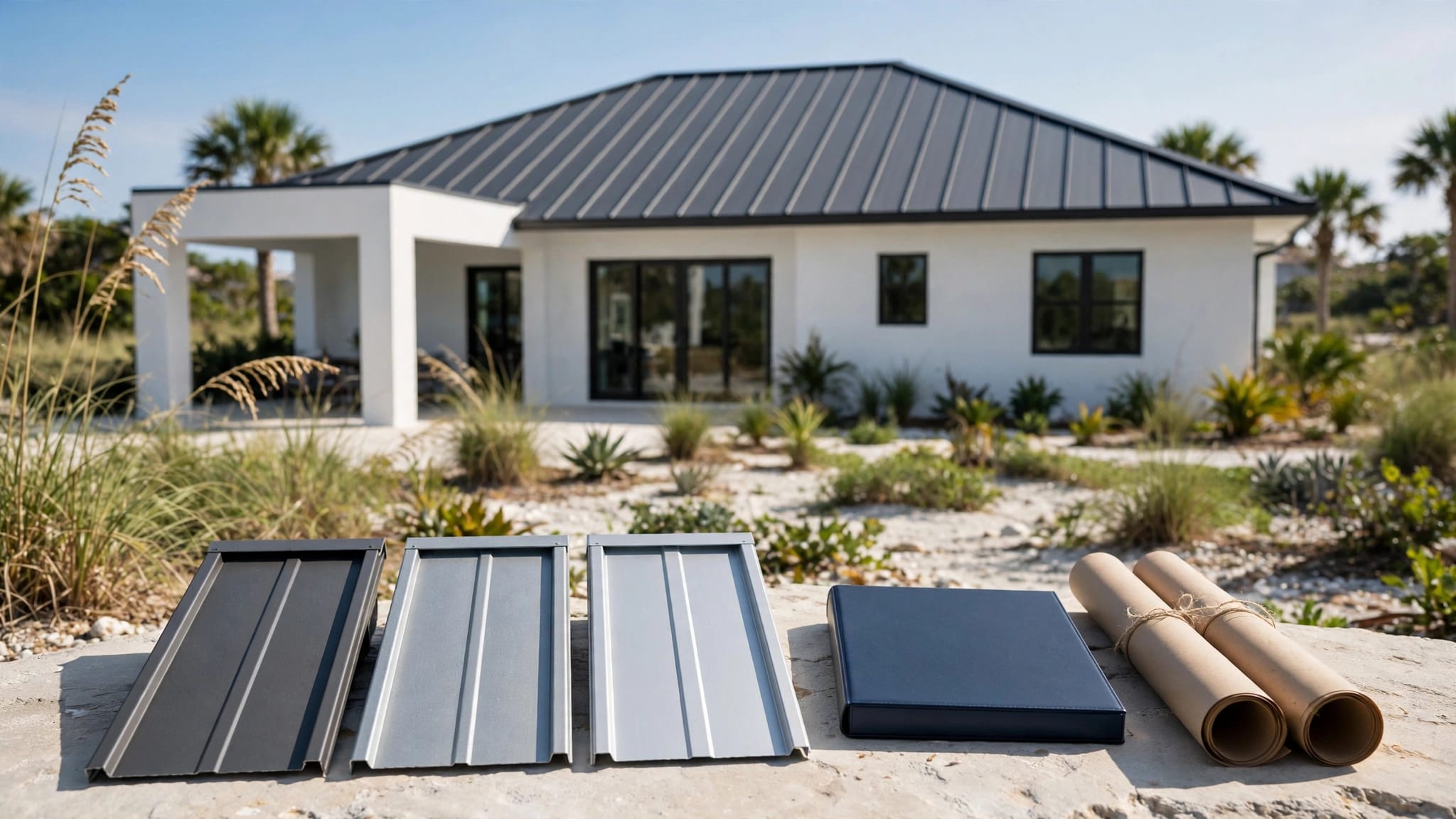
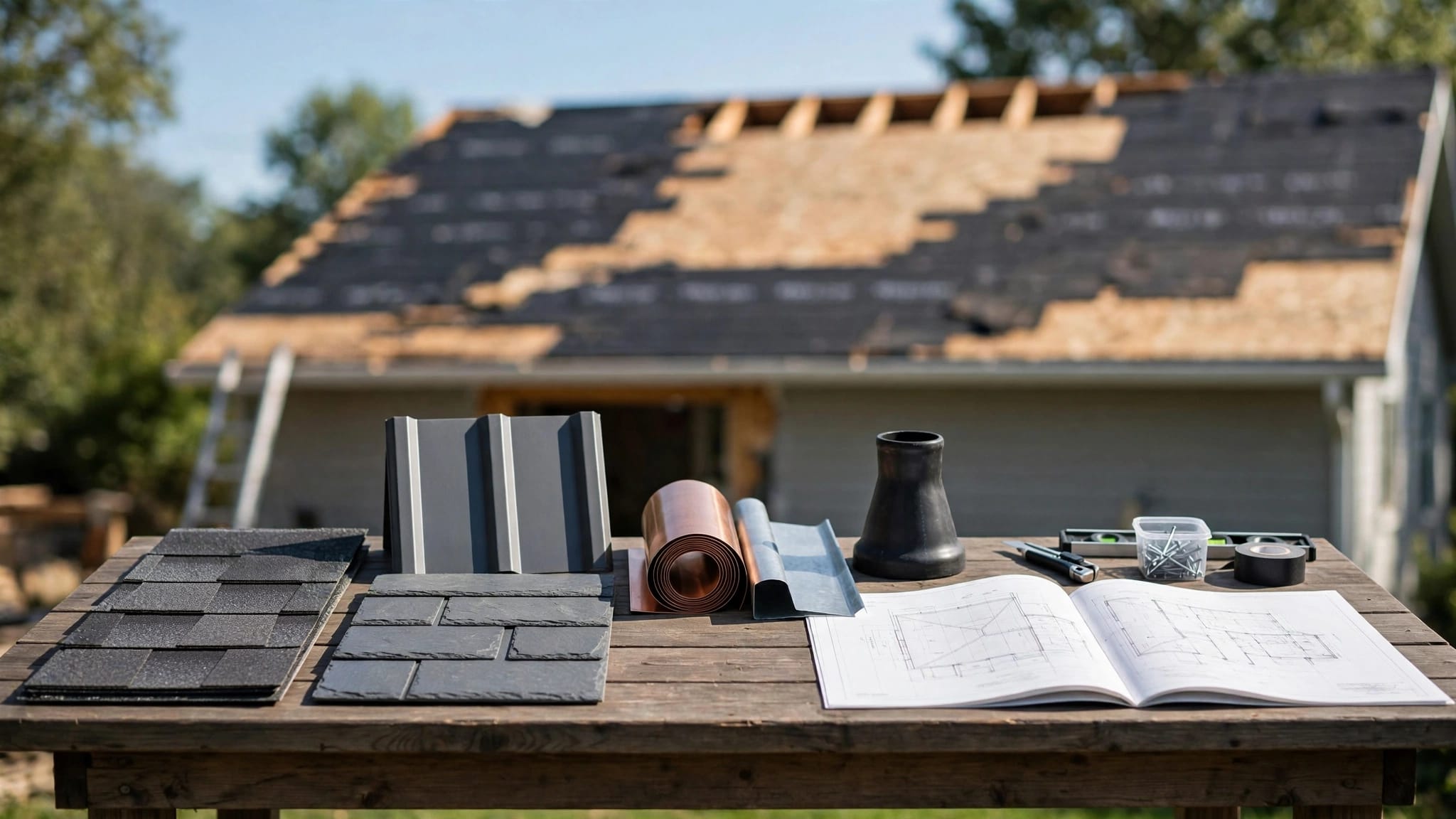
The material choice matters too. Standing seam, PBR, R, 5V, and multi-rib profiles all create different trim conditions. The profile shape, rib height, hem direction, and fastening method change what will fit and what will not. A catalog like metal roof flashing profiles helps crews match the right shape before metal gets bent.
When the detail is custom, how to order custom metal roof trim the right way keeps the measurements, angles, and notes straight before fabrication starts.
Jobsite brake trim vs factory trim
Matching the profile to the panel is only part of the job. The bigger question is where the piece gets formed and how much adjustment the roof will demand.
| Factor | Jobsite brake trim | Factory trim | Better fit |
|---|---|---|---|
| Odd angles and out-of-square walls | Easy to adjust on site | Must match the order | Jobsite brake trim |
| Repeatable straight runs | Slower setup, more handling | Fast and consistent | Factory trim |
| Last-minute changes | Can change the same day | May need a reorder | Jobsite brake trim |
| Finish consistency | Depends on field handling | Uniform from the shop | Factory trim |
| Labor use | Needs a skilled bender | Reduces field bending | Factory trim on large runs |
The pattern is clear. A brake gives you flexibility. Factory trim gives you repeatability. Complex roofs often need both on the same project, because no single method covers every condition well.
Where jobsite brake trim gives you an edge
Jobsite brake trim shines when the roof is still telling you what it wants. That happens on remodels, additions, agricultural buildings, and repairs where the framing, fascia, or wall lines are not perfectly true.
A brake helps in these situations:
- Out-of-square conditions : The crew can tweak leg lengths and angles to match a crooked fascia or wall.
- One-off transitions : A change in pitch, height, or roof plane often needs a piece that did not exist in the original takeoff.
- Last-minute field fixes : If a penetration shifts, or a detail gets missed during layout, the brake can save a trip back to the shop.
- Small repair jobs : Waiting for factory pieces can slow a simple repair when the crew already has the material on site.
That freedom comes with tradeoffs. The brake depends on the skill of the person running it, and field work rarely happens in perfect conditions. Wind, rain, and heat can slow the process. So can rushed measurements and noisy assumptions. A trim piece bent wrong on the roof is a delay, a wasted sheet, and sometimes a scratch on a finished panel.
When factory trim is the better call
Factory trim makes sense when the geometry is known and the same piece repeats across the roof. Long ridge caps, straight fascia wraps, and identical wall transitions are good candidates. So are larger jobs where speed matters and every repeated piece has to look the same.
A controlled shop setup usually gives cleaner bends and more consistent dimensions than a field brake under changing weather. That matters on exposed finishes, because repeated handling can leave marks. It also matters when the roof uses a specific panel profile and the trim has to fit that profile without extra fuss.
For custom pieces, tips for ordering custom metal trim help keep leg lengths, pitch, and finish notes consistent before fabrication starts. That saves time later, especially when the job needs several related pieces that all have to align.
Factory trim is also the better call when the schedule is set and the substrate is confirmed. If the deck, wall, or fascia is ready for measurement, the shop can make pieces that arrive prepared for install. If the building is still shifting, though, a pre-made piece can become the wrong piece fast.
Common failure points that cause callbacks
Most trim callbacks come from a short list of mistakes. The roof rarely fails in a mysterious way. It usually leaks where the planning was thin.
The piece that fits the drawing but misses the roof is the one that leaks.
A few problem spots show up again and again:
- Measuring the rough opening instead of the finished condition : Trim should match the final substrate, not a framing guess.
- Ignoring panel profile details : Rib height, hem direction, and attachment method all affect fit.
- Losing the water path : If a lap or bend sends water the wrong way, the roof will tell on you in the first storm.
- Overworking the metal : Repeated bends can weaken the piece and leave it looking tired before the roof is done.
- Mixing field-bent and shop-formed pieces without checking alignment : A small mismatch at one detail can throw off the next three.
On exposed-fastener roofs, proper flashing sequence for metal roofs keeps lower pieces under upper ones and helps the roof shed water the right way. Sequence matters as much as shape.
Choosing the right mix for a Florida roof
Most real jobs do not need one answer everywhere. They need the right mix. Long straight pieces can come from the shop. Odd transitions, out-of-square walls, and surprise field changes can go on the brake.
That mix works best when the crew sorts the details before install day. Start by identifying every repeat piece and every one-off. Then confirm the finished dimensions, not the rough framing. After that, decide which trim has to arrive ready to install and which trim needs room for field adjustment.
Florida weather raises the stakes. Heat moves metal. Afternoon rain punishes weak laps. Coastal air can expose sloppy cuts and unprotected edges faster than a dry inland job. Because of that, trim planning needs to account for the panel profile, the fastening pattern, and the order in which pieces go on the roof.
A good rule is simple. If the detail is repetitive and locked in, factory trim saves time. If the detail is irregular or still changing, jobsite brake trim protects the schedule. On many roofs, both methods belong in the same plan.
Conclusion
Complex trim work rewards planning, but it also rewards flexibility. Factory trim is strongest when the geometry repeats and the measurements are locked. Jobsite brake trim is strongest when the roof is imperfect and the detail keeps changing in the field.
The best crews do not pick a side out of habit. They choose the piece that fits the panel, the sequence, and the actual building in front of them. When those three line up, the roof drains clean, the edges look right, and the callbacks stay down.
Share Our Metal Roofing News Articles
Related Posts