Florida HVHZ Metal Roofing Requirements Versus Non-HVHZ
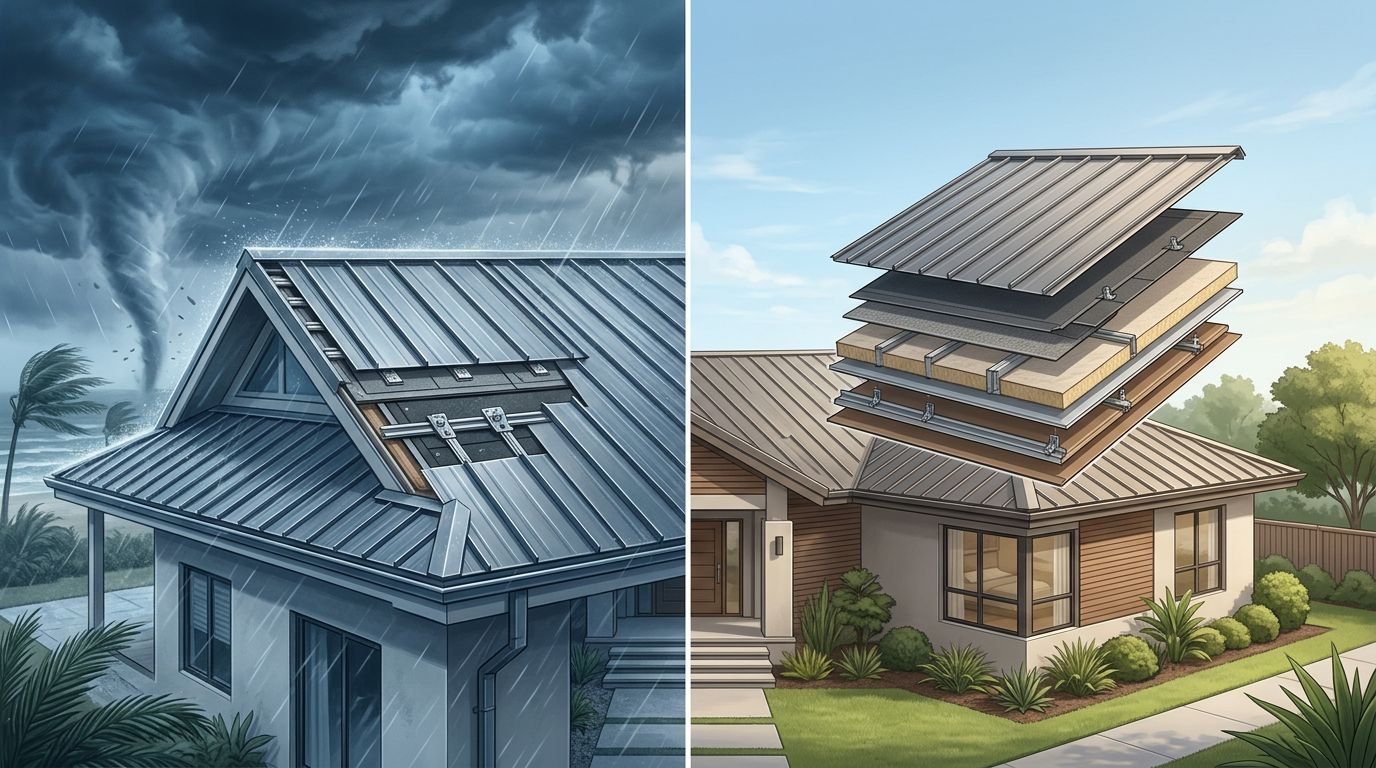
Two Florida roofs can use the same-looking steel panel and still need different permit documents, tests, and attachment details. The dividing line is often Florida HVHZ metal roofing rules, which apply in Miami-Dade and Broward counties and carry stricter wind and water requirements.
Outside the High-Velocity Hurricane Zone, Florida's statewide code still controls the work. However, product approvals, underlayment, deck construction, and wind pressures can differ by code edition and project location. Knowing which rule set applies before ordering panels prevents a costly mismatch.
Why Florida has two roofing rule sets
HVHZ is a geographic code designation, not a metal panel style. In Florida, the High-Velocity Hurricane Zone covers Miami-Dade and Broward counties. A steel roof in Fort Lauderdale follows HVHZ provisions, while one in Orlando or Jacksonville follows the non-HVHZ path, subject to the adopted code and local review.
That boundary matters because HVHZ rules address extreme wind uplift and wind-driven rain with more prescriptive testing and installation details. Non-HVHZ counties still face hurricanes, tropical storms, and strong coastal winds. The difference is the approval and design framework, not whether the roof needs to resist severe weather.
Florida's Building Code provides a statewide baseline for every roofing project. The permit reviewer may evaluate the panel, clips or screws, deck, underlayment, flashing, slope, and load path as one assembly. A panel with a Florida approval number isn't automatically approved for every building or fastening pattern.
Code editions also change. The local authority having jurisdiction, or AHJ, determines which edition and local requirements apply to a permit. A detail from an older installation guide may not match the rules currently used by the building department.
The practical rule is straightforward: classify the project address first, then select a roof system whose approval covers the actual building.
Florida HVHZ metal roofing requirements at a glance
The main differences become easier to see in a side-by-side comparison.
| Requirement | HVHZ | Non-HVHZ |
|---|---|---|
| Location | Miami-Dade and Broward counties | Other Florida jurisdictions |
| Approval path | Florida Product Approval with HVHZ coverage or an accepted local approval; Miami-Dade NOA documentation is common | Florida Product Approval or local approval accepted by the jurisdiction |
| Wind and rain testing | Applicable TAS testing, including TAS 100 and TAS 125-03 for qualifying metal roof assemblies | Tests and performance data listed in the approved product documents |
| Underlayment | Stricter roof-deck and secondary-water-barrier provisions, based on the code and approved assembly | More flexibility in some systems, but the adopted code and approval control |
| Deck and attachment | Tested deck, fasteners, clips, spacing, and perimeter details must match the approval | The selected assembly still must meet design pressures and fastening requirements |
| Permitting | HVHZ roofing permit requirements, including the applicable Uniform Roofing Permit Application | Standard local roofing or building permit process |
This table is a screening guide, not an installation specification. The approved drawings, product evaluation, design pressures, and local building department requirements control the final detail.
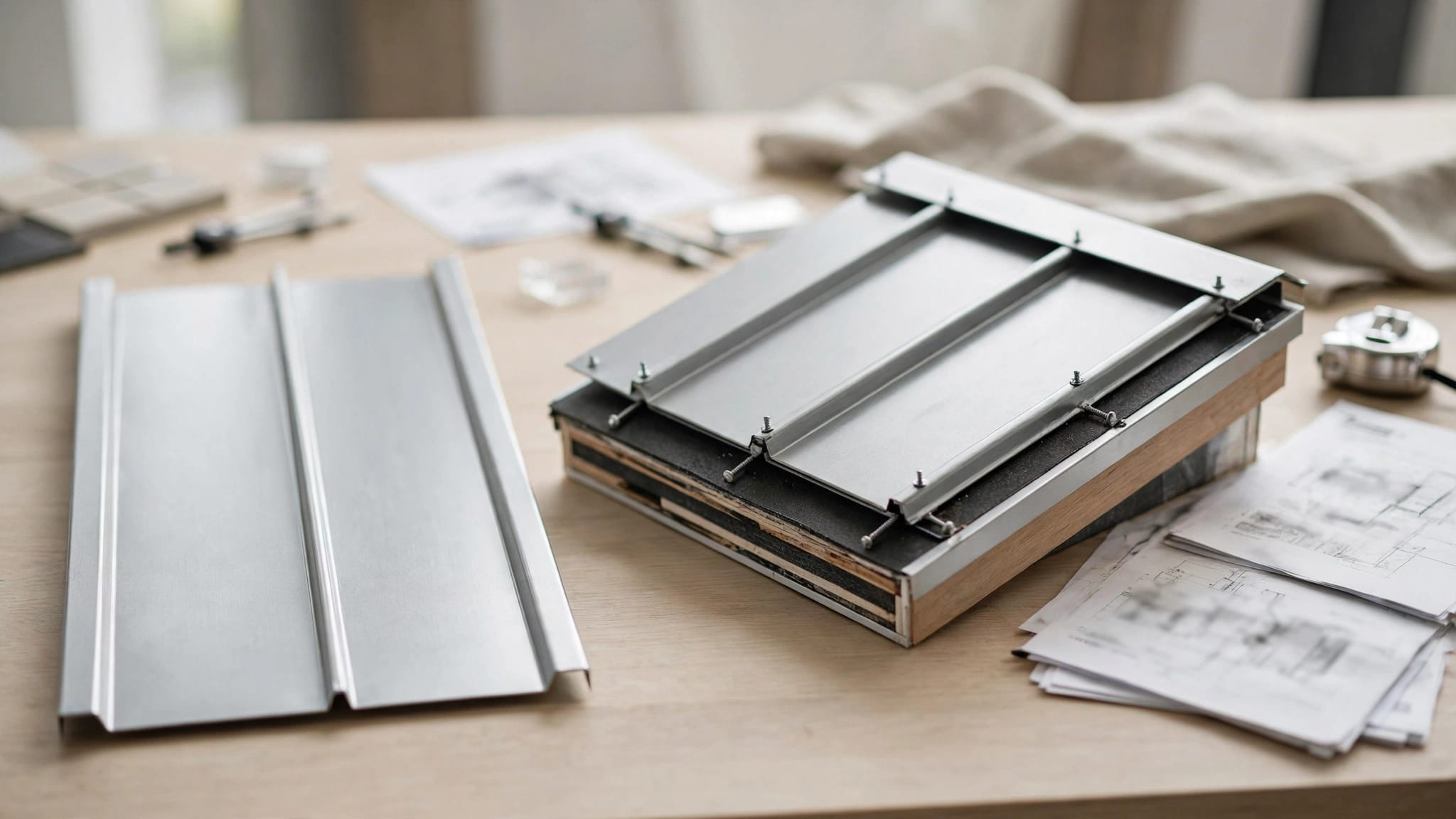
A Florida HVHZ metal roofing project must show that the complete assembly can handle the building's wind exposure. The sheet itself is only one component. Clips, screws, purlins, decking, seams, trim, closures, and flashing all affect performance.
For qualifying non-structural architectural metal roof assemblies, TAS 125-03 uses UL 580 as modified and applies a margin of safety of 2 for uplift testing. TAS 100 addresses wind-driven rain resistance. These tests evaluate a defined roof system, not an interchangeable collection of parts.
The tested configuration may limit the panel thickness, clip type, fastener type, spacing, substrate, roof slope, and perimeter construction. Changing a screw or increasing clip spacing can move an installation outside its approval.
What HVHZ metal roofing must prove
Wind uplift demand comes from the building's location and geometry. The calculation can involve exposure, enclosure classification, roof mean height, roof zones, slope, and the applicable ASCE wind provisions. A product evaluation may use reference conditions such as a 9.5-degree roof slope and a 15-foot mean roof height, but those reference values don't replace the project's actual design pressures.
An FL# or NOA identifies an approved product, but it doesn't replace the project's wind-pressure calculation. The approved assembly must meet the actual uplift demand.
HVHZ underlayment rules also deserve close attention. In the 2023 HVHZ code-change materials, ASTM D226 Type II is identified as the minimum underlayment for the relevant roof-deck application. Depending on the approved system, installation may require two layers or one layer over self-adhered tape applied across all roof-deck joints.
Miami-Dade roofing guidance also describes a self-adhering, polymer-modified bitumen underlayment as a secondary water barrier over the entire roof deck. That treatment includes a minimum 4-inch horizontal overlap, a 6-inch vertical overlap, and fully bonded seams. Contractors should verify whether those details apply to the selected assembly and adopted code edition before installation.
Standard felt or a generic synthetic underlayment can't be substituted because it is easier to source. The underlayment must match the approved roof assembly and the local permit documents.
The deck carries the panel attachment forces, so its condition matters. TAS 125-03 materials for non-structural metal roof assemblies specify wood decking at least 15/32 inch thick, with fastening that follows HVHZ requirements. A weak, damaged, or incorrectly fastened deck can create a compliance problem even when the panel itself has an approval.
HVHZ roof work also has a more formal permit process. Florida code materials require an HVHZ Uniform Roofing Permit Application for new roofing, recovering, reroofing, repair, or maintenance work in the zone. A licensed contractor must execute the applicable application, and the local building department should confirm the current form and submission requirements.
The statewide baseline for non-HVHZ metal roofing
Non-HVHZ doesn't mean a roof is exempt from Florida's wind requirements. All Florida roofing projects need a permitted, code-compliant assembly with suitable deck construction, attachment, flashing, underlayment, and product documentation.
Outside Miami-Dade and Broward, Florida Product Approval is often the main approval path. A statewide approval can cover use across Florida, while a local product approval may have geographic limits. The approval must cover the intended profile, substrate, attachment method, and installation conditions.
Non-HVHZ projects can have more underlayment flexibility than HVHZ projects. Some approved systems allow mechanically attached asphalt or synthetic underlayment, while others require self-adhered materials at selected roof areas. Eaves, valleys, penetrations, deck joints, and roof edges may have separate requirements.
Older roofing habits can cause trouble here. A contractor shouldn't assume that 30-pound felt, a particular synthetic product, or a familiar fastener pattern works on every non-HVHZ roof. Code editions and product approvals change, and some newer provisions expand sealed-deck requirements outside the HVHZ.
Coastal sites still deserve careful wind review. A home near the Gulf or Atlantic may have higher design pressures than an inland property. The AHJ, licensed roofing contractor, engineer, or architect should confirm the required uplift resistance for the address and building geometry.
For homeowners comparing profiles, a comparing metal roof panel types guide can help explain the differences between 5V, corrugated, and standing seam systems. The final selection, however, must follow the project's approval and structural requirements.
Match the panel to the approval, not the color chart
Panel profile and gauge are only the starting points. A roof system's compliance can depend on the exact steel thickness, panel width, seam design, clip spacing, fastener diameter, screw placement, substrate, slope, and edge treatment.
Mid Florida Metal Roofing Supply offers AG/Multi-Rib, PBR/R, standing seam, Armored Coast standing seam, and 5V panels for Florida projects. Those profiles fit different residential, commercial, agricultural, and utility-building applications, but the profile name alone doesn't establish HVHZ compliance.
Before fabrication, ask for the approval documents and installation drawings for the exact system. A useful package should identify:
- The Florida Product Approval number or applicable Miami-Dade Notice of Acceptance, along with the approved use category.
- The allowable roof slope, panel thickness, deck type, purlin spacing, clip layout, and fastener schedule.
- The tested uplift resistance and the conditions under which that rating applies.
- The required underlayment, flashing, closures, sealants, penetrations, and perimeter details.
- Any limits on roof height, building type, exposure, or installation location.
The comprehensive guide to metal roof panels can help with basic system terminology. For code compliance, the approved drawings carry more weight than a general product description.
Accessories are part of the roof assembly. Custom trim, ridge and eave details, sidewall flashing, closure strips, sealants, and fasteners must work with the selected panel. Substituting a component without checking the approval can affect both water resistance and wind performance.
A product family may also have separate HVHZ and non-HVHZ listings. That distinction appears in Florida approval documents for several roofing products, including metal roof systems. Always confirm that the document covers the project location, rather than assuming a non-HVHZ listing applies in Miami-Dade or Broward.
A practical ordering and permit workflow
Start with the exact project address. Give the supplier and contractor the building location before requesting a final panel package, because the address determines whether HVHZ rules apply.
Next, identify the AHJ and the code edition used for the permit. The building department can confirm local forms, product approval expectations, inspections, and any local amendments.
Then have the contractor or design professional determine the required wind pressures. The selected roof assembly must meet those loads at the field, perimeter, and corner zones.
After that, match the deck, underlayment, clips, screws, trim, and flashing to the approved installation details. Don't order from a color, gauge, or panel name alone.
Finally, submit the permit package before work begins. Keep the approval documents on the job, follow the listed fastening pattern, and ask the local building department before making field changes.
Conclusion
Florida uses one statewide building code framework, but HVHZ projects face a stricter approval and installation system. Miami-Dade and Broward roofs may require TAS testing, tighter underlayment details, HVHZ-specific permits, and approval documents that cover the complete assembly.
Non-HVHZ roofs still need Florida-approved materials, proper wind design, and local permitting. The strongest choice is the panel system whose approval matches the address, deck, slope, wind pressure, and installation method. For Florida HVHZ metal roofing , that verification should happen before the panels are ordered, not after the permit reviewer raises a problem.
Share Our Metal Roofing News Articles
Related Posts