Metal Roof Valley Flashing for Florida Roofs: What Homeowners Should Know
Florida roofs don't get an easy life. Rain can hit sideways, humidity lingers for months, and coastal air can speed up corrosion. That's why metal roof valley flashing deserves more attention than it usually gets.
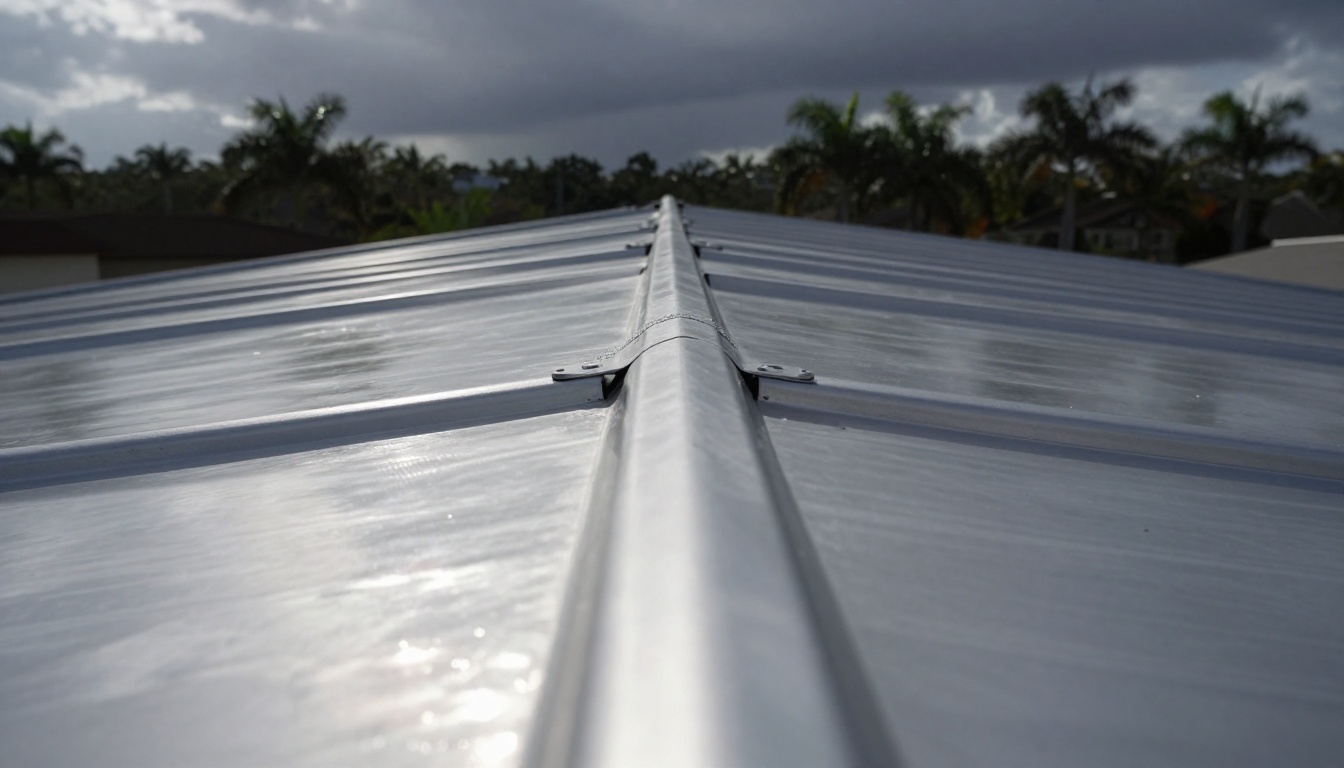
A roof valley is where two roof slopes meet, and it carries a huge amount of water. Think of it like the roof's drainage highway. If that one detail is undersized, poorly lapped, or fastened in the wrong place, a strong metal roof can still leak where storms hit hardest.
Why valley flashing matters more in Florida
Valley flashing is the formed metal channel that guides runoff down the roof and away from the structure. On a metal roof, it also has to work with panel movement, underlayment, and trim details. If you need a quick refresher on terms, this guide to roof flashing basics for metal roofs helps clarify how valleys fit into the full system.
Florida makes this detail harder for three reasons. First, rainfall is intense, so valleys handle concentrated water flow for long periods. Second, wind-driven rain can push water uphill or sideways at laps. Third, heat, salt air, and wet debris can wear down weak materials faster than many owners expect.
The roof type also matters. Standing seam, 5V, Multi-Rib, and PBR panels don't all terminate at a valley the same way. Because of that, one valley detail won't fit every panel profile. Open valleys often shed debris well, while some systems use a raised center or W-style valley to help control cross-wash. The right choice depends on the roof layout and the panel manufacturer's instructions.
Florida code adds another layer. Through 2026, Florida remains under the 8th Edition Florida Building Code, with the local building department making the final call. In simple terms, valley flashing has to be corrosion-resistant, watertight, and sized and installed to match both code and the approved roof system.
The valley flashing details that make or break performance
A good valley detail starts with the metal itself. In Florida, contractors commonly use corrosion-resistant flashing that meets code minimum thickness requirements, often 26-gauge galvanized steel or 0.019-inch aluminum, depending on the system and approval. Near the coast, material compatibility matters even more because salt air can punish the wrong combination of metals and fasteners.
Width matters too. In many Florida applications, a valley pan of at least 24 inches is common, though the exact size should follow the roof design and manufacturer specs. Narrow valleys are a problem because they crowd the water path, especially during tropical downpours.
Edge treatment is another big one. Hemmed or stiffened edges help the valley hold shape and resist capillary draw. Raw cut edges are more likely to deform or let water creep where it shouldn't. If you're comparing options, these available roof flashing profiles in Florida show how formed valley pieces and custom trim can match different panel systems.
Sealant should support a valley detail, not replace it.
That matters because Florida sun breaks down exposed sealant over time. A proper metal roof valley flashing detail uses shape, overlap, and fastening first, then sealant only where the manufacturer calls for it.
Here's a quick way to spot the difference between a sound detail and a risky one:
| Good valley detail | Red flag |
|---|---|
| Corrosion-resistant formed valley pan | Thin field-made piece with no clear approval |
| Wide, open water channel | Narrow pan with panels crowding the center |
| Hemmed edges | Raw cut edges |
| Fasteners at the outer edges only | Screws in the middle of the water path |
| Shingle-style laps with proper sealant | Short laps or caulk-only joints |
| Valley underlayment widened below the metal | Underlayment stopping short of the valley area |
Underlayment deserves special attention. Florida roofs rely on it as backup protection when wind-driven rain gets under metal. In high-wind regions, and especially in HVHZ areas, the valley underlayment build-up may be stricter. That can include layered self-adhered membranes and tighter fastening rules. On larger reroof jobs, upgrade rules may also apply, so it's smart to ask early.
How to review a valley flashing plan before work starts
You don't need to climb onto the roof to ask good questions. In fact, don't. Metal panels are slick, edges are sharp, and a simple inspection can turn risky fast. Instead, review the plan from the ground and ask the contractor to show the detail on paper.
Start with the panel profile. Ask whether the valley flashing is designed for your exact roof system, not just "metal roofing" in general. A standing seam valley detail can differ a lot from one used on exposed-fastener panels.
Next, ask for the material and thickness. Then ask where the fasteners go. Fasteners should stay out of the main water channel. If someone plans to screw right through the center of the valley, that's a hard stop.
After that, ask how the valley ties into the underlayment. The answer should include manufacturer instructions, overlap direction, and whether local code or product approval requires added protection in your area.
Finally, ask for photos or drawings of similar work. That makes it easier to compare what's proposed against common Florida valley flashing failures, such as exposed fasteners in runoff lines, undersized valley pans, and sloppy sealant patches.
Recent storm seasons have reinforced the same lesson. Well-installed metal roofs usually perform very well in Florida. Most valley leaks trace back to bad detailing, skipped approvals, or shortcuts during installation, not to the metal roof itself.
After major storms, inspect safely from the ground with binoculars and check the attic for stains. Look for bent valley metal, debris dams, rust streaks, or sealant smeared across the channel. Those are warning signs worth a closer look from a licensed roofer.
Conclusion
A metal roof valley isn't just trim, it's one of the hardest-working parts of the whole roof. In Florida, that means the flashing must handle heavy rain, wind, heat, humidity, and sometimes salt air without losing its shape or drainage path. If you're planning a new roof or reviewing a repair quote, ask for the valley detail, product approvals, and manufacturer specs before work begins. Good valley flashing is quiet when it works, and that's exactly the point.
Share Our Metal Roofing News Articles
Related Posts