Metal Roof Valley Flashing For Florida Open Valleys
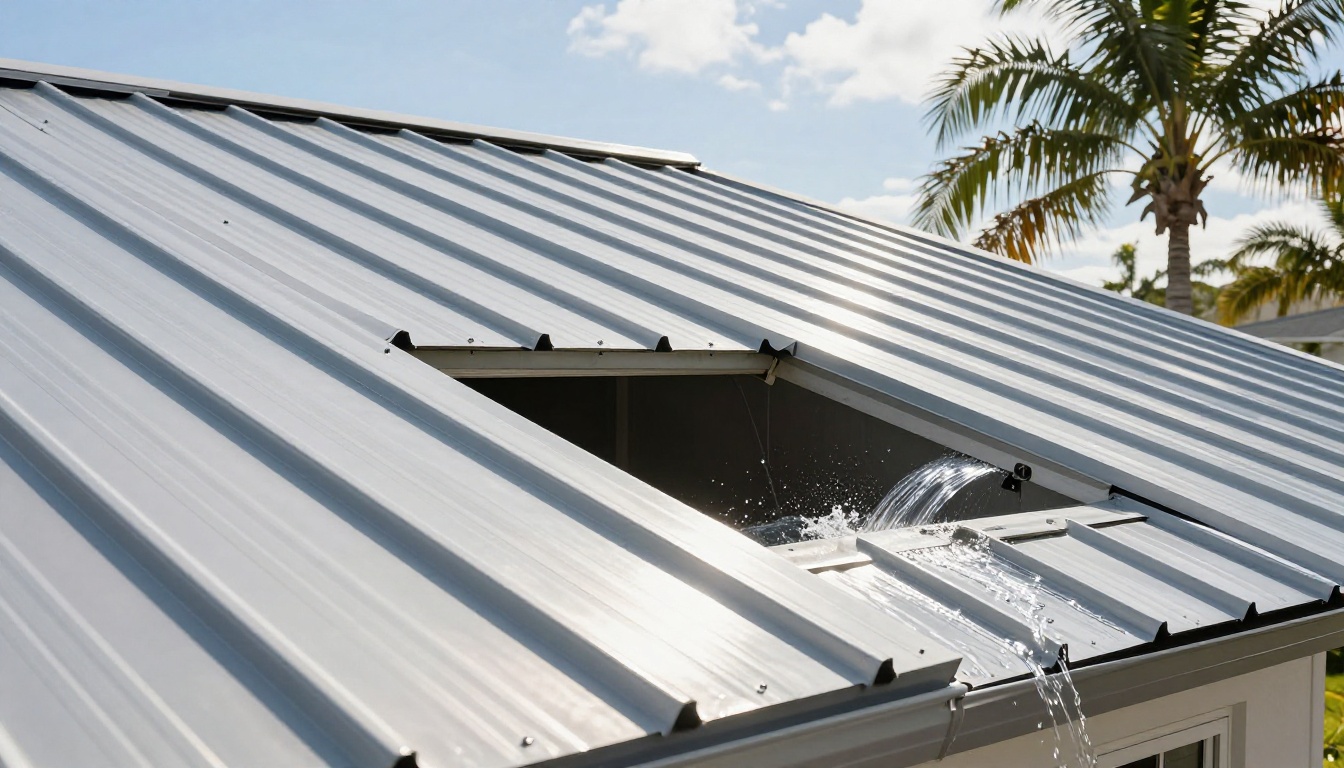
When a Florida storm hits, the roof valley turns into a river. That is why metal roof valley flashing matters so much in an open valley system. It has one job, move heavy runoff off the roof without letting wind-driven rain push under the panels.
For homeowners and roof crews, the small details decide the outcome. Valley width, metal type, hems, underlayment, and fastener placement all matter. Get those right, and an open valley sheds water fast. Miss them, and even a good-looking roof can leak.
Why open valleys work well on Florida metal roofs
An open valley leaves the flashing exposed between the two roof planes. In Florida, that layout makes sense because it gives water and debris a clear path out. Leaves, pine needles, and palm fronds are less likely to pack tight than they are in a closed valley.
Still, an open valley is the hardest-working trim on the roof. It handles concentrated runoff, sideways rain, and constant moisture. Because of that, the flashing should be corrosion-resistant and sized for the water load. For many metal roofs, a 24-inch valley pan is a common starting point, with enough metal to run 8 to 12 inches under the adjacent panels on each side. Long runs, low slopes, and complex roof shapes may call for a wider pan.
The valley edges should also turn up, usually about 1/2 inch. That small hem acts like a curb. It stiffens the metal and slows water that wants to creep sideways by capillary action.
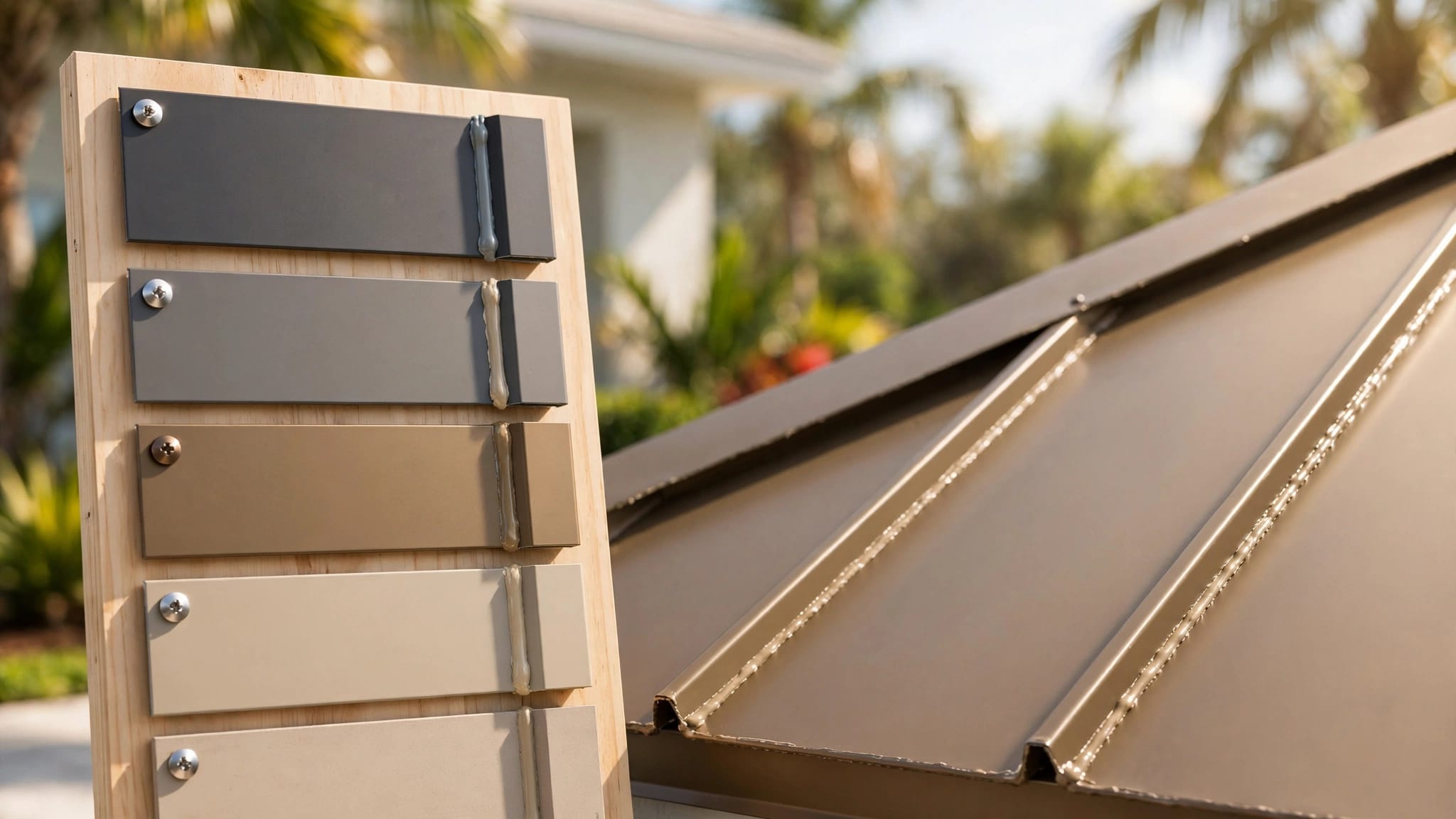
Material choice matters just as much. Coated steel and aluminum are common in Florida because they handle humidity better than plain steel. Thickness must also meet code and roof system requirements. Just as important, the valley metal should match the roof system, or be approved for contact with it. Mixing metals, like copper against coated steel, can speed up corrosion.
Under the valley, add serious water protection. As of March 2026, Florida remains on the 8th Edition Florida Building Code, 2023, and the local building department still has the final say. In many Florida conditions, a self-adhered underlayment in the valley is a good move, and high-wind zones may call for more.
If you want a quick refresher on trim terms, valley flashing basics explained helps before you order parts.
Keep fasteners out of the valley's main water channel. Water always wins that fight.
How to install metal roof valley flashing for an open valley
Good open valleys are simple, but they are not forgiving. Each step has to guide water downhill, not trap it.
- Prep the deck and underlayment : Start with a clean, smooth deck. Then run self-adhered membrane centered in the valley. Extend it well past the centerline so driven rain has a backup layer. In high-wind areas, many crews add extra membrane in the valley zone.
- Set the valley pan straight and continuous : Use the longest valley pieces you can. Longer custom pieces reduce seams, and fewer seams usually mean fewer weak spots. If a splice is unavoidable, lap it so water runs over the joint, not into it. Bed the lap in butyl tape or a compatible sealant made for metal movement.
- Form the edges and keep the channel open : Hem the valley edges up. Next, cut the roof panels back from the centerline so the flashing stays visible. The exact cutback depends on the panel profile and maker instructions, but the goal stays the same, keep a clean, open channel for water.
- Fasten on the outer flanges only : Use corrosion-resistant fasteners where the system calls for them, but keep them out of the flow line. On Florida jobs, fastener spacing also has to match the roof system and local wind zone. Near the coast or in higher exposure areas, crews often tighten attachment at edges and perimeters.
- Finish the eave and panel terminations carefully : The lower end of the valley has to feed water into the gutter or off the roof without gaps. That area sees backflow in hard rain, so sloppy cuts show up fast.
A few habits separate a solid job from a callback. Don't reuse old flashing. Don't smear exposed caulk down the center as a shortcut. Also, follow the panel manufacturer's detail, whether the roof uses 5V, PBR, or standing seam. Florida code requires flashing at slope changes, but the roof system details matter just as much as the code book.
The mistakes that cause most Florida open valley leaks
Most valley leaks do not start with a dramatic failure. They start with one weak detail, then Florida weather keeps testing it. A valley pan may be too narrow. A crew may drive screws through the water path. Someone may rely on sealant where a formed lap or proper hem should do the work.
Debris makes bad details worse. When leaves and palm fibers collect in an open valley, water slows down and starts searching for a side path. If the panel cuts crowd the center, or the valley has raw edges instead of hems, that trapped water can creep under the panels.
Corrosion is another quiet problem. Reused valley metal, worn coatings, or contact between dissimilar metals can eat away at the flashing long before a homeowner sees a stain inside. Meanwhile, Florida heat ages sealants fast. If the valley only stays dry because of a bead of caulk, the clock is already ticking.
Watch for these warning signs:
- Rust lines or staining near the valley center or laps
- Screws in the channel , or patched holes from old fasteners
- Heavy sealant smears used like a repair blanket
- Wet debris dams that stay packed after rain
For a closer look at common open valley issues in Florida storms, it helps to compare what a good detail looks like next to one that is already failing.
Inspect open valleys at least twice a year, and again after major storms. Clear debris gently, look for coating wear, and check that the eave end still drains cleanly. If the flashing has corrosion, split laps, punctures, or repeat leak history, replacement is usually smarter than another tube of sealant.
Bottom line for Florida open valleys
When the next summer storm dumps water sideways, the valley will tell you if the roof was detailed well. Start with compatible metal, enough width, hemmed edges, solid underlayment, and clean drainage at the eave. In short, metal roof valley flashing should move water fast and stay out of the way. If it can't do that, the detail needs another look.
Share Our Metal Roofing News Articles
Related Posts