Metal Roof Color Selection for Florida Heat and HOA Rules
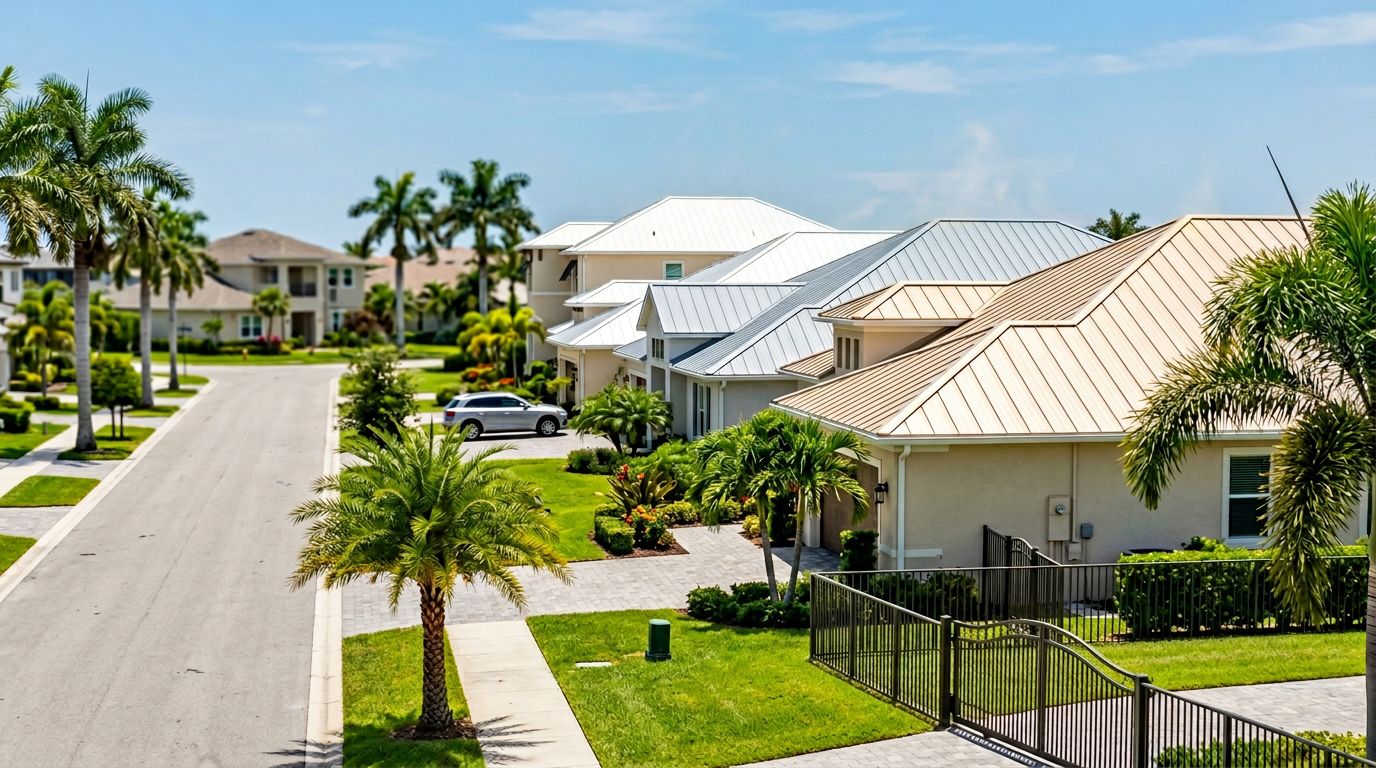
Picking metal roof colors in Florida isn't just about curb appeal. Your choice can affect attic temps, HVAC run time, how fast the finish shows age, and whether your HOA signs off without a fight.
Think of it like choosing a car paint color in full sun. The shade matters, but so does the clear coat, where you park, and how picky your neighborhood is. The good news is you can make a smart, heat-friendly choice and still stay inside HOA lines, if you follow a simple process.
Choose metal roof colors that fight Florida heat (and verify the numbers)
Florida sun can punish a roof. Dark colors absorb more solar energy, which can raise roof surface temperature and increase heat moving into the attic. Lighter colors usually reflect more sunlight, so they tend to run cooler during peak hours. That's why whites, light grays, and light tans are common on Florida homes, even when the architecture isn't "coastal."
Still, color names can fool you. "Ash Gray" from one brand might reflect far more sun than "Pebble Gray" from another. Instead of trusting the brochure, ask for performance data and confirm it matches the exact panel and coating you're buying.
Here's what to look for when you want a cooler roof:
- Solar reflectance : How much sunlight the surface reflects.
- Thermal emittance : How well the roof releases heat.
- SRI (Solar Reflectance Index) : A combined score used on many submittals.
Florida's Building Code (9th Edition, in effect in 2026) focuses on wind resistance, tested assemblies, underlayment rules in HVHZ, corrosion exposure, and proper installation. It does not require cool-roof ratings for typical steep-slope residential metal roofs. Even so, cool-roof data can still help you compare options and may matter for certain programs, rebates, or project requirements.
To verify "cool roof" claims, request one of the following from the manufacturer or supplier:
- A product data sheet showing initial and aged reflectance and emittance, not just "cool roof" marketing language.
- Confirmation the product appears in the Cool Roof Rating Council (CRRC) Rated Products Directory under the correct brand and coating.
- If requested by a client or architect, confirmation it aligns with ENERGY STAR roofing listings (many listings rely on CRRC test data).
A common mistake is approving a light color, then switching to a different coating line later. The color can look similar, but the performance numbers and fade resistance can change.
Heat control also depends on the full system. Ridge ventilation, intake ventilation, and the right underlayment matter, especially in low-slope areas and over conditioned spaces. Color helps, but it can't fix a poorly vented attic.
Make your roof color HOA-proof (without giving up performance)
HOAs often regulate roof appearance because a roof is the largest visible surface on the home. Many Florida associations don't care that metal is "better," they care that it looks consistent.
As of recent Florida law updates (including SB 600, passed in 2025), many HOAs must allow metal roofs that meet applicable building code requirements. However, an HOA can still enforce reasonable aesthetic standards , such as approved colors, sheen, and profile.
So, treat HOA approval like a mini construction submittal. Your goal is to remove uncertainty.
Start by pulling these documents before you fall in love with a color:
- Architectural guidelines (often separate from the CC&Rs)
- Any "approved color palette" list
- Prior approvals in your neighborhood (drive the community and take notes)
Next, translate vague HOA wording into specific roofing choices. For example:
- "Earth tones only" usually means tan, bronze, brown, or weathered gray, not bright white.
- "Non-reflective finish" usually means low-gloss or matte , not shiny metallics.
- "Must match existing homes" means you should photograph nearby roofs in full sun, then pick two close options.
If your HOA is strict, build your request around what they already accept. This guide on choosing the right metal roof color for Central Florida can help you narrow down shades that fit local styles and heat realities.
To increase approval odds, submit:
- The manufacturer color name and code (not "light gray")
- A photo of your home plus two neighbor reference photos
- A short note confirming the roof system will be permitted and installed to code
- A sample chip or panel section (more on this below)
If you're a contractor, pre-package this for homeowners. Most delays happen because boards get incomplete info and kick it back.
A practical, step-by-step method to pick the right color and finish
Once you know the HOA boundaries, you're choosing between a handful of realistic options. Now the details matter, because Florida heat and UV don't treat every finish the same.
Compare finish systems before you compare shades
Two roofs can start the same color and age very differently. In general, PVDF (often referred to as Kynar 500) holds color and resists chalking better than many SMP systems, especially in strong sun and salt air. If long-term color matters, read this breakdown of Kynar 500 (PVDF) vs. SMP paint for Florida color retention.
If the home is near the coast or gets frequent salt exposure, prioritize the coating and warranty terms, then pick the color. A great shade with a weaker coating can look tired faster.
Don't trust a screen, request physical samples
Computer previews are helpful, but they lie in two ways: lighting and calibration. Florida sun is harsh, and it reveals undertones you won't see indoors.
Ask for physical samples and test them like this:
- View samples outside , in morning and late afternoon light.
- Hold them against stucco, brick, or siding, not against your hand.
- Check the sample at street distance, because that's how the HOA will see it.
- If you're choosing a "cool" light gray, confirm it doesn't read blue next to white trim.
Also ask for matching details. Color-matched trim, ridge cap, and fastener heads can shift slightly between batches. That mismatch stands out on light roofs.
Quick comparison of common Florida-friendly color families
Use this table as a first filter before you request samples:
| Color family | Heat performance in Florida sun | HOA approval odds | What to watch for |
|---|---|---|---|
| White, bone, light stone | Usually best | Medium to high | Can look too bright in "earth tone" communities |
| Light gray, weathered gray | Very good | High | Undertones show in bright sun, test next to trim |
| Tan, sand, light bronze | Good | High | Looks warmer over time if dirt builds up |
| Medium bronze, brown | Fair | High | Higher roof temps, may need better attic ventilation |
| Charcoal, black | Lowest | Medium | Shows fading, chalking, and oil canning more easily |
Match the color to the panel profile you're installing
Profile changes how color reads. Standing seam has wide flat areas, so waviness and glare can show more on darker, higher-gloss colors. Exposed-fastener panels break up reflections with ribs, but they introduce visible fastener lines.
If you're considering standing seam, it helps to confirm what's available as stock colors and what requires a special order. For example, Armored Coast standing seam panels list common stocked shades that homeowners and HOAs often accept.
Finally, keep ordering in mind. Color is not just panels. It's also flashing, drip edge, rake trim, and ridge cap. A clean roof look depends on having all the pieces planned early. This step-by-step metal roof material ordering guide for Central Florida is a solid reference when you're building a complete, color-matched scope.
Final checklist before you order
- Confirm HOA rules, approved palettes, and required sheen level.
- Narrow to 2 to 3 compliant metal roof colors that also fit the home's exterior.
- Ask for physical samples , then view them outdoors at two times of day.
- Verify coating type (PVDF vs SMP) and read the color and fade warranty terms.
- Request cool-roof metrics (reflectance, emittance, SRI) when heat performance is a priority.
- Confirm matching trim, flashings, and fastener colors are available for your chosen shade.
- Keep the permit in mind, because code compliance still drives the roof system details.
A Florida roof has one job every day: take the sun's beating and keep the home comfortable. Pick a color that your HOA will sign off on, then back it up with the right coating and real-world sample checks. Metal roof colors are a long-term choice, so it pays to slow down for one extra week and get it right.
Share Our Metal Roofing News Articles
Related Posts