How to Prep Metal Panels for Butyl Tape
Butyl tape only works as well as the metal beneath it. A dusty lap, a damp edge, or a hot panel can weaken the bond before the tape ever gets pressed down.
That matters on Florida roofs, where panels pick up pollen, salt film, and jobsite dirt fast. If you take a few minutes to prep metal panels the right way, the tape seals tighter and lasts longer.
Start with a clean, bond-ready surface
The first step is simple, but it changes everything. Butyl tape needs direct contact with the panel, not with dust, oil, chalk, or loose coating.
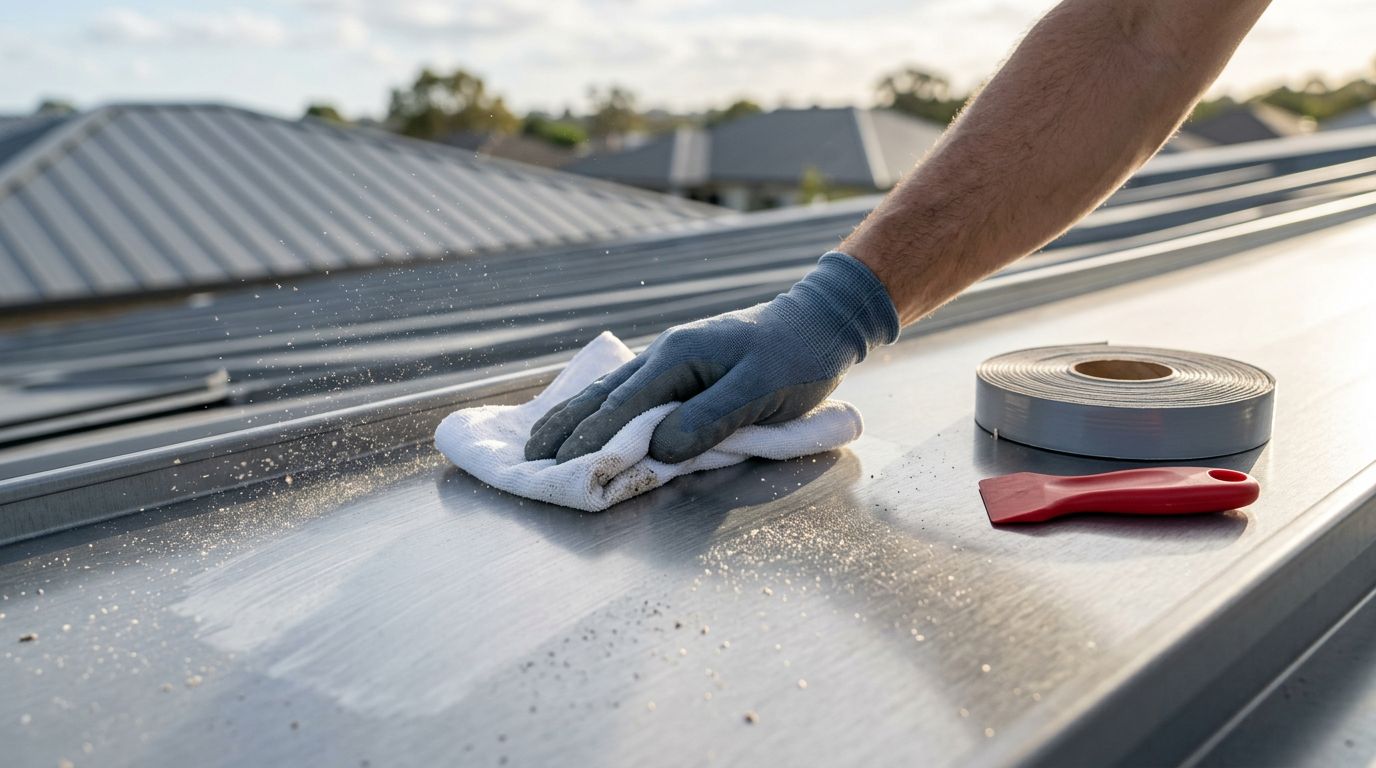
Wipe away loose dirt first. Then clean the contact area with a residue-free method that matches the panel finish. If the metal has mill oil, fingerprints, or shop grime, remove that too. A clean, lint-free cloth helps because it does not leave fibers behind.
Here's a quick check before you set tape on the panel.
| Prep check | What to look for | Why it matters |
|---|---|---|
| Dirt and dust | Pollen, sand, metal shavings, chalk | Tape bonds to grime, not the panel |
| Oil or film | Mill oil, handprints, shipping residue | These reduce grip and shorten seal life |
| Old sealant | Dried beads, stuck tape, sticky scraps | Old material creates high spots and gaps |
| Loose coating | Flaking paint, rust scale, residue | Tape needs a stable surface to hold |
If the surface looks clean but feels slick, keep wiping. A panel can look fine and still carry a thin film that blocks adhesion.
Clean metal, dry metal, and flat metal give butyl tape its best chance.
When you prep seams, laps, and trim edges with care, the tape has a full surface to grab. That improves the seal and reduces the chance of early leaks. For a wider look at seam choices, butyl tape versus tube sealant for metal roofs explains where a compression seal fits best.
Make dryness a hard rule
Moisture is one of the fastest ways to ruin a tape joint. Water blocks contact, and butyl tape needs contact across the whole strip.
That means more than waiting out rain. Freshly washed panels can still hold water in the hem, the lap, or around fastener holes. Morning dew and evening humidity can also leave a thin film that's easy to miss. If the panel feels damp, give it more time.
Use towels or air to clear the obvious water, then check corners and overlap points by hand. Those hidden spots matter because they are often the first places a leak starts. Even a small amount of trapped moisture can stop the tape from seating evenly.
Dryness also matters after cleaning. If you wash the panel, don't rush the next step just because the face looks dry. The back of the overlap can still hold moisture, and that is the part the tape must seal.
A good habit is to touch the contact area before taping. If it feels cool, damp, or clammy, wait. The extra minutes are cheaper than reopening a seam later.
Watch panel temperature before you tape
Temperature changes how butyl tape behaves. Warm tape usually presses out well, but overheated metal can make placement messy. Cold panels can make the tape stiff and hard to seat.
Florida sun can heat a panel fast, especially on open jobsites. If the panel is hot enough to feel uncomfortable, wait for shade or a cooler part of the day. Early work hours often give you better control than midday heat.
Stable temperature helps the tape hold its shape while you place it. That matters because butyl tape is a pressure-sensitive seal, not a filler. It works by being squeezed between clean surfaces. When heat softens the panel too much, the tape can slide before it compresses properly.
Try to keep the panel surface and the tape at similar temperatures. Stored tape should not sit baking in a truck, and cold material should not go straight onto sun-heated steel. A little planning here gives you a cleaner seam.
For a closer look at how prep fits into the full install process, metal roofing installation best practices covers alignment and fastening details that affect seal quality too.
Check fit, flatness, and edge condition
Butyl tape seals best when the panel sits flat and firm. If the lap rocks, bows, or bridges a gap, the tape loses compression.
That is why panel condition matters before the tape goes on. Look for oil-canning, bent hems, dented edges, and cut lines with burrs. A rough edge can leave a tiny gap that keeps the tape from compressing evenly. It can also damage the tape during placement.
Dry fitting helps here. When the overlap sits tight before tape installation, the finished joint has a better chance of staying tight. If the panel needs repositioning, do that first. Tape should not be used to hide a poor fit.
Pay close attention to areas around corners, ribs, and penetrations. These spots often shift during handling, and a slight twist can change how the lap closes. If the panel is going to flex after installation, the tape joint may suffer later.
Use this simple rule: if the metal does not look ready to touch its mate cleanly, stop and fix the fit first. The tape is there to seal a proper joint, not to repair a bad one.
Conclusion
The best tape job starts before the tape comes out of the box. Clean metal, dry metal, the right temperature, and solid panel fit all help butyl tape do its job.
When you prep metal panels with care, the seal is stronger, the joint stays neater, and the roof has a better shot at lasting through Florida weather. If one of those conditions is off, fix it first, then apply the tape with firm pressure and a steady hand.
Share Our Metal Roofing News Articles
Related Posts