What Causes Fastener Pull-Over on Metal Roof Panels
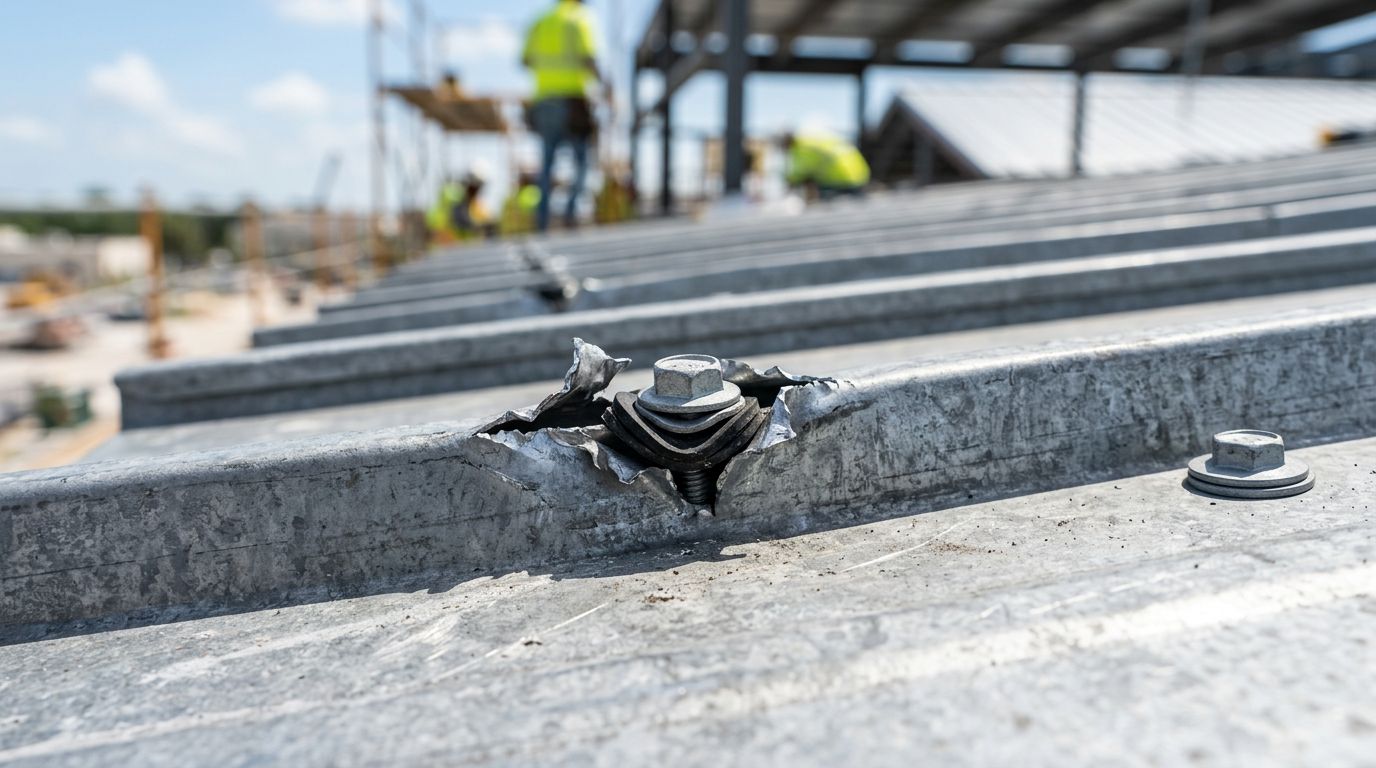
Fastener pull-over can turn a sound-looking roof into a leak risk fast. The screw may still be in place, but the metal around it starts to tear or dish out. Once that happens, the panel loses clamp force, and wind or water can work its way in.
This failure shows up most often on exposed-fastener metal roof panels. It gets worse when crews use the wrong fastener, miss the framing, or drive screws too hard. In Florida, heat, storms, and salty air shorten the margin for error.
Pull-over, pull-out, and back-out are different problems
Fastener pull-over happens when the screw head or washer tears through the panel metal. The fastener may still grip the wood or steel below. The sheet fails first.
Pull-out is different. In that case, the screw loses hold in the substrate or framing. Back-out is a slow loosening, often caused by movement, vibration, or washer wear. Standing seam roofs also fail differently, since clips and seams carry the load instead of exposed screw heads.
A quick comparison helps show why the repair changes with the failure.
| Failure type | What fails first | Common cause |
|---|---|---|
| Pull-over | Panel metal around the screw | Thin sheet, overdriving, poor support |
| Pull-out | Grip in wood or steel below | Short screw, weak framing, wet wood |
| Back-out | Fastener tension over time | Thermal cycling, vibration, worn washer |
Pull-over is a panel problem first. Pull-out is a substrate problem first.
If you treat one like the other, the fix will miss the mark. Replacing a screw won't help if the hole has already enlarged, and swapping a panel won't solve weak framing.
Installation mistakes that load the fastener head
Pull-over usually starts with stress at the fastener, not with a storm. A washered screw needs the right hole, the right clamp force, and a flat seat. When any of those are off, the sheet bends and the opening starts to oval.
Follow the panel maker's fastening pattern in the metal roofing installation guides, because spacing and screw placement matter more than most owners think.
Common mistakes include:
- Overdriving the screw until the washer bulges.
- Using a fastener that is too short or the wrong diameter.
- Setting screws in unsupported areas of the panel.
- Fastening through warped trim, bowed purlins, or damaged ribs.
- Reusing old screws with hard or cracked washers.
Overdriven screws are a big one. The washer should compress enough to seal, but it should not cut into the metal. If the panel is already thin, that small mistake becomes a tear point.
Alignment matters too. Screws that land off-center or at an angle concentrate load on one side of the hole. Over time, wind movement works that spot like a paper punch. Then pull-over starts at the first weak fastener and spreads along the run.
Florida weather can push a good roof past its limits
Metal expands in the sun and contracts at night. That movement is normal, but it keeps working the fastener line. In Florida, a roof can cycle through heat, humidity, and afternoon rain in the same day.
High winds make the problem worse. Wind uplift flexes the panel, especially near edges, ridges, and corners. If the panel is thin, or the support spacing is wide, the metal around each screw has to carry more load.
Moisture also matters. Wet or deteriorated wood can soften the grip of a wood screw, which may lead to pull-out first, then panel movement, then pull-over at the next weak point. On coastal jobs, salt air attacks washers and fastener coatings faster than many owners expect.
Age is another factor. Sun hardens rubber washers. Rust weakens the sheet around old holes. A roof that looked fine a few seasons ago can start showing shiny rings, lifted washers, or tiny tears around fasteners after one rough storm cycle.
Preventing damage and fixing early signs
Prevention starts before the first screw goes in. Order the correct fasteners, washers, closures, sealants, and trim so no one improvises on site. A metal roofing hardware and accessory checklist helps keep the project complete.
The installation plan should match the panel profile, the framing, and the wind load. Use the correct torque setting, and replace any screw that spins without holding. If a panel sits loose, find the cause before you add another fastener nearby.
When pull-over has already started, inspect more than the obvious tear. Check for elongated holes, damaged purlins, soft decking, and cracked washers along the same run. A single bad screw can be fixed with a new fastener in sound metal. Wider damage may call for a panel replacement or a full attachment review.
A practical repair sequence helps:
- Remove the damaged fastener.
- Check the hole, washer, and surrounding panel metal.
- Move to sound material if the opening has stretched.
- Replace any weak substrate or rusted fastener.
- Seal and tighten to the correct spec.
That process works best when the roof is caught early. Once several fasteners have torn through, the panel often needs more than a quick patch.
Key Takeaways
Fastener pull-over usually means the panel failed first. That happens when the screw is overdriven, undersized, poorly placed, or asked to hold too much movement.
Florida heat, wind, and moisture shorten the safety margin. If you catch shiny washers, elongated holes, or torn metal early, you can stop a small fastener problem from turning into a larger roof repair.
Share Our Metal Roofing News Articles
Related Posts