Metal Roof Expansion Joint Details for Long Panel Runs
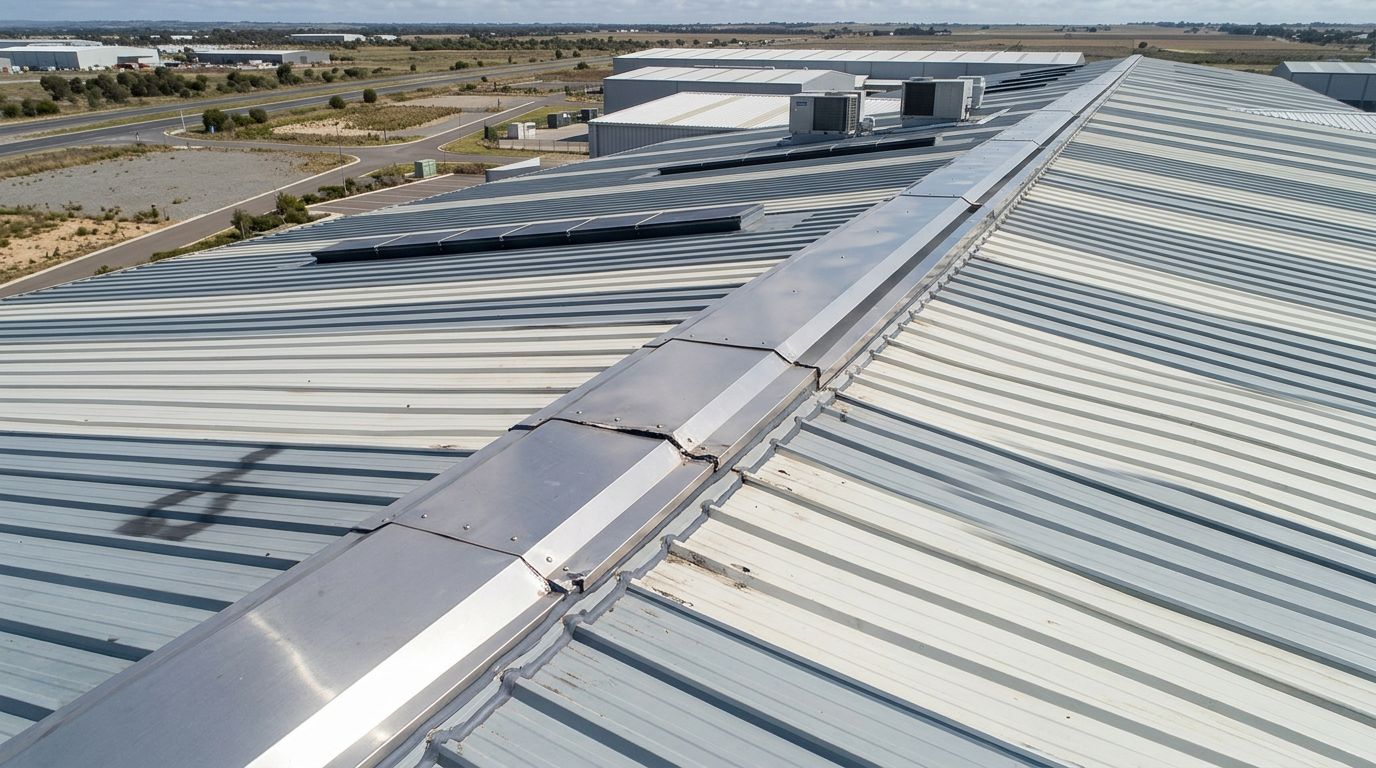
Long metal roof runs look clean, but they also move a lot. Heat, cooling, structural deflection, and long spans can turn a quiet roof into one that pops, oil-cans, or leaks at the seams.
That's why metal roof expansion joints matter on projects with uninterrupted panel lengths. The detail has to let the roof move without fighting the structure, the fasteners, or the waterproofing.
For contractors, architects, and owners, the goal is simple: place the right joint in the right spot, then build every layer around that decision. The details below focus on movement, drainage, and field-proven habits that hold up on real projects.
Key Takeaways
- Long panel runs need a movement plan, not just a longer panel order.
- Expansion joints work best when they line up with structural breaks or clear transitions.
- Fasteners, clips, sealants, and trim all need to match the panel system.
- A joint that blocks movement can fail faster than no joint at all.
- Manufacturer instructions and project-specific engineering should control the final detail.
What Expansion Joints Do on a Metal Roof
A metal roof expands when it gets hot and contracts when it cools. On a short run, that movement may be small enough to hide. On a long run, the movement adds up across every panel, seam, clip, and attachment point.
An expansion joint gives that movement a controlled place to happen. Instead of forcing the full roof to stretch as one piece, the detail breaks the run into sections that can shift without building stress into the panels. That helps reduce buckling, fastener fatigue, seam distortion, and noise.
Not every system uses the same approach. Standing seam roofs often rely on clip design, panel length limits, and segmented runs. Other panel systems may use a more visible joint assembly or a roof break with dedicated flashing. The right answer depends on the panel profile, substrate, building size, and the way the roof drains.
Before any detail gets drawn into a set, review the installation instructions for metal roof panels. The manufacturer's rules on panel length, clip layout, and trim compatibility should guide the layout from the start.
Where Long Runs Start to Need a Joint
There is no single length that triggers a joint on every roof. Panel profile, color, exposure, substrate, and building movement all affect the answer. A dark panel on a hot roof in Florida will move more than a short, shaded run on a small structure.
The table below shows common conditions that push a designer or installer toward an expansion detail.
| Condition | Why It Matters | What to Check |
|---|---|---|
| Long uninterrupted roof lines | Movement accumulates over distance | Panel length limits, clip spacing, and joint placement |
| Structural breaks or building joints | The roof and structure may move differently | Align the roof detail with the building break |
| Wide temperature swings | More expansion and contraction cycles | Panel material, coating color, and attachment method |
| Complex roof geometry | Valleys, transitions, and offsets create stress points | Flashing continuity and drainage paths |
| Large open spans | Deflection can transfer into the roof assembly | Secondary framing and support conditions |
A joint works best when it sits where the building already changes direction or structure. That is usually cleaner than forcing one into the middle of a smooth, continuous field.
The important point is this: the roof should move in a planned way. If the detail has to fight movement, the field usually wins, and the joint loses.
Detailing That Lets the Roof Move and Stay Dry
Good expansion details do two jobs at once. They allow movement, and they keep water out. If one of those jobs gets ignored, the roof will show it.
A sealant can help a joint stay watertight, but it cannot replace movement allowance.
The most reliable details keep attachment points simple and predictable. That usually means avoiding hard locks where the panels need to slide, using clips or cleats where the system calls for them, and keeping the flashing sequence aligned with the flow of water. The underlayment, closures, and trim should bridge the break without pinching the panel edges.
A few habits matter on almost every project:
- Keep the joint aligned with a structural break whenever possible.
- Leave room for panel movement at clips, laps, and trim interfaces.
- Use sealants and tapes only where the manufacturer allows them.
- Maintain a clear drainage path so water does not pond at the joint.
- Match fastener type and spacing to the panel profile and substrate.
The metal roofing fasteners and accessories used at a joint need to fit the system, not just the screw head. Washers, rivets, closure strips, and sealants all play a part in how the detail performs over time.
Common Failure Points on Long Panel Runs
Most expansion joint problems come from one of three mistakes: the roof was locked down too tightly, the joint was placed in the wrong spot, or the flashings were built without enough overlap and movement allowance.
Overfastening is a classic failure point. When screws or clips prevent movement, the panels try to find relief somewhere else. That often shows up as buckling near the joint, popped fasteners, or visible waviness along the panel line.
Water management causes trouble too. A joint located where water slows down, backs up, or changes direction can leak even if the metal is otherwise sound. That is why joints need to be integrated with slope, flashing, and panel orientation. A waterproof detail that ignores drainage is only half-built.
Another common issue is mixing parts that do not belong together. A panel system may need a specific clip, a certain closure shape, or a particular flashing profile. A generic substitute can look close from the ground and still fail under movement.
When the roof has custom lengths, takeoff accuracy matters as well. A complete metal roof material list should include the joint assembly, edge metal, fasteners, sealants, and any special trim needed at transitions. If the list misses those items, the field crew ends up improvising.
Coordinating Panels, Trim, and Engineering Before Fabrication
Long-run details work best when the whole roof package is planned together. That means the panel profile, structural support, flashing profile, and fastener schedule all get reviewed before fabrication begins. It also means the expansion joint is not treated like an add-on.
Architects and contractors should verify how the roof breaks at ridges, eaves, walls, and changes in plane. A joint that looks fine on paper can become awkward if it conflicts with a valley, a curb, or a parapet. In those cases, the project may need a different break location or a custom flashing approach.
Project-specific engineering matters here. Roof dimensions, loads, and attachment patterns vary from one building to the next, especially on larger commercial or agricultural structures. The final detail should match the approved drawings, local code requirements, and the panel manufacturer's published guidance.
For Florida work, that review is even more important because heat loads and weather exposure are part of normal service conditions. A detail that survives on a short, simple roof may not be the right choice on a longer, more exposed run.
Final Checks Before the Roof Goes Up
A long metal roof run should never depend on guesswork. The expansion joint, the clips, the fasteners, and the flashing all need to work as one system.
If the roof can move freely where it should, and stay tight where it must, the assembly has a much better chance of staying flat and watertight. That starts with the panel manufacturer's instructions, then moves through the engineer's details, then into careful field installation.
The cleanest-looking roof is often the one that was planned for movement before the first panel was cut.
Share Our Metal Roofing News Articles
Related Posts