How To Read A Metal Roofing Quote Like A Pro In Florida
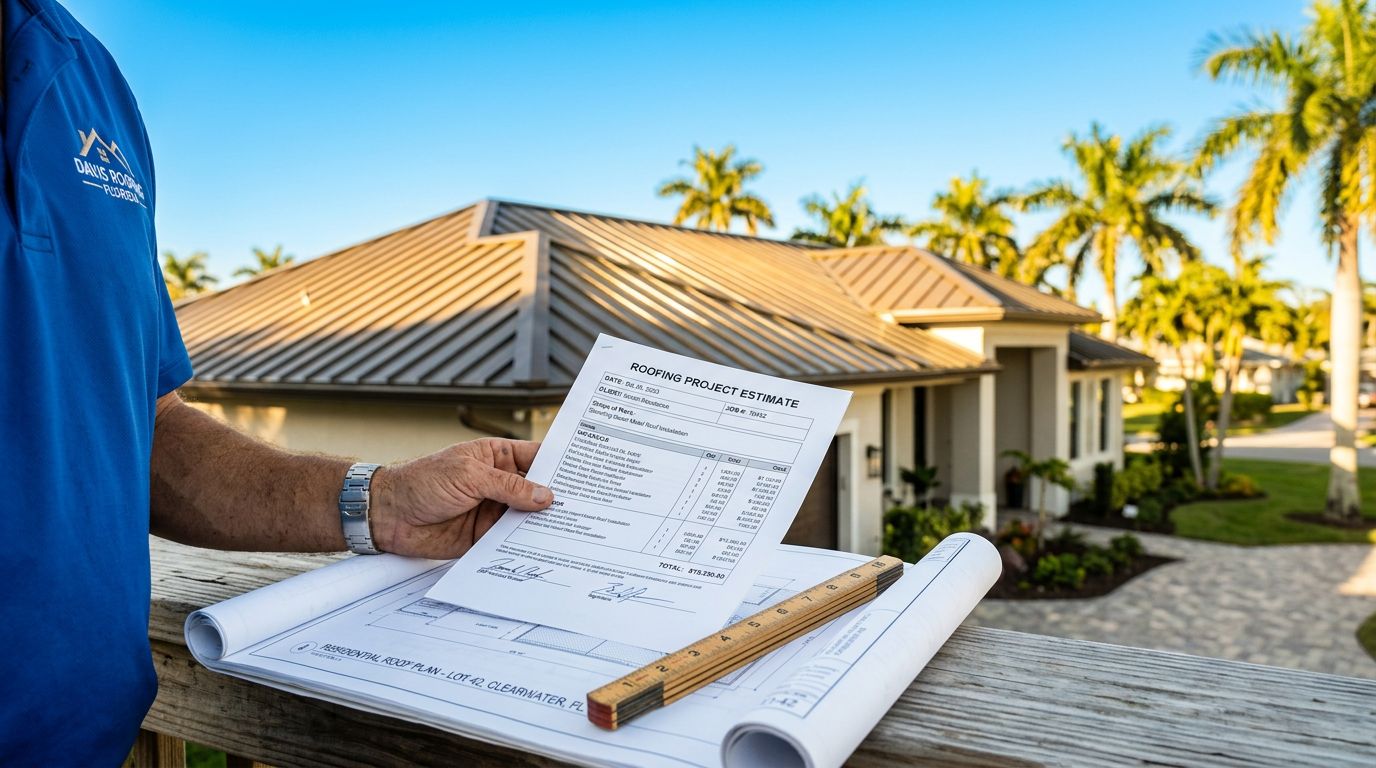
A roofing quote can look simple, then you notice pages of line items and a total that doesn't match the other bids. Sound familiar? When you're comparing 2 to 4 contractors, the goal isn't to find the cheapest number. It's to find the clearest scope and the fewest surprises.
This guide breaks down a metal roofing quote Florida homeowners usually see, what each section should include, and where costs often hide. You'll also get a quick "quote decoding" checklist you can use before you sign.
Start with scope, measurements, and the units that drive price
Most quote confusion starts with one problem: two contractors aren't quoting the same job. Before you compare totals, confirm the scope matches across bids.
Here are the unit terms that show up on Florida metal roofing estimates:
- Squares : Roofing area in 100-square-foot blocks. (2,300 sq ft of roof area equals 23 squares.)
- Linear feet (LF) : Used for edges and long runs, like eaves, rakes, ridge caps, and valleys.
- Penetrations : Anything poking through the roof, such as plumbing vents, chimneys, skylights, solar mounts, and attic fans.
Next, look for how the contractor handled waste and complexity. A low bid sometimes "wins" by leaving out the parts that make a roof leak-proof in a tropical downpour.
A good quote spells out items like tear-off, disposal, deck condition, and the metal system type. If it's vague, you're gambling.
Here's a fast way to spot what's missing.
| Quote line item | What it really means | Why it changes your total |
|---|---|---|
| Roof area (squares) | Total surface area, not house square footage | Drives most material and labor math |
| Tear-off vs overlay | Remove existing roof or install over it (if allowed) | Tear-off adds labor, dump fees, and time |
| Deck repairs (allowance) | A budget set aside for bad plywood | Without it, you'll get a change order later |
| Penetration count | Number of flashings and detail areas | Details take time, and time costs money |
| Linear feet of trim | Eave, rake, ridge, valley, transitions | Trim packages vary a lot between bids |
Two quotes can both say "standing seam," yet one includes all flashings and closures and the other doesn't. Treat a quote like a grocery receipt. If it doesn't list ingredients, you don't know what you're buying.
Materials and code items that change Florida metal roof quotes
In Florida, you're not just buying panels. You're buying a tested roof system that has to meet local wind, water, and permit rules. Those rules vary by county and city, so your "Authority Having Jurisdiction" (the local building department) gets the final say.
Start with the panel details. The quote should name the profile (5V, standing seam, exposed-fastener panels like Ag or PBR), the metal thickness (often listed by gauge), and the finish/coating . Coastal homes also need more attention to corrosion resistance. Salt air can punish the wrong fasteners and trims.
Underlayment is another big divider between bids. Some contractors price a basic mechanically fastened underlayment. Others include self-adhered peel-and-stick in critical areas, or across the whole deck in tougher zones. If you want to understand how underlayment choices affect cost and performance, see this guide on choosing metal roof underlayment in Florida.
Now zoom out to code compliance. As of February 2026, Florida is transitioning to the 9th Edition Florida Building Code (FBC 2026) , with an effective date of December 31, 2026. Even before that date, many contractors quote to meet or exceed upcoming expectations, especially for wind and water.
If you're in HVHZ (High-Velocity Hurricane Zone, mainly Miami-Dade and Broward), the quote should read differently than an inland Orlando-area roof. HVHZ bids often require Miami-Dade NOA details, specific fastening patterns, and stricter underlayment language. Non-HVHZ coastal areas can still have aggressive wind requirements, so don't assume inland pricing fits your beachside home.
This table shows what you want to see in writing.
| Item to look for | HVHZ expectations | Non-HVHZ expectations |
|---|---|---|
| Approvals | Miami-Dade NOA or HVHZ-specific Florida approval | Florida Product Approval commonly required |
| Wind language | Uplift testing references (often TAS standards) | Wind design still matters, may cite FBC methods |
| Underlayment | Often stricter, sometimes multiple layers or self-adhered membranes | Can vary widely, ask for exact spec |
| Fasteners | Exact type and spacing, plus edge details | Still important, but details are sometimes less strict |
If a quote doesn't mention product approvals or tested assemblies, you might hit permit delays, rework, or failed inspections.
Also check the accessories line items. Closures, sealant tapes, ridge vent materials, and pipe boots can look "small," but they are the difference between a dry attic and a stain that spreads every rainy season.
Labor, permits, and the fine print that decides who pays for surprises
Materials get the spotlight, but labor language is where many Florida roofing disputes begin. A strong quote explains the process in plain terms, and ties payment to milestones.
First, confirm permits and inspections . In most Florida jurisdictions, reroofing needs a permit, and inspections often happen at key stages (for example, dry-in and final). If a bid says "permit by owner," that may be fine, but it also shifts risk and effort to you. At minimum, the quote should say who pulls the permit and who schedules inspections.
Next, look for change order rules and contingencies . These aren't "gotchas" when they're written clearly. They're guardrails.
Common Florida contingencies include:
- Rotten decking discovered after tear-off
- Fascia or soffit damage found once trim comes off
- Weather delays during storm season
- Material lead time changes for made-to-order panels or custom trim
You also want clarity on cleanup, magnetic nail sweeps, and disposal. If those details aren't in the quote, ask before you sign.
Timing matters too. If you're trying to plan around work, kids, or an approaching rainy week, this walkthrough of a Central Florida metal roofing project timeline helps you ask better scheduling questions.
Finally, use this short checklist to "decode" each bid the same way.
Quote decoding checklist (use this before choosing a contractor)
- Same scope : Panel type, underlayment type, tear-off vs overlay, and trim package match across quotes.
- Clear measurements : Squares and linear feet appear, and penetration count isn't vague.
- Code language : Quote states approvals (Florida Product Approval, Miami-Dade NOA if applicable) and notes requirements vary by local jurisdiction.
- Fastener details : Type, finish, and spacing are spelled out, especially in coastal areas.
- Deck repair plan : Allowance included, or unit price per sheet listed.
- Permits included : It says who pulls permits and handles inspections.
- Change orders defined : Written process, pricing method, and approval requirement.
- Warranty separated : Manufacturer coverage and workmanship coverage listed as two different things.
If you're also checking whether the material list makes sense for your roof design, this step-by-step metal roofing material ordering guide is a helpful reference for trim, flashings, and accessory items that should appear on a complete quote.
Conclusion
Reading a metal roofing quote Florida homeowners can trust comes down to one habit: compare scope before price. When the measurements, materials, approvals, and change order rules are clear, the "best" bid usually stands out fast.
Use the checklist, ask for missing line items in writing, and don't accept vague totals. A metal roof is a long-term system, and your quote should read like a plan, not a guess.
Share Our Metal Roofing News Articles
Related Posts